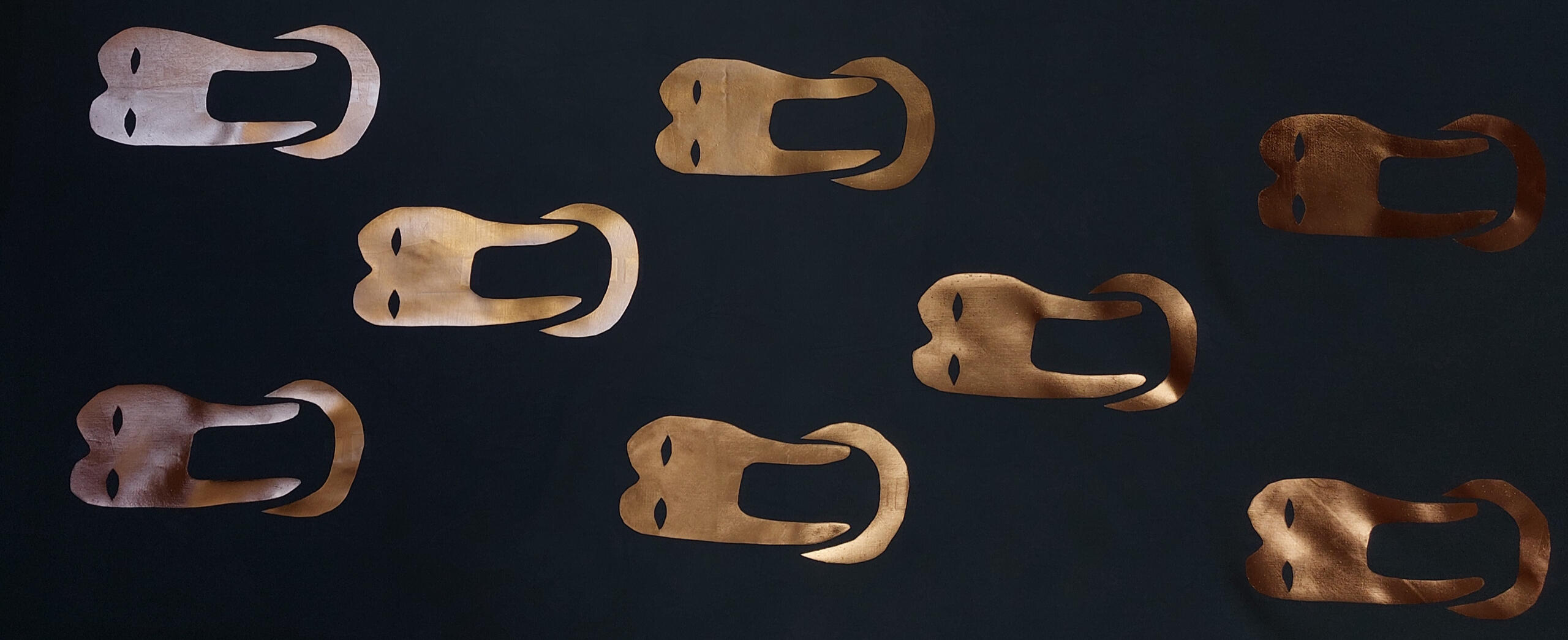
Rosa van Burik

Buitenkunst Art Camp

Commencement Rock - graduation project
thesis Body of Plenty

Naked on the catwalk

Earthbound

The Garden of Roots

Querencia

The Feathered Watcher

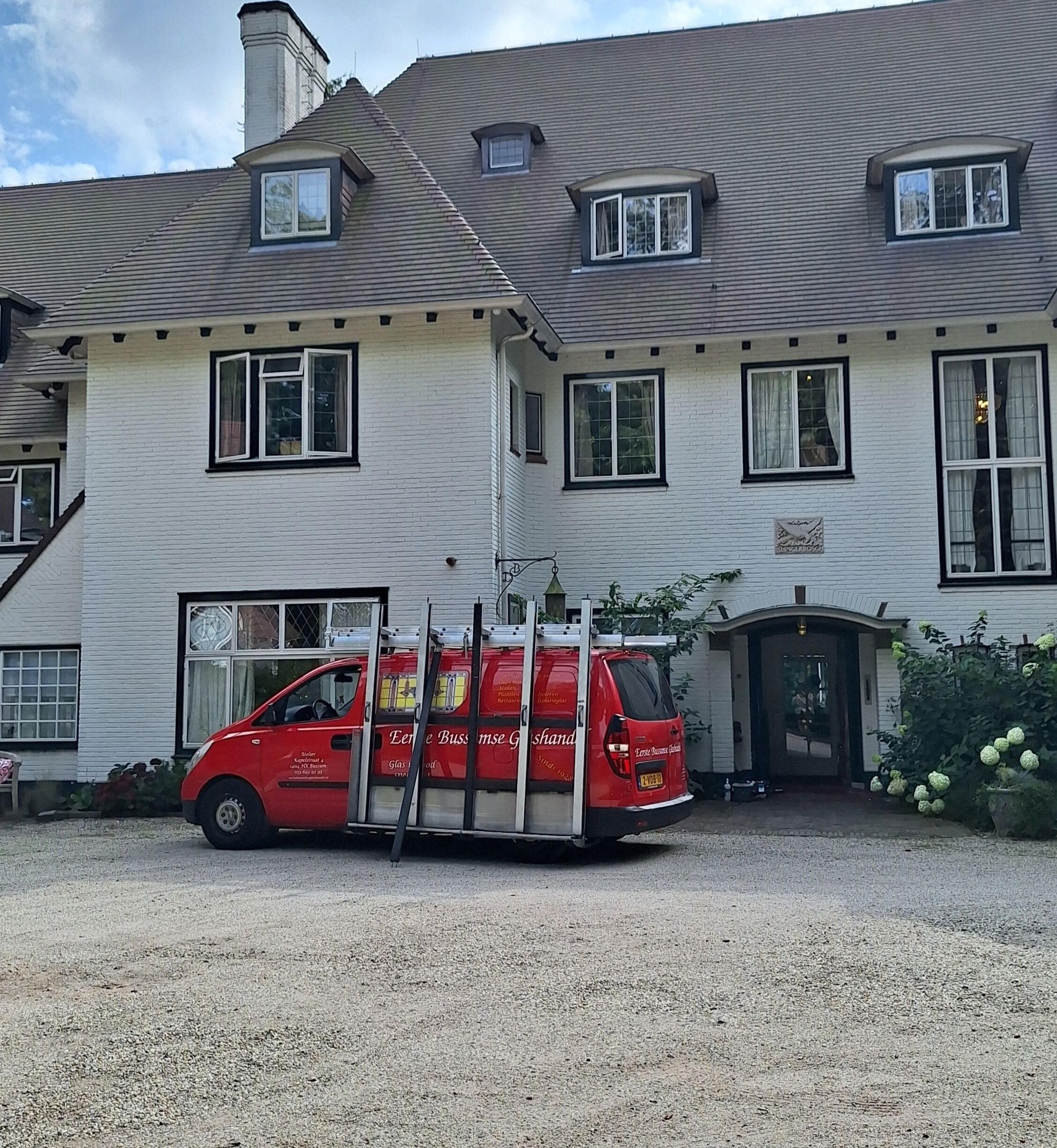
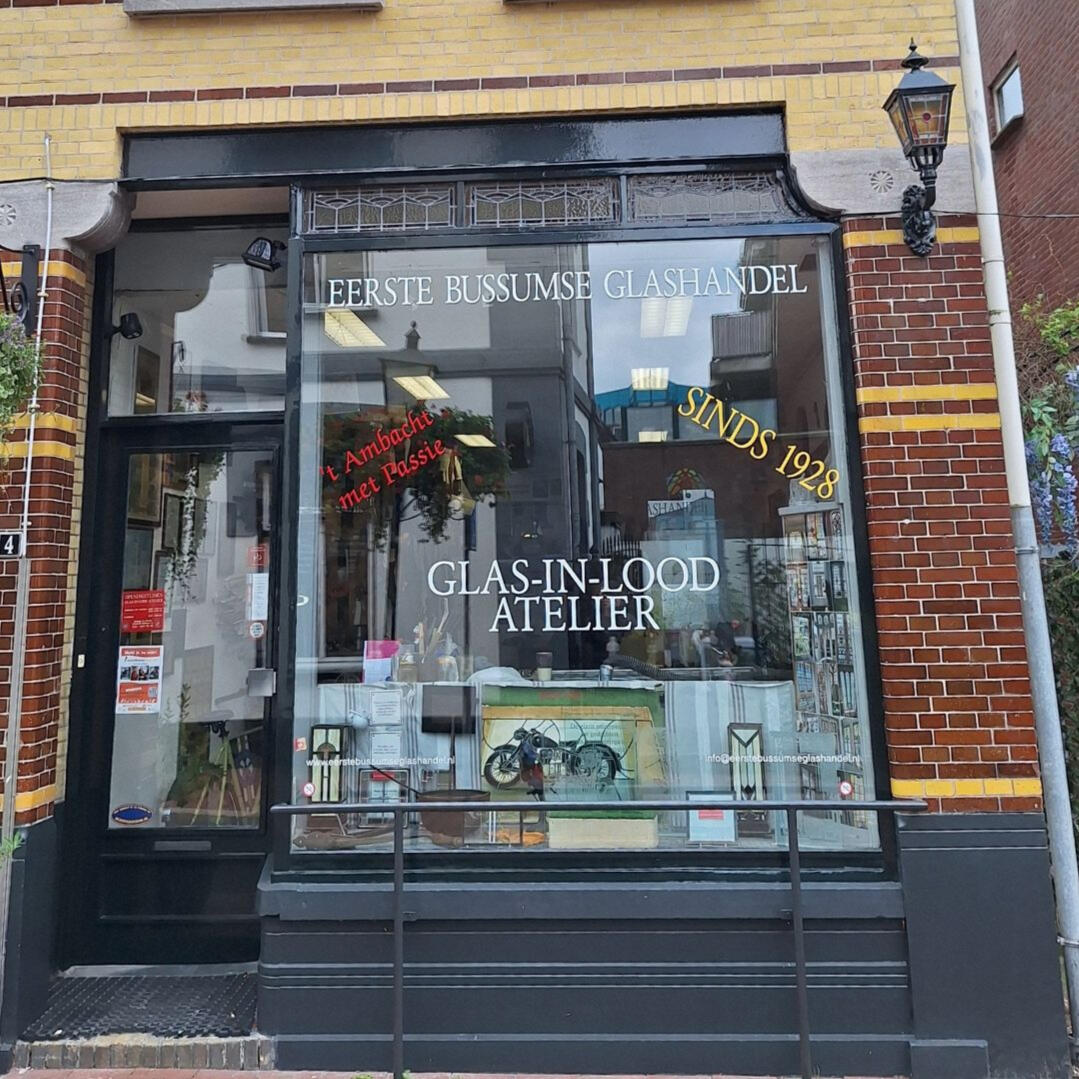
Internship Eerste Bussumse Glashandel

Lineage

Trapped in the wrong era

Too good to waste

Farspeakers

Veil & Reveal

Online home

YouScape
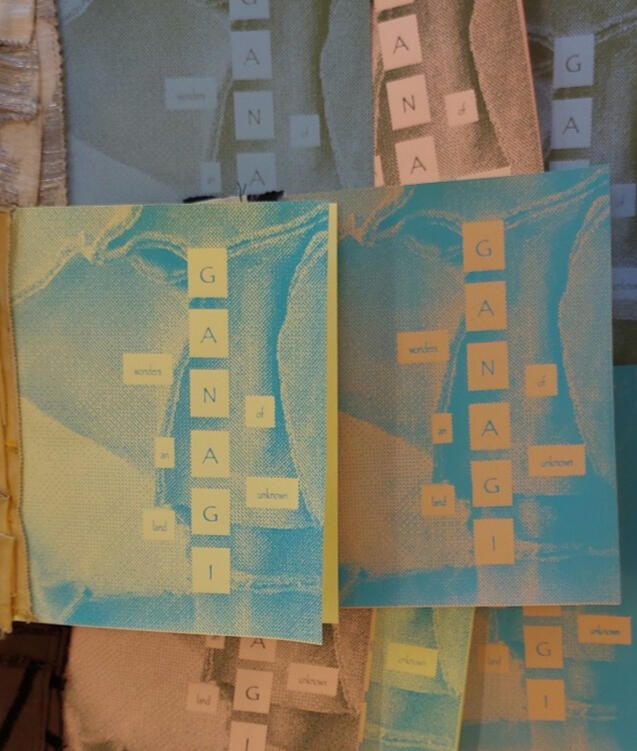
Ganagi: Wonders of an unknown land
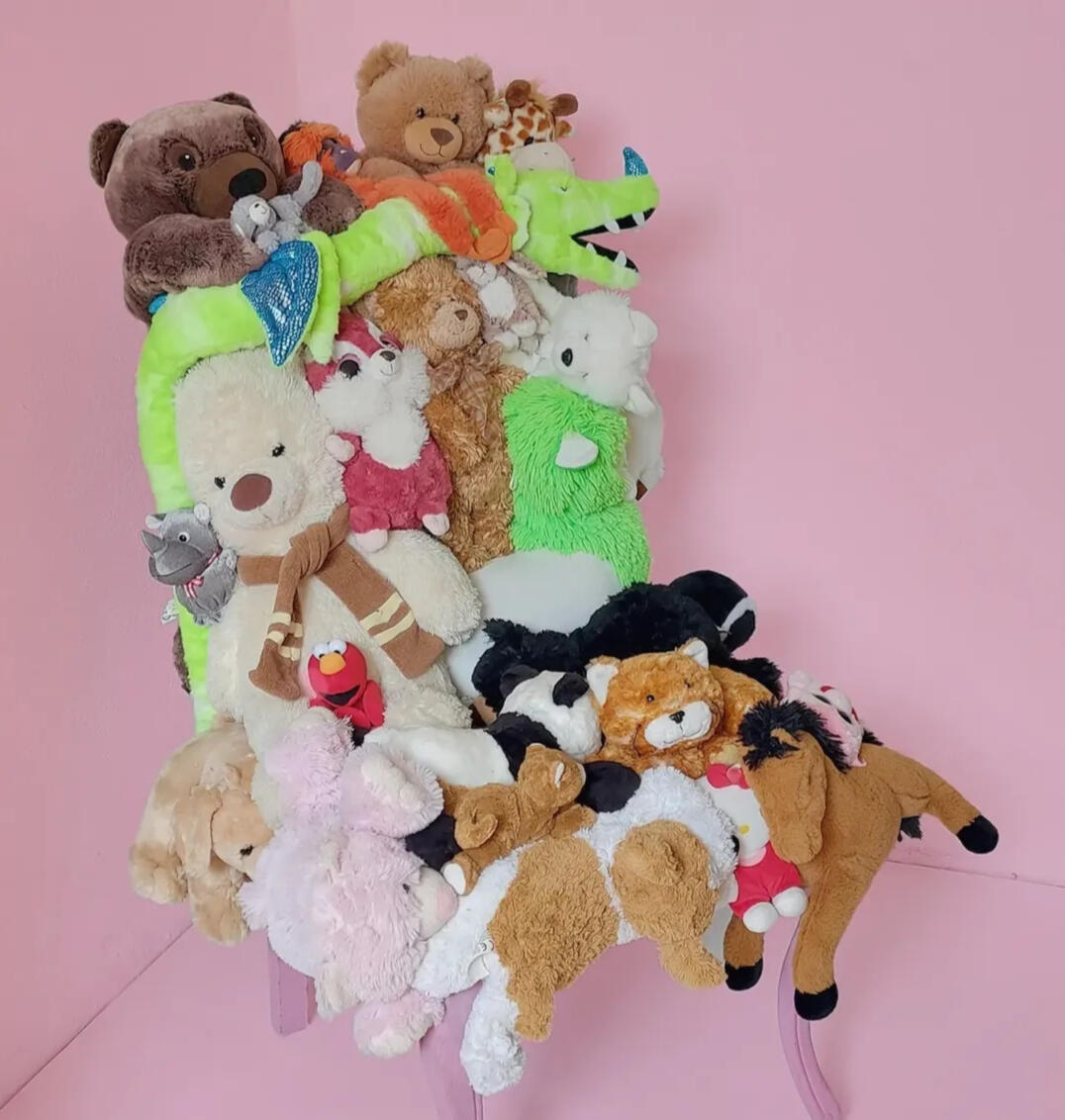
Childhood Dreams

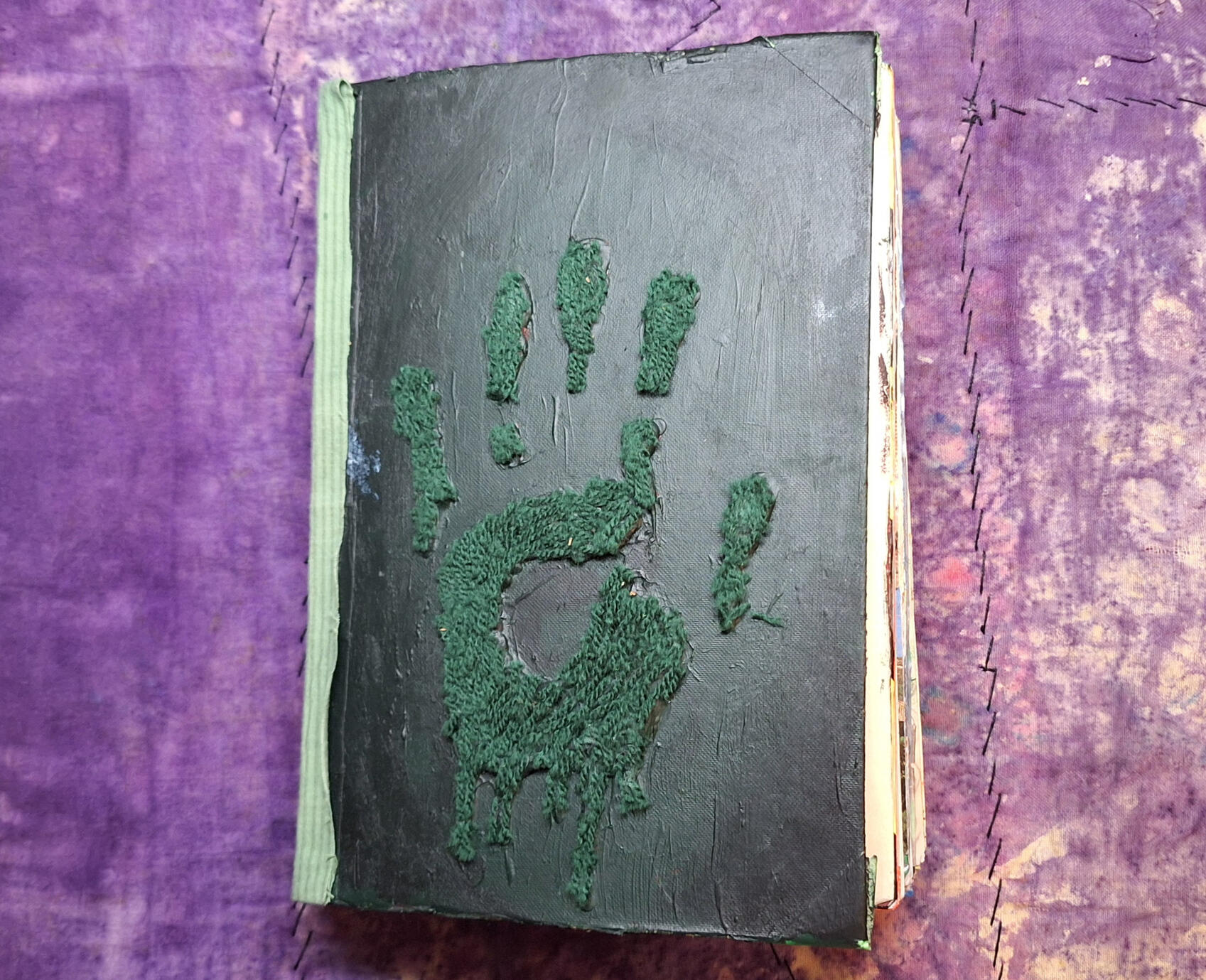
Flipthrough Sketchbook
Meet the artist
I am Rosa, a 23-year-old artist specializing in sculpture, installation, and writing. My work delves into the intricate relationship between humans and the natural world, focusing on themes of transformation, memory, and materiality. Utilizing organic and found objects, fragments imbued with history, I explore how we shape our environment and, in turn, how it shapes us. Balancing between care and destruction, preservation and decay, my pieces invite viewers to reconsider their connection to the living world, challenging the notion of separation and highlighting our deep entanglement within it.
Naked on the catwalk
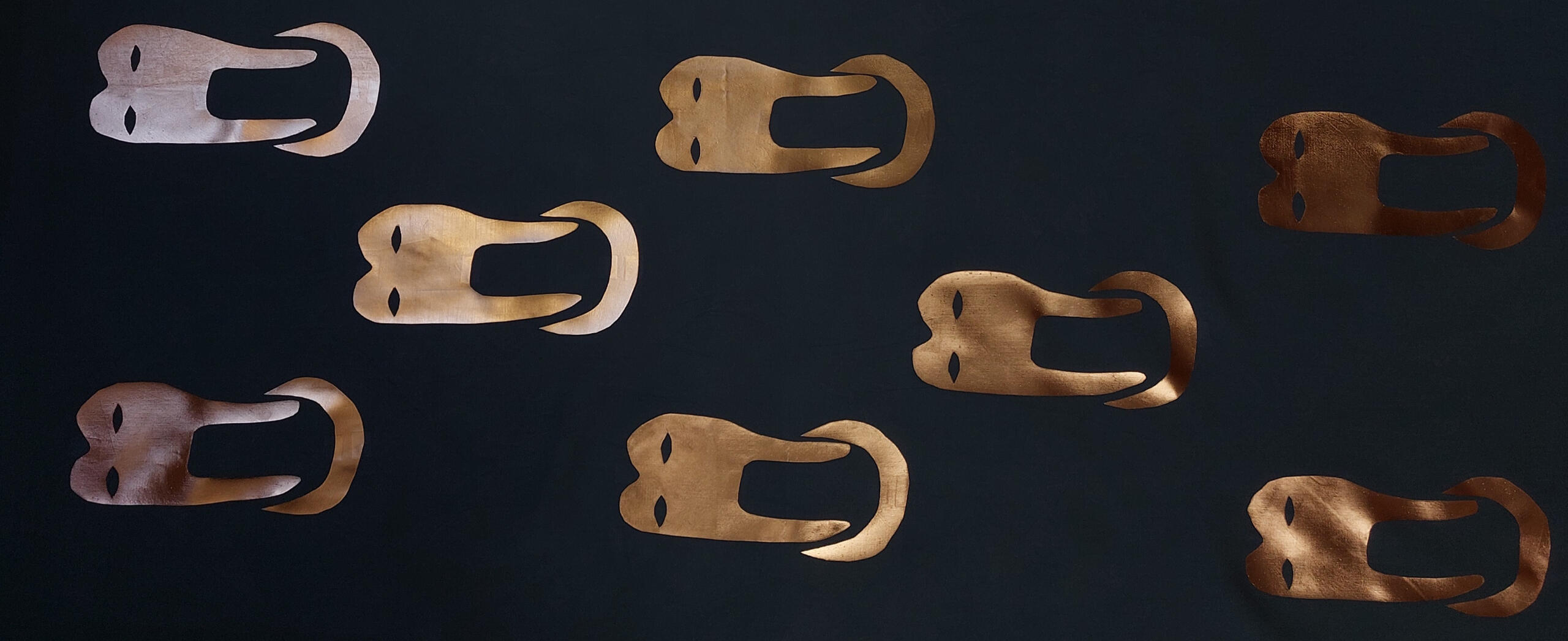
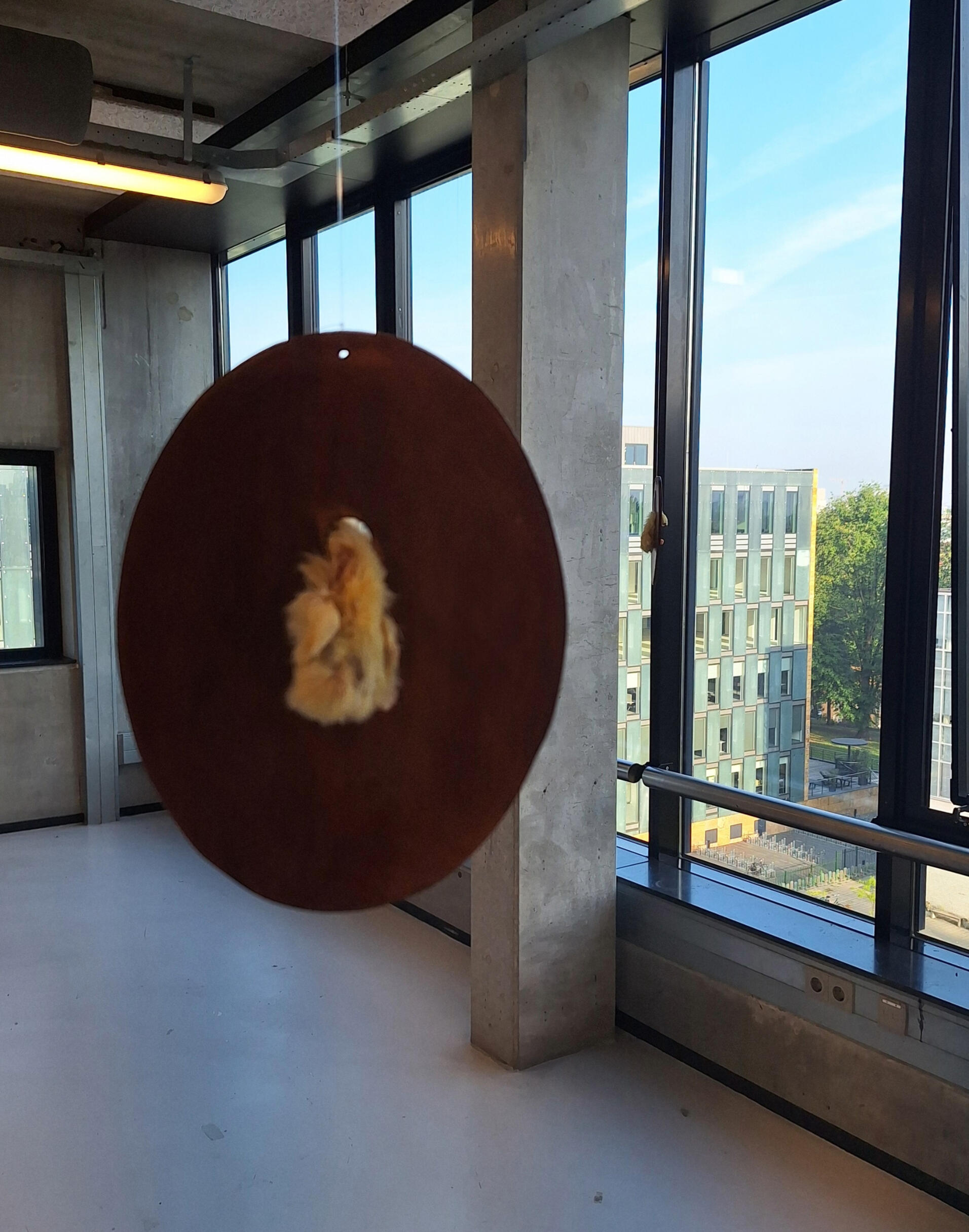
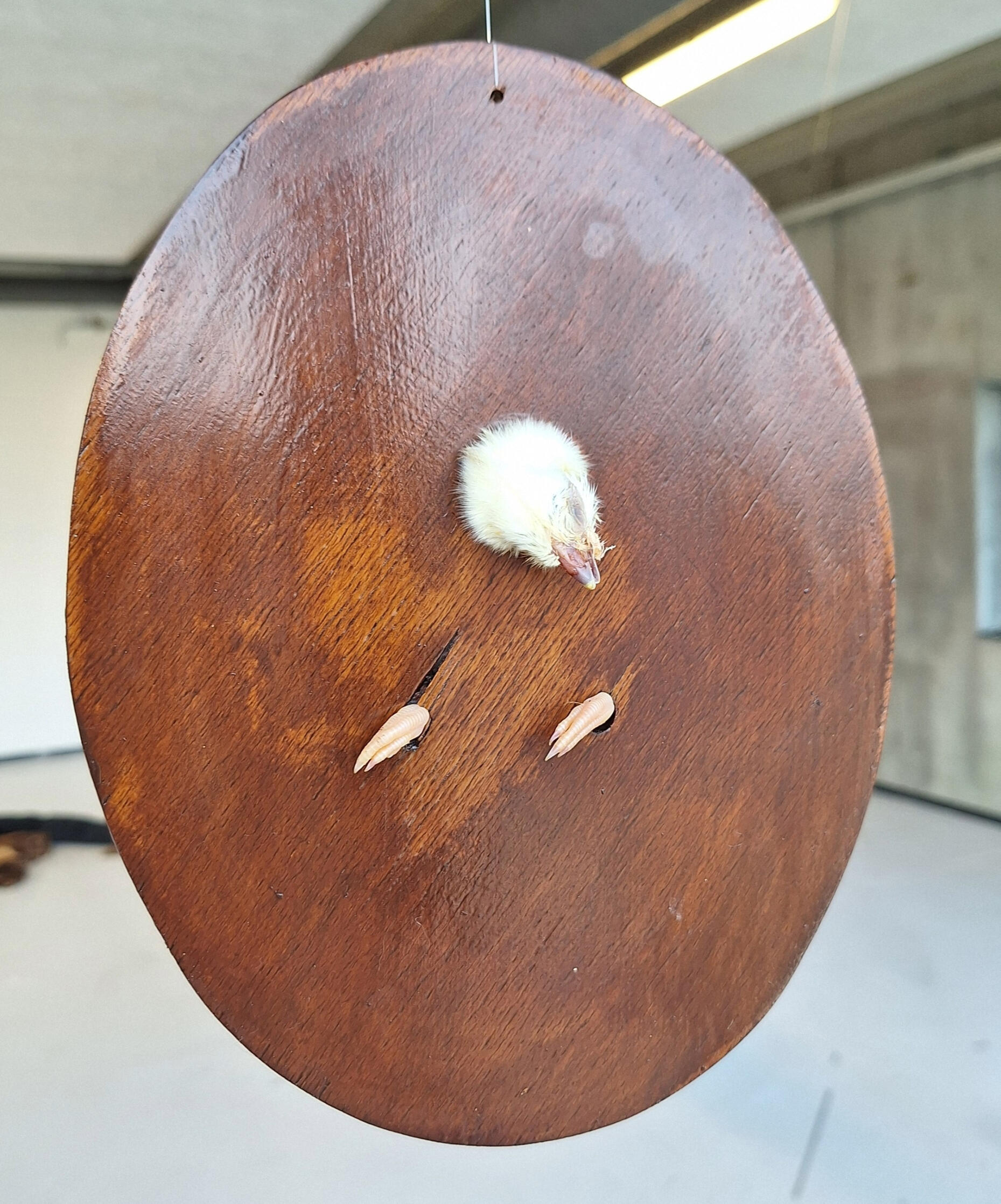
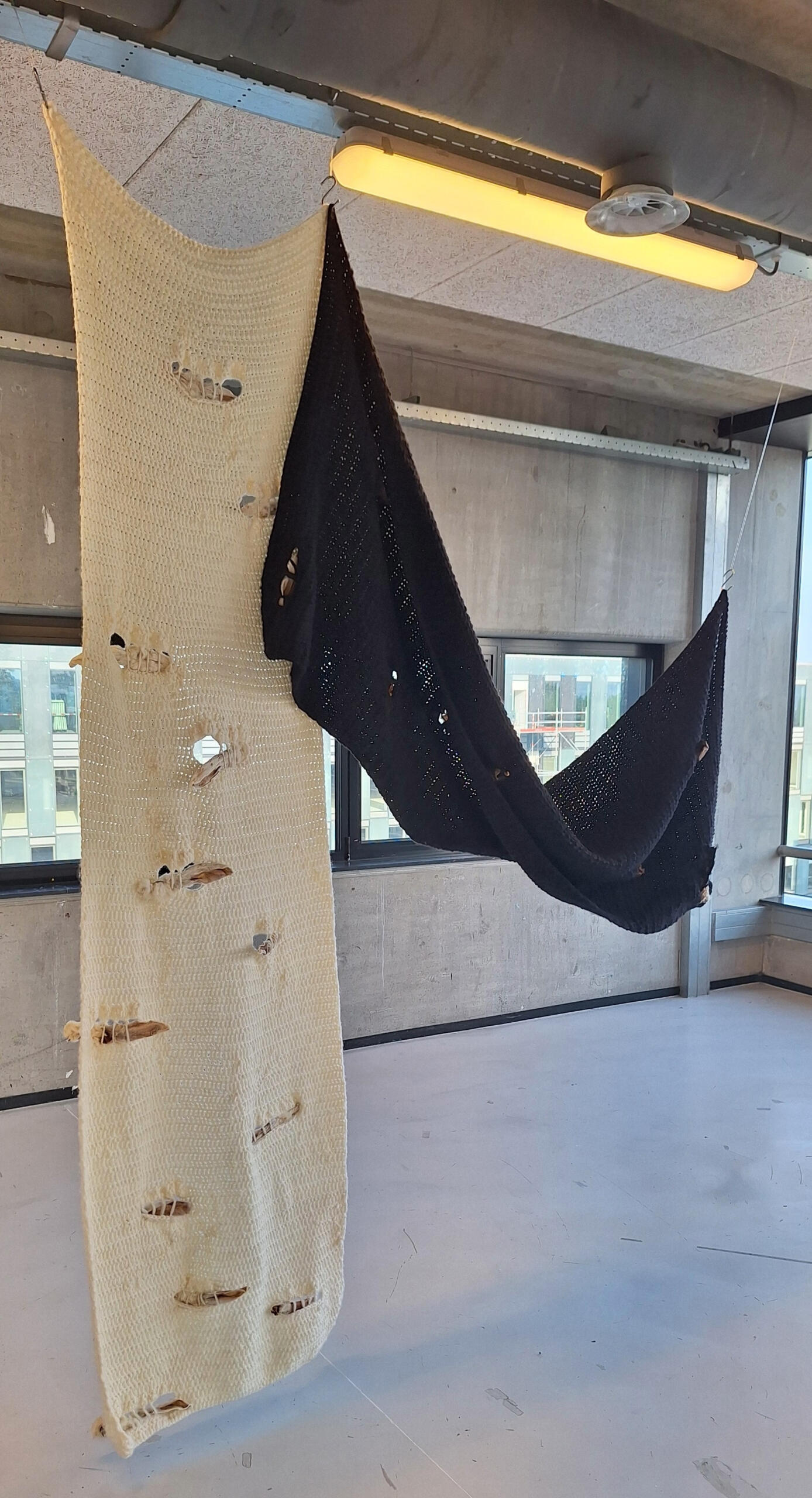
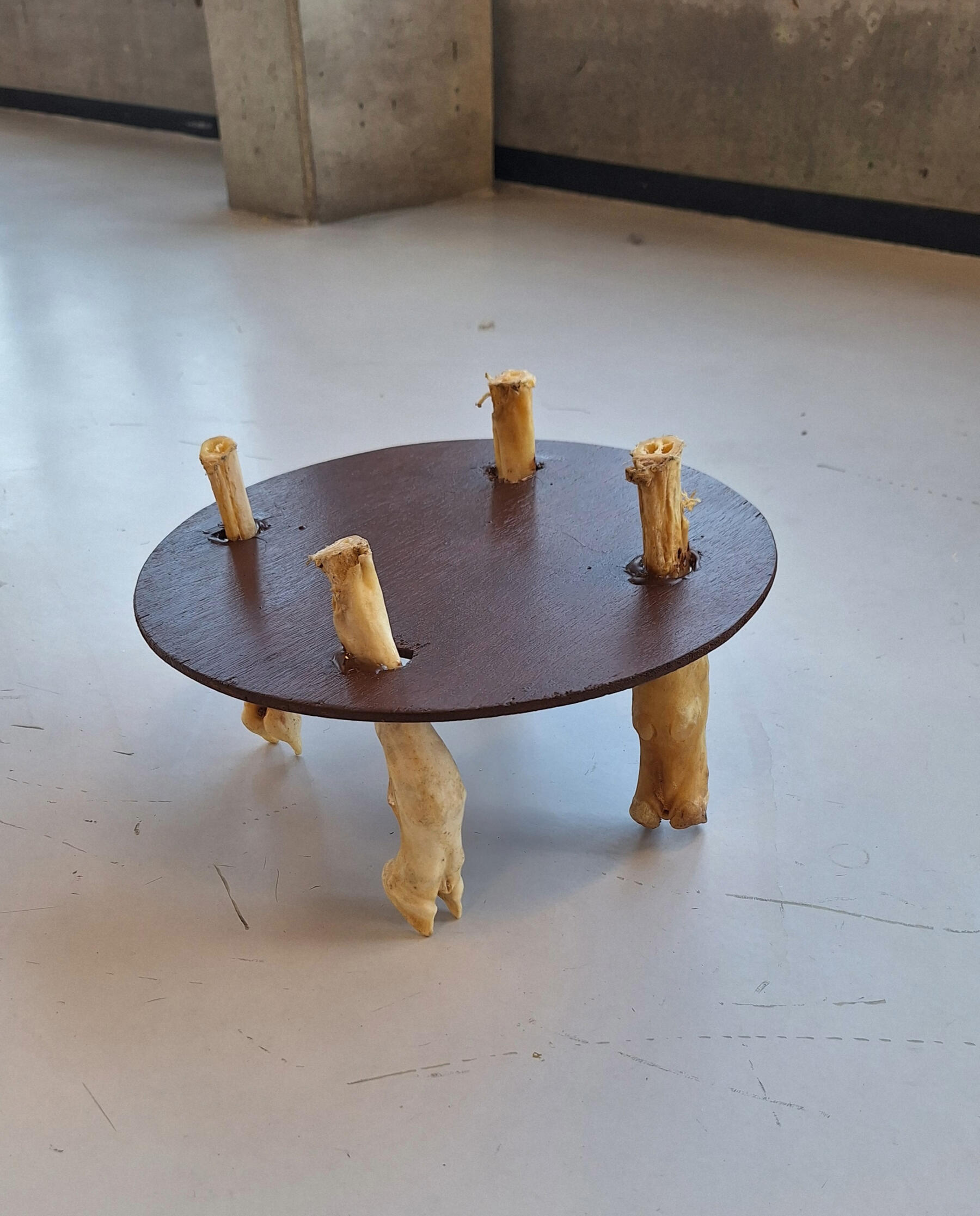
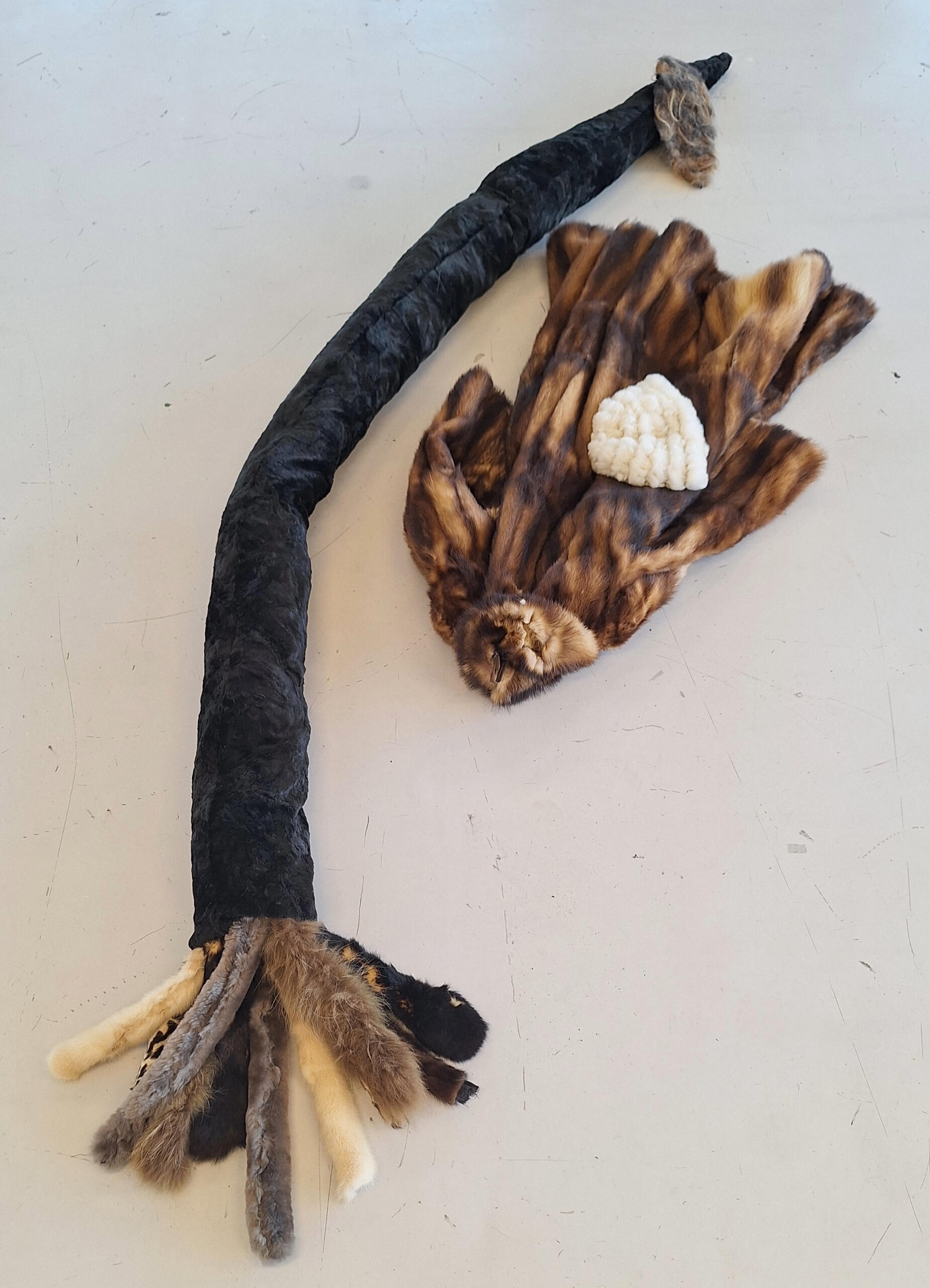
These series of works explore how animal bodies are used in human industry, turned into materials, and made nearly invisible in systems of production. The tapestries, with crocheted rabbit and pig ears, connect to both domestic craft and industrial farming: two spaces where animals are either idealised or reduced to mere commodities. By using sheep's wool, a material associated with comfort and tradition, I weave these meanings into my work to emphasize the uneasy balance between care and consumption, softness and violence. The suspended, one-day-old gassed chicks & lamb legs, set within wooden headboards, bring attention to the harsh efficiency of agricultural systems that measure life by its usefulness. Framed within objects inspired by hunting culture, these tiny bodies become unsettling remains, quiet reminders of the hidden violence within everyday objects.The fur-covered, worm-like form and the human-hair mask further question the line between human and non-human bodies. The hybrid creature, stitched from animal fur and baby cowhide, exists in a strange in-between state, as if reshaped by giving it a new kind of body. Meanwhile, the mask, a symbol of protection, instead forces direct contact with human hair, indicating humans can stop hiding behind the systems of production, to validate their own actions of consumption. By repurposing these organic remains, my work asks how deeply we are tied to the bodies of others: how we wear, consume, and live among the traces of beings reduced to function. In doing so, I hope to reveal the unseen violences of industry and challenge the ethics of human-animal entanglement.
Dimensions
headboards with two chicks: 24 x 19.5 cm
headboard with lamb legs: diameter is 25 cm
crocheted tapestry with ears: 1.90 x 110 meter
the worm: 3 meters long, wrap around the thickest part: 40 cm & thinnest: 12 cm
human hair mask: 26 x 16 cm
Earthbound
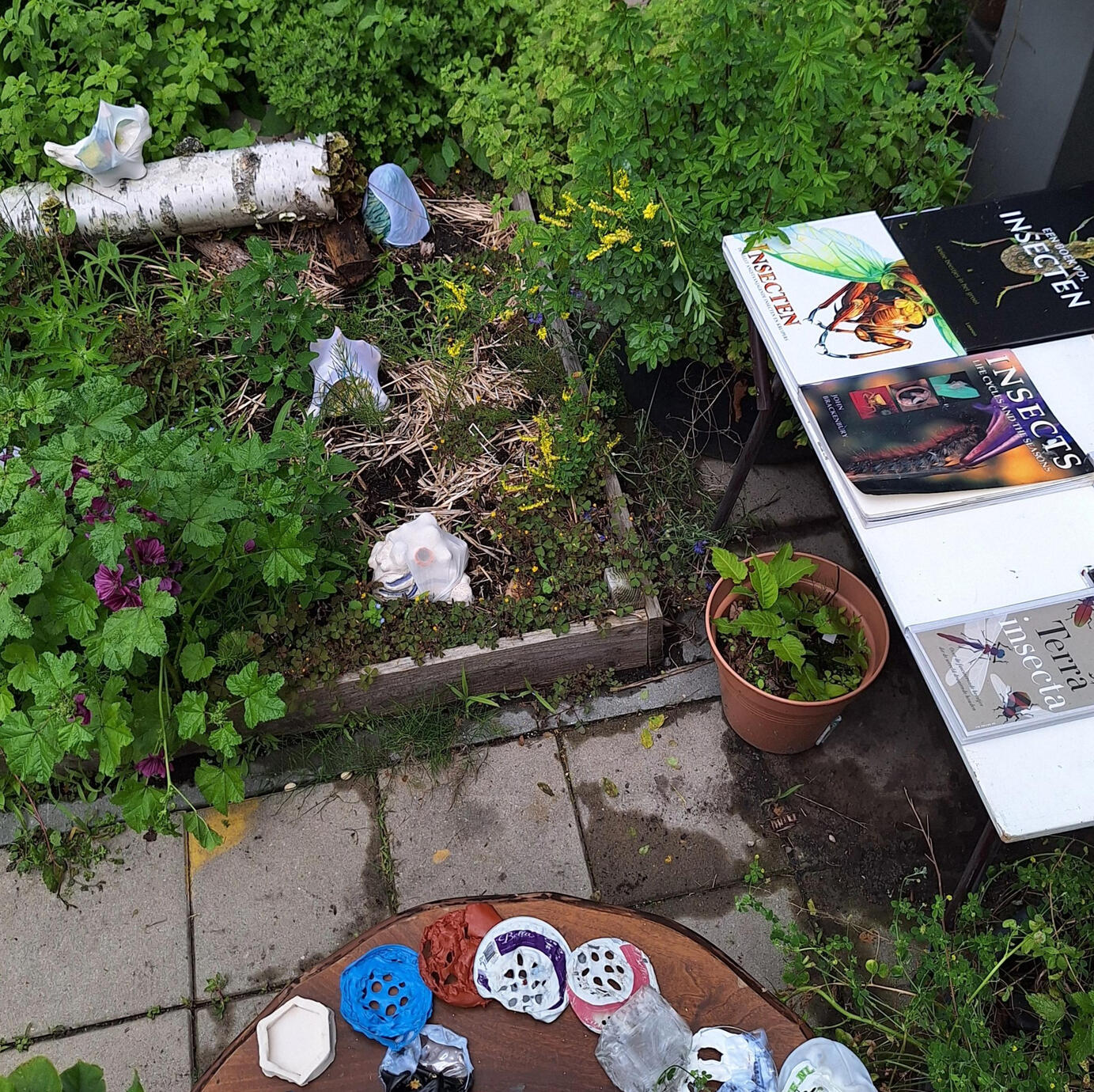
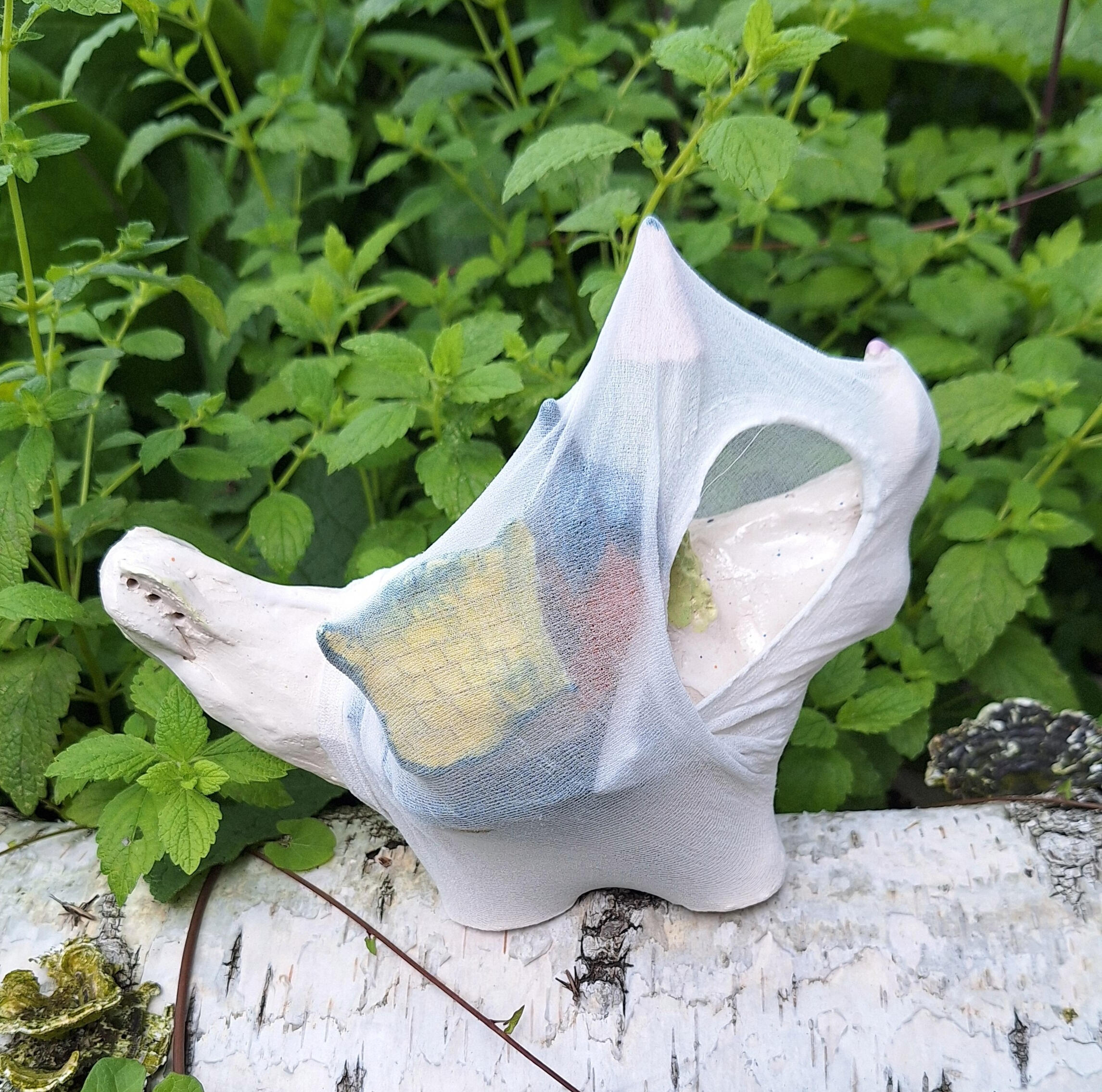
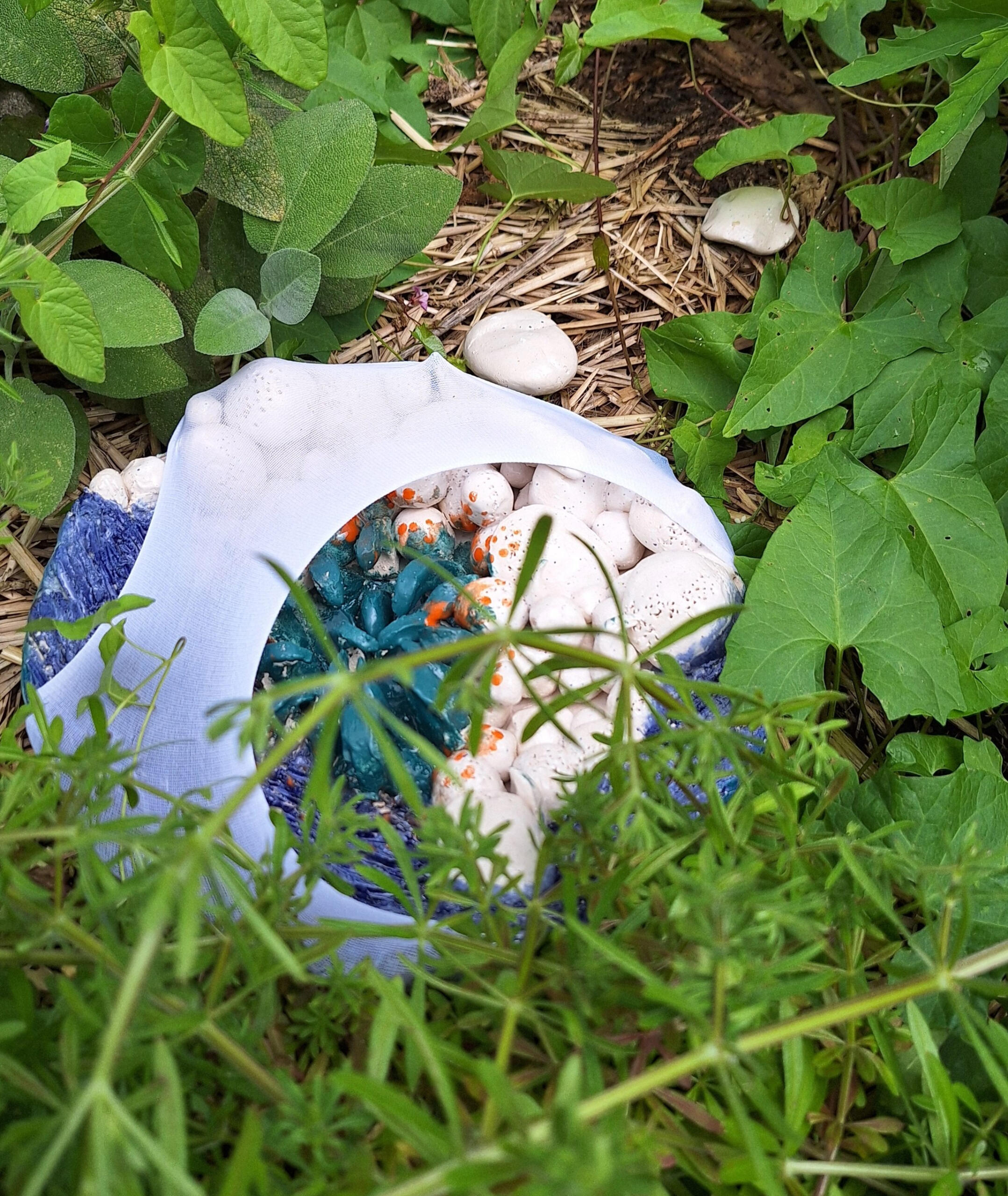
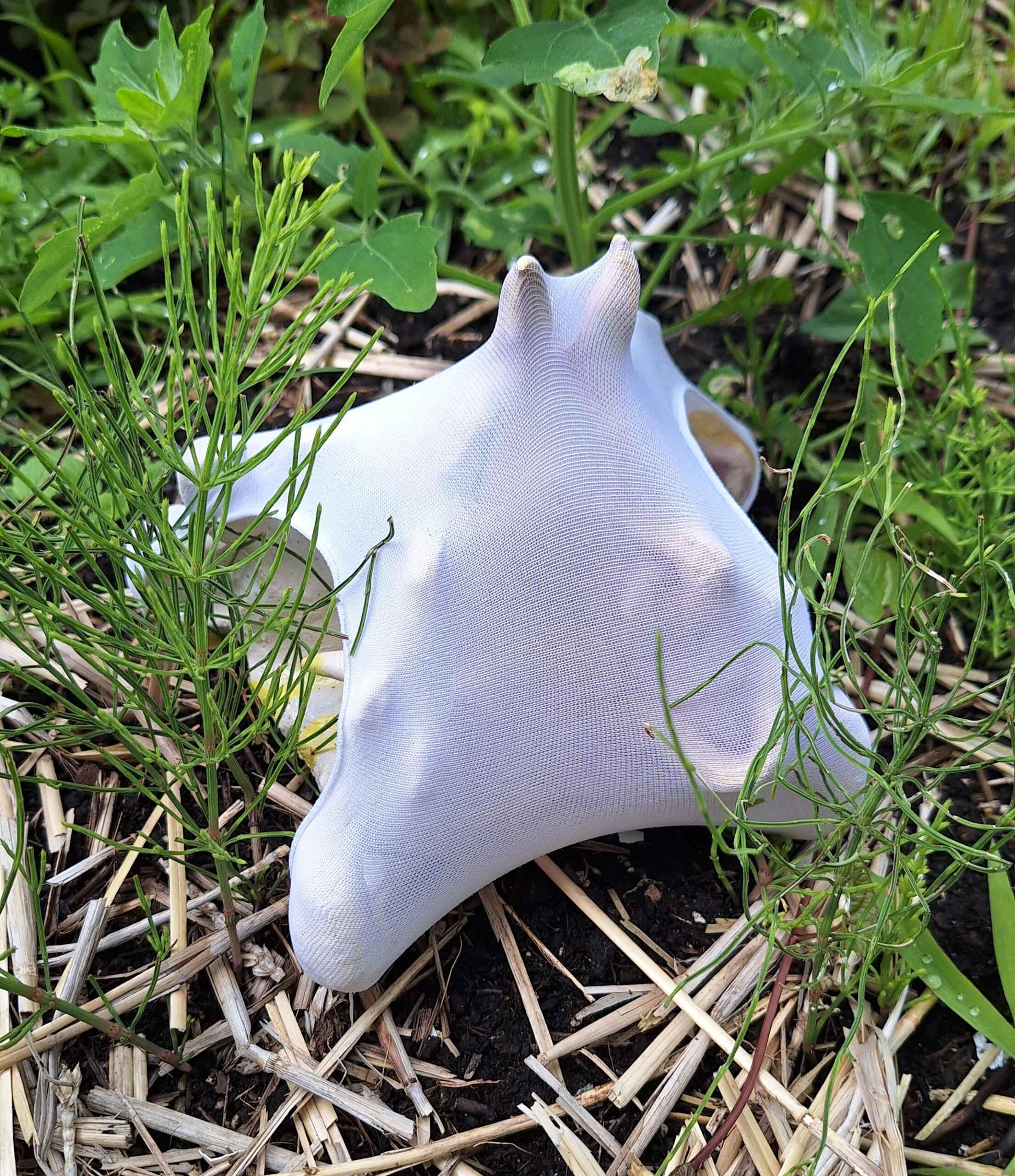
The insect clay sculptures respond to the rapid decline of insect populations in the Anthropocene, driven by pesticide use, deforestation, and the human impulse to control nature through manicured lawns. This loss extends beyond insects, disrupting ecosystems and threatening bird populations that rely on them for food. Inspired by the diverse lifestyles of insects, I shaped each piece with attention to their natural behaviors, particularly their attraction to bright, reflective surfaces. Designed to be placed in gardens, these sculptures slowly break down, merging with the earth and providing shelter, inviting insects and other small creatures to inhabit them. In this way, they serve as both a tribute to what is disappearing and a quiet act of restoration.
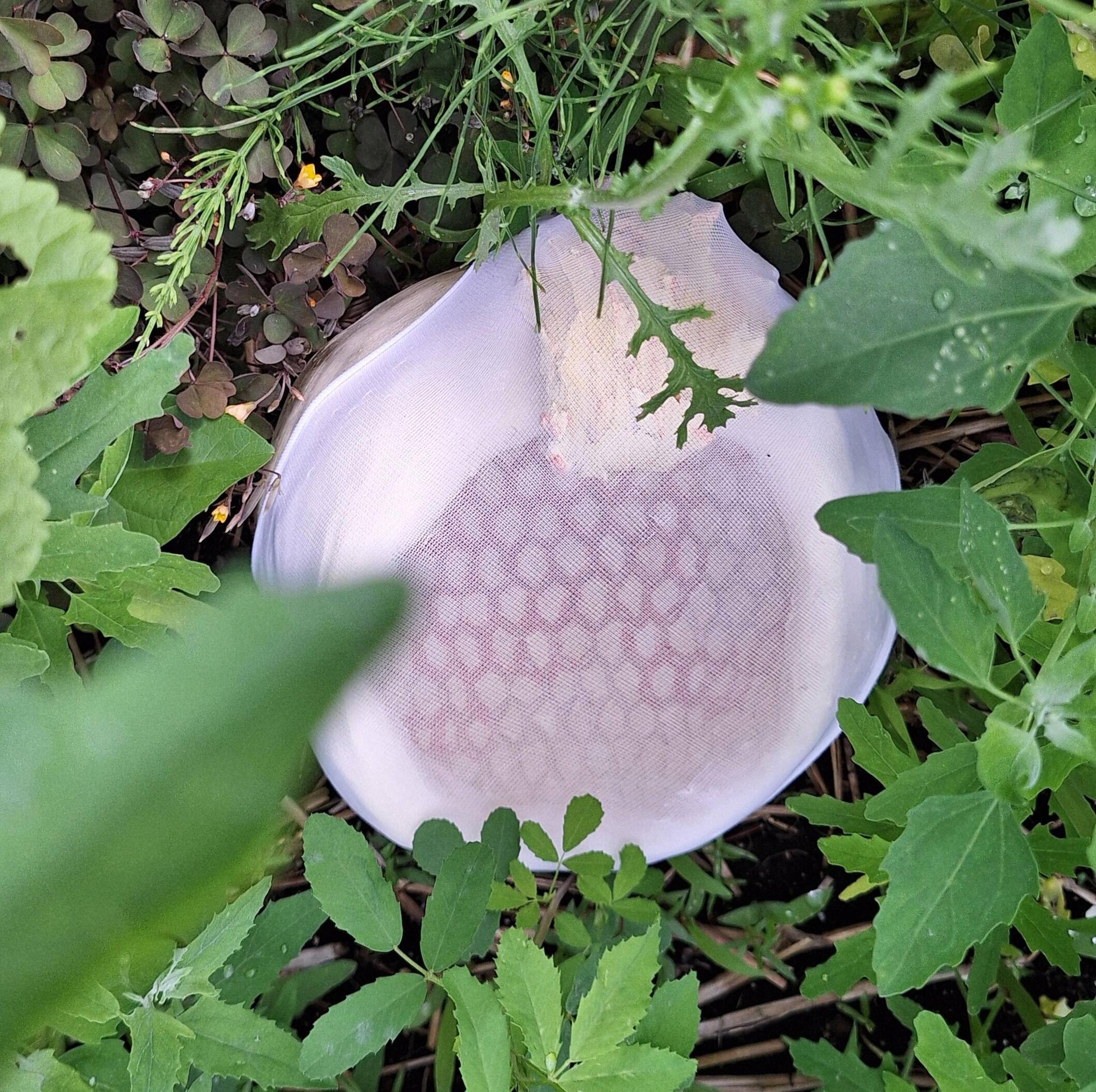
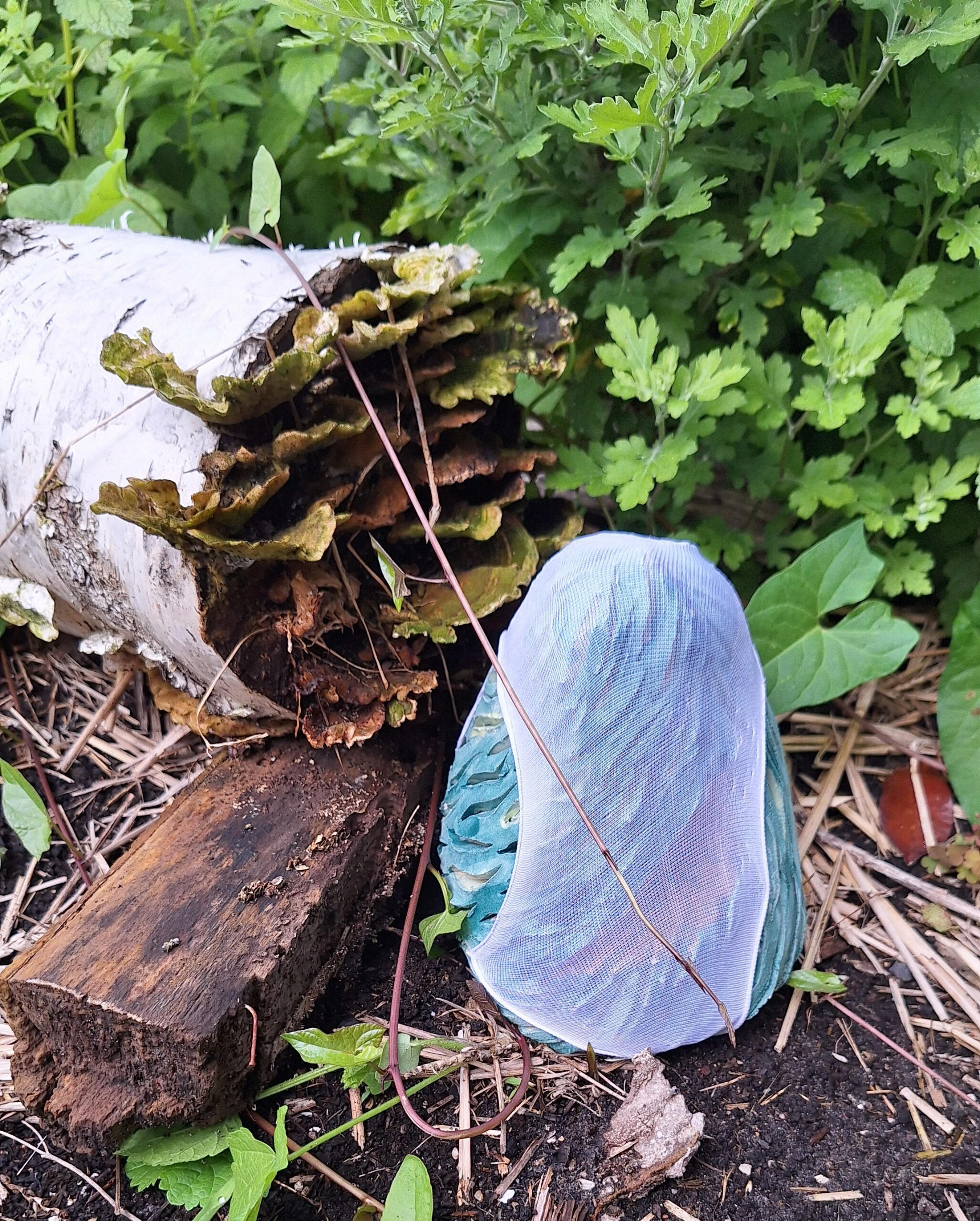
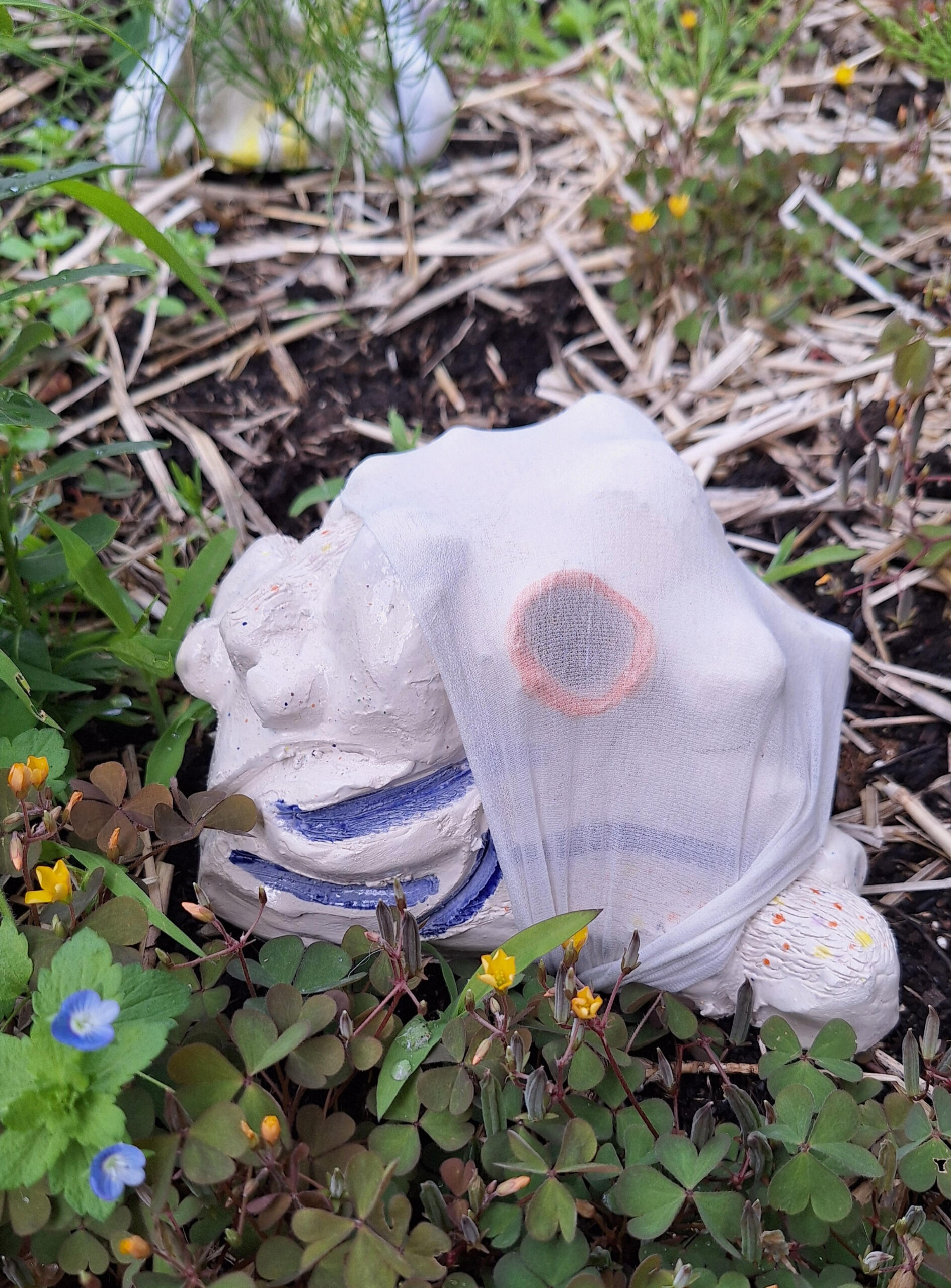
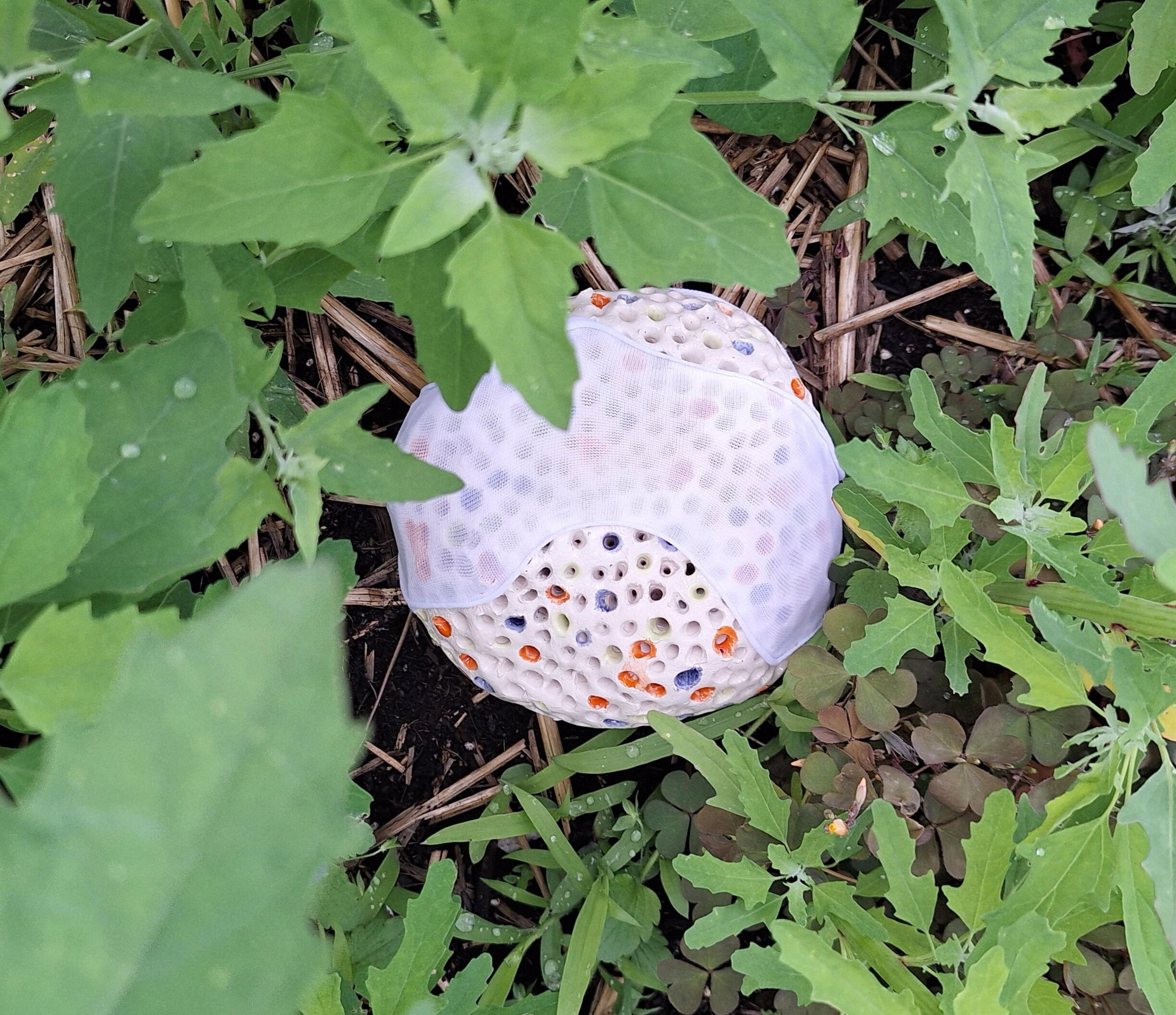
In the video down below you can find a reading of my book that dives deeper into my personal visions of all to do with the surrounding everyday world and how it inspired me in the months while working on these works!
Dimensions
the critters sculptures: all withing the range of 25 x 25 cm.
the book: 13.5 x 11.5 cm
The Garden of Roots
I created this book as a way to reflect on my own process of making and how it extends beyond my artistic practice and into the act of giving. For a long time, creating for the people I love has been a personal language, a way to document not just their interests but also the connections we share. Each piece made for someone carries a history of care, an intimate exchange where objects become markers of relationship and memory. Through this project, I wanted to explore that instinct more intentionally, considering how making can serve as both a personal and relational act. At the same time, this book became a way to embrace my designer side, thinking about form, function, and how ideas can be shaped into something tangible. It is both a reflection and an offering: a collection of moments, inspirations, and the significance of creating for others.
Dimensions
the book: 18 x 20 cm
Querencia
¿Soy la única que lo entiende?
Cuanto más hablo a los demas de tí, cuanto más te desvaneces.
Somos completamente unidos.
Las manos de obreros que trabajan hasta que salen heridos.
Nos escondemos en una jaula que nosotros mismos hemos diseñado.
Luchamos por otros, aunque nos cueste la vida.
¿Cuanto debo tomar o cuanto tomamos unos de otros?
Que mis manos rellenen el vacío en las tuyas y que nos arruinemos de nuevo en nuestro árbol genealógico anudado.Los peces unen a mi familia, aunque los sacaron del mar.
El instinto de sobrevivir corre por nuestras venas.
La lucha entre el calor y el frio.
Am I the only one who understands it?
The more I speak to others about you, the more you fade away.
We are completely bound together.
The hands of workers toil until they are wounded.
We hide in a cage of our own design.
We fight for others, even at the cost of our lives.
How much must I take, or how much do we take from each other?
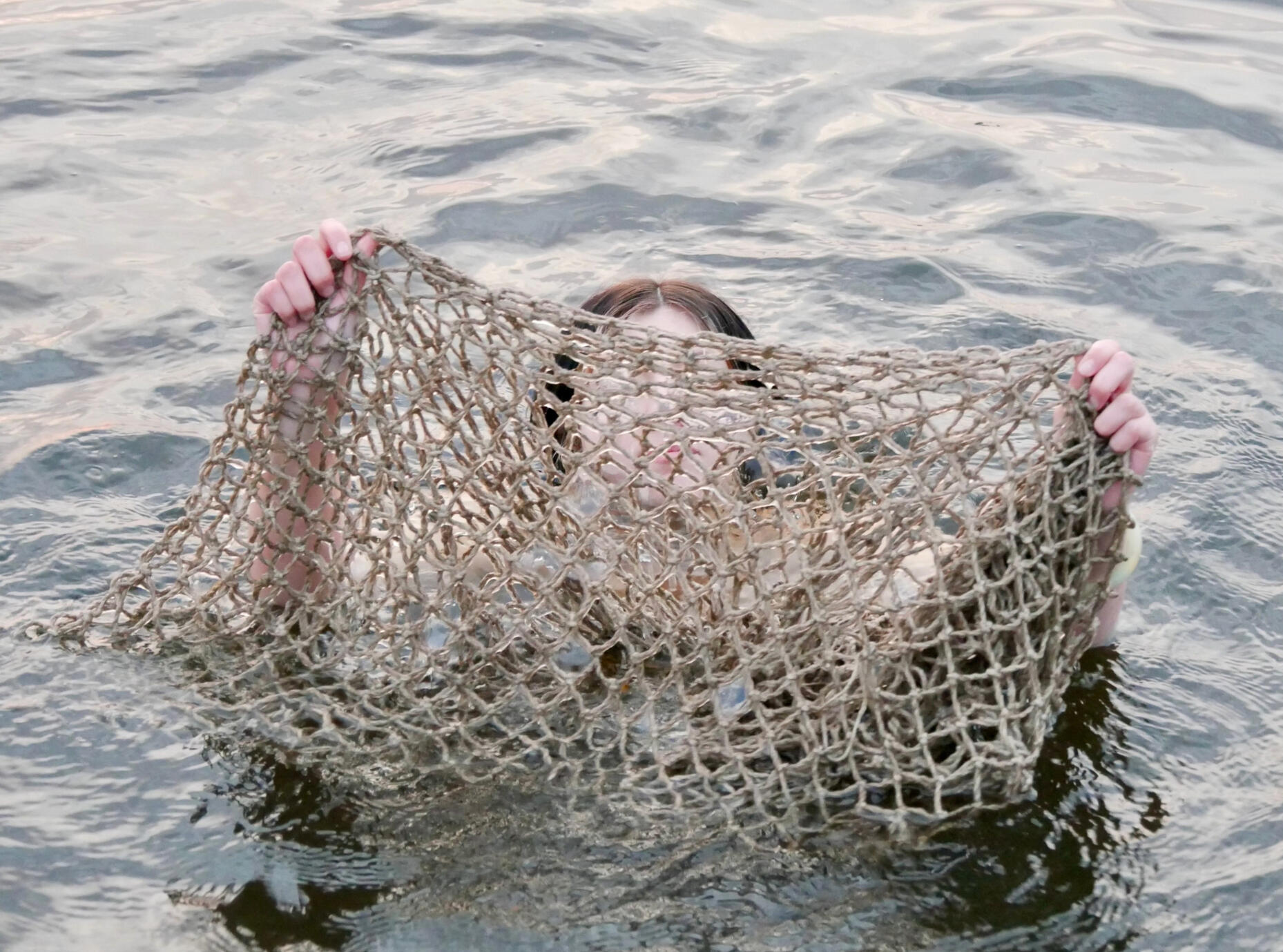
Let my hands fill the emptiness in yours, and let us ruin ourselves once more in our knotted family tree.Fish unite my family, even though they were taken from the sea.
The instinct to survive runs through our veins.
The struggle between heat and cold.
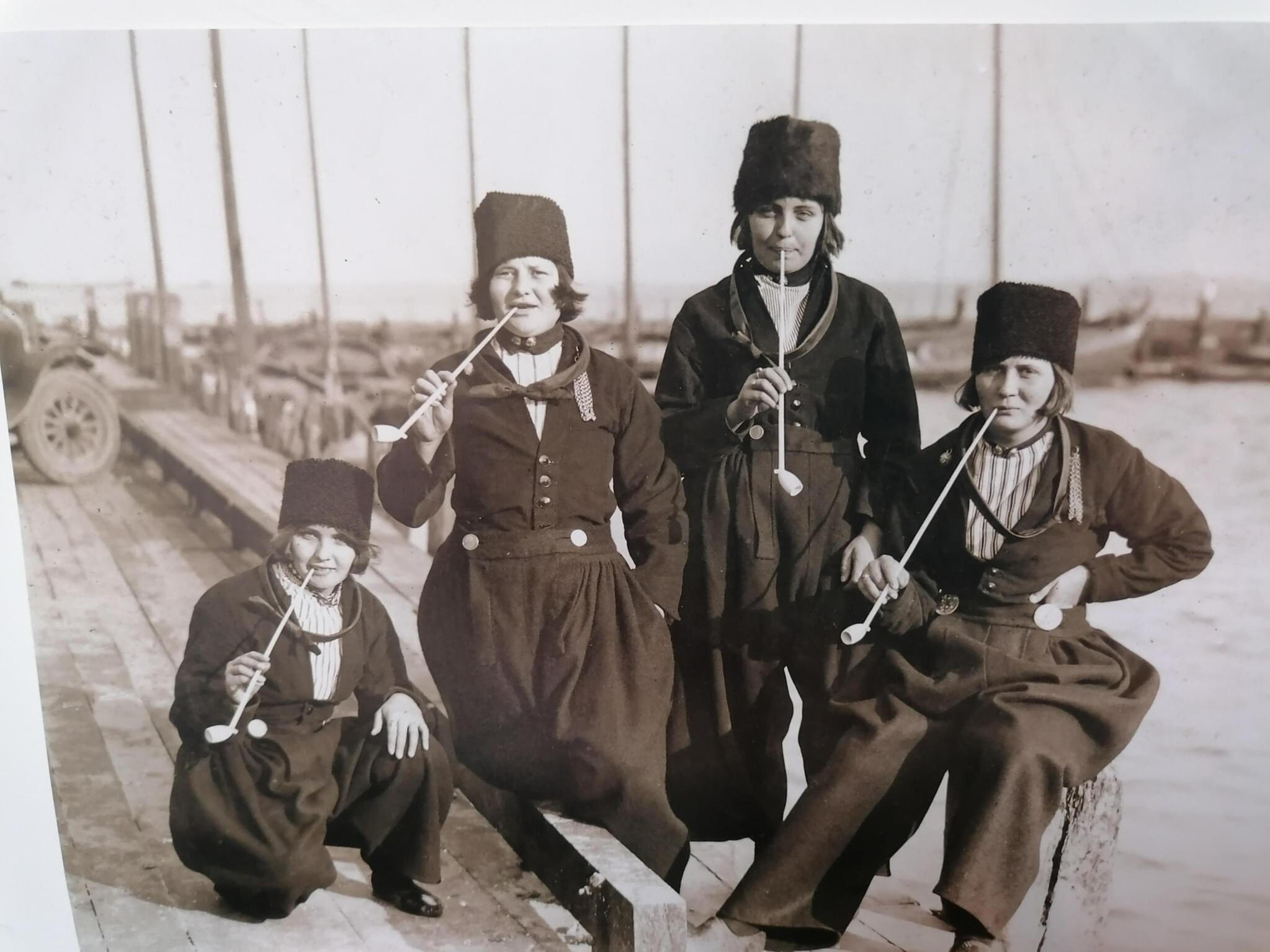
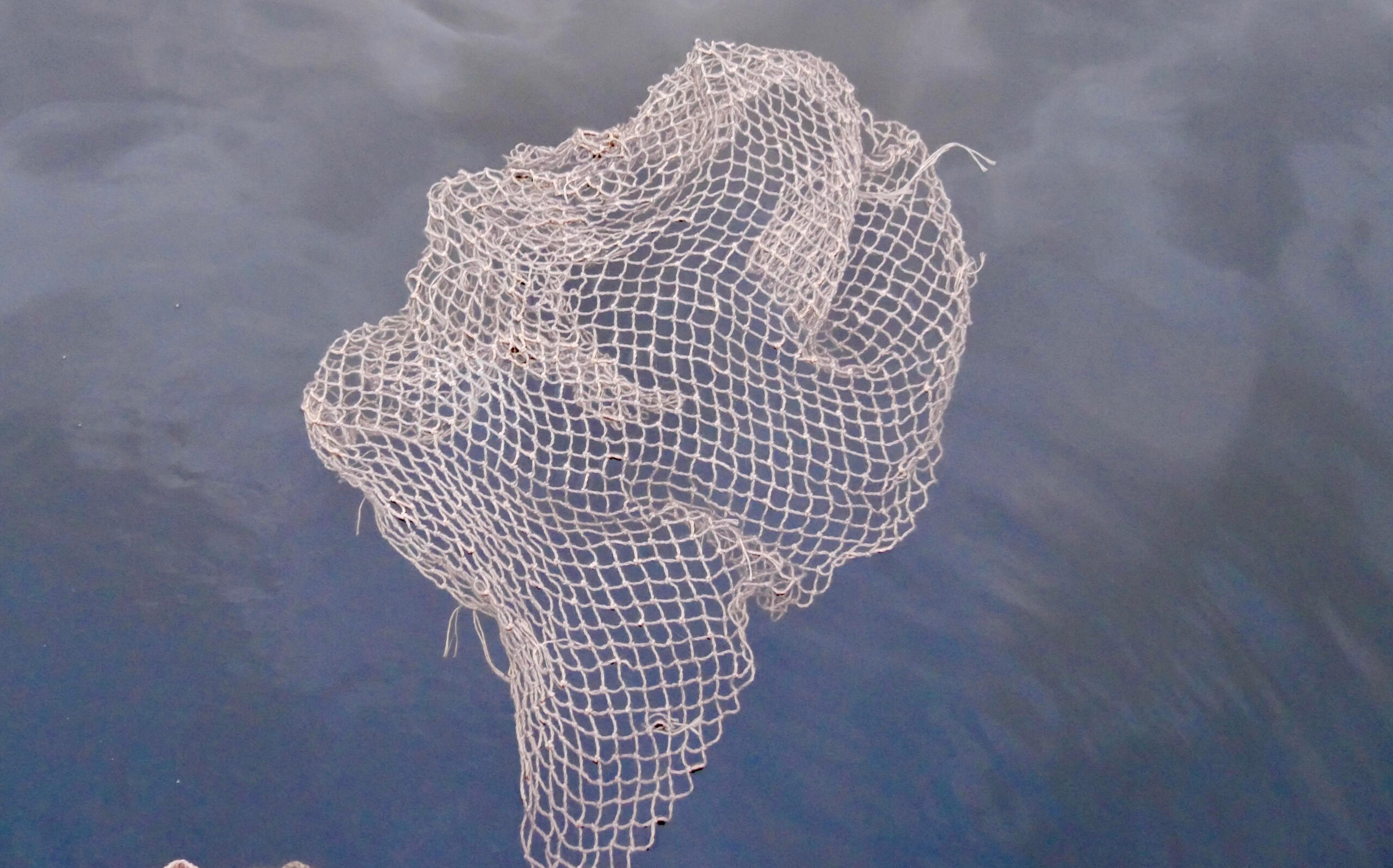
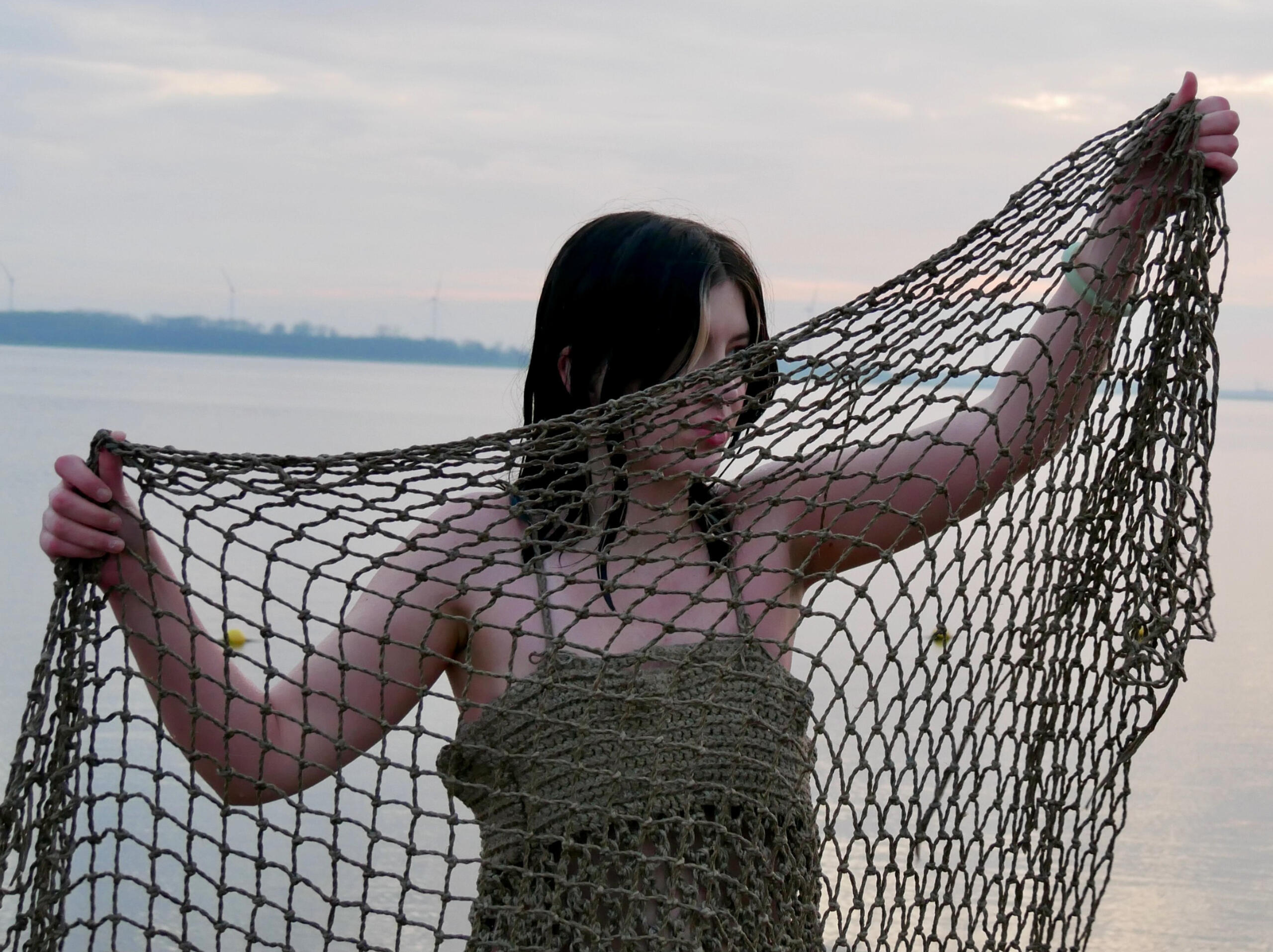
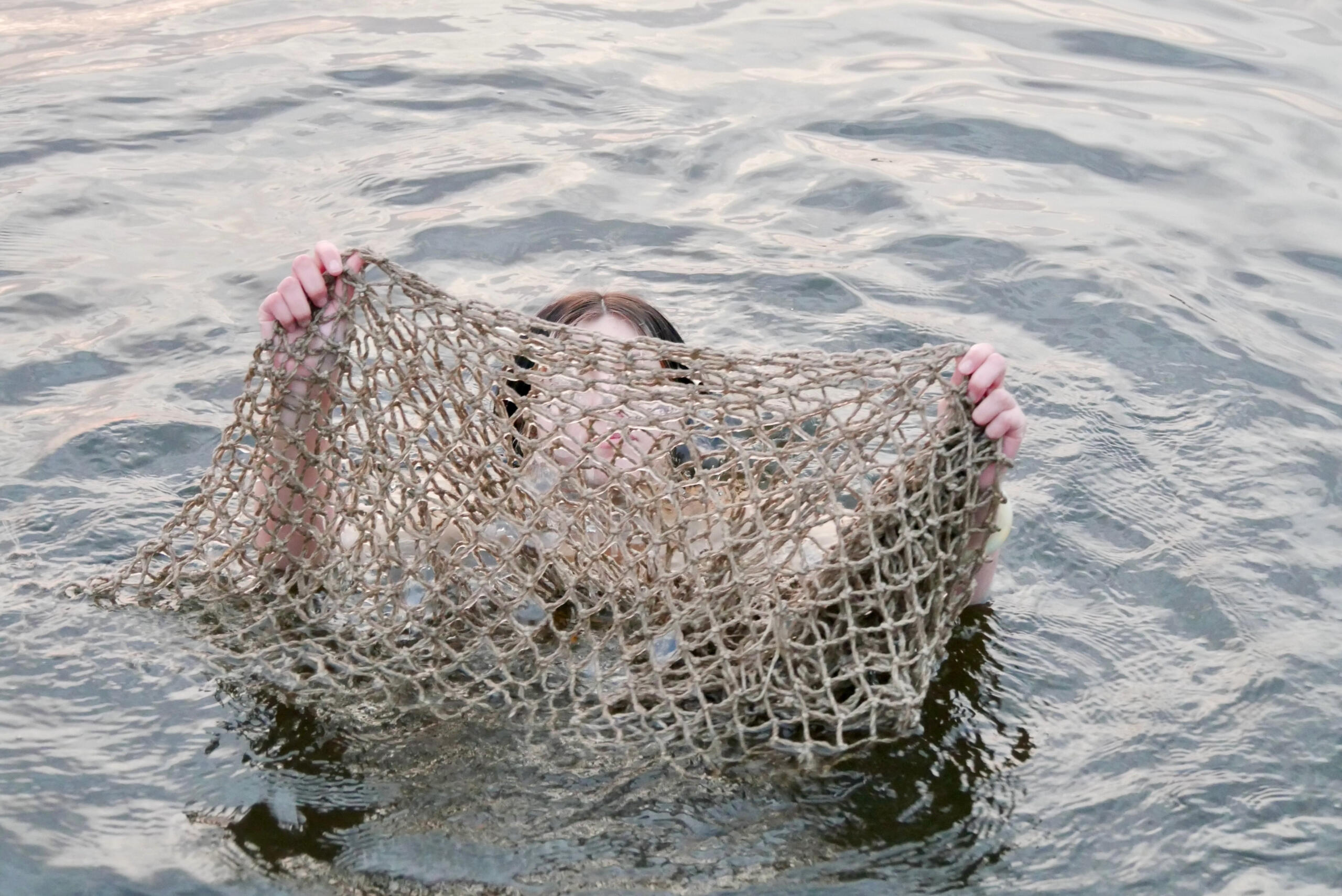
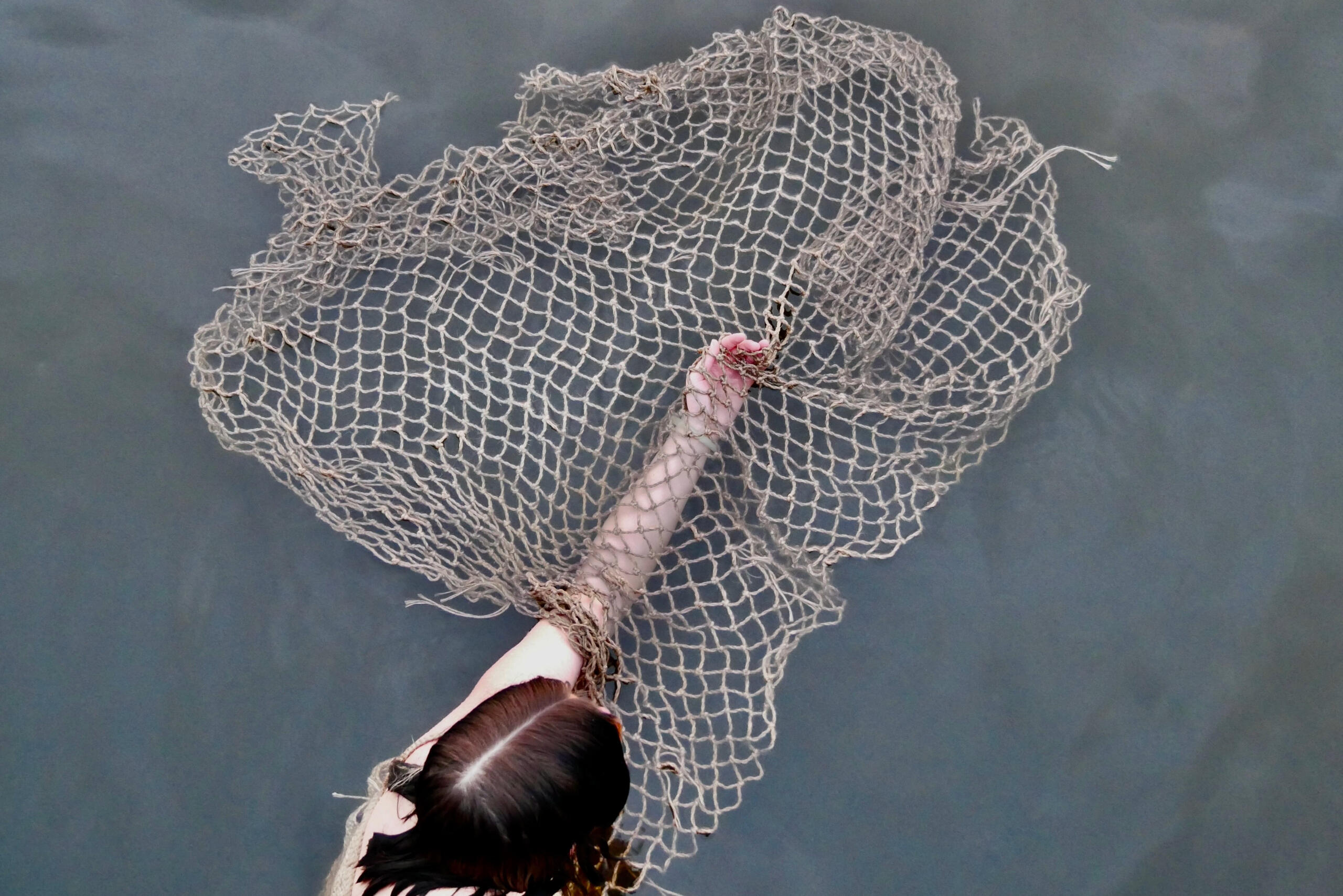
Dimensions
the knotted net: 1.90 x 1.32 meter
the fishers dress: 1.44 x 0.39 meter
The Feathered Watcher
Feel the environment wrap around you, immersing you in its peace. A cocoon, shielding you from everything else. Home, my home, I find it here. It stares me in the eye, reaching out its branches. It sends me its goodbyes and asks to be found again in another lifetime.
"May we meet again, child," the creature crackles as it rises, its hollow eyes leaving mine. With each step, its feathery coat drags along the ground, dissolving into the wind.
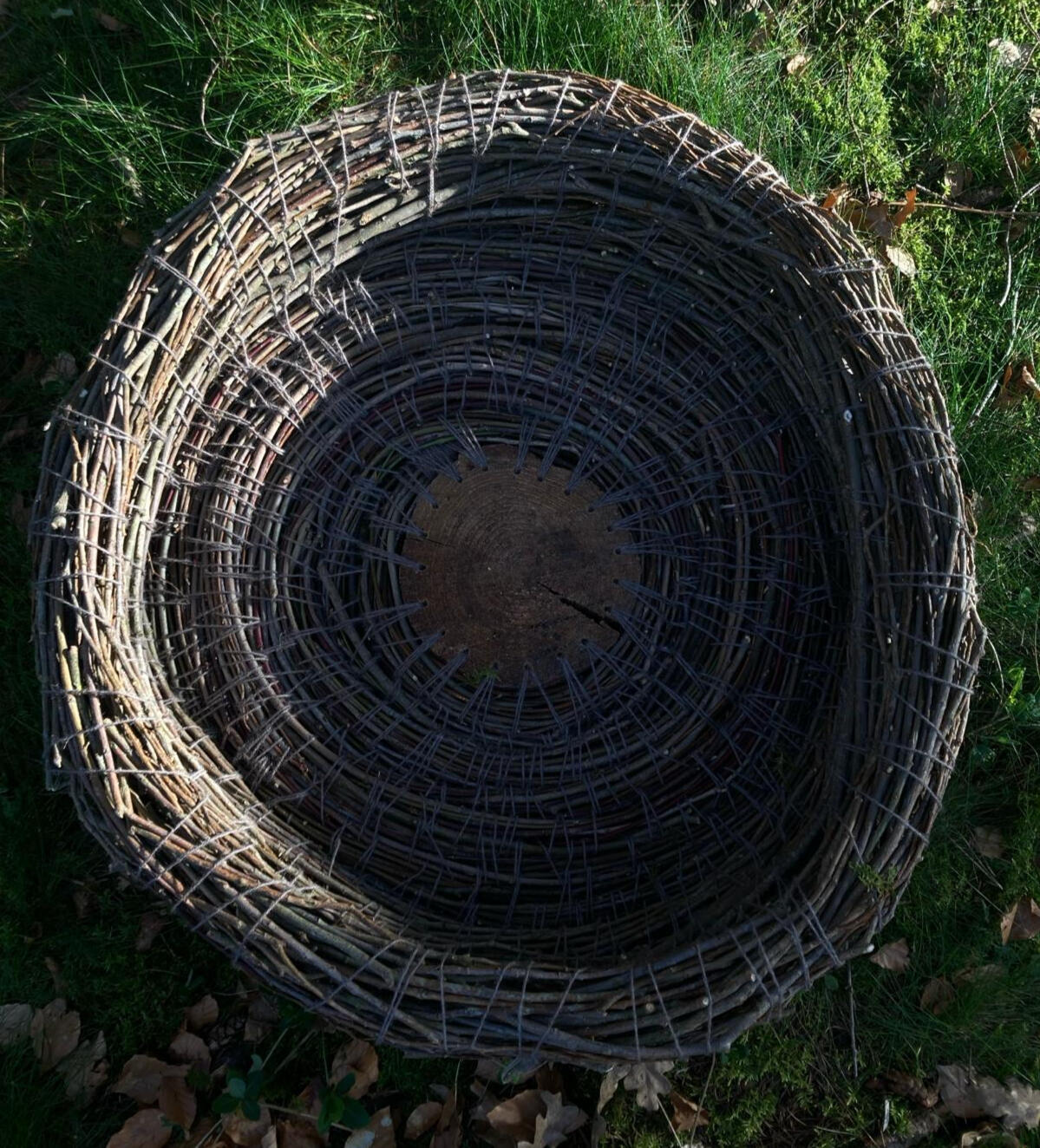
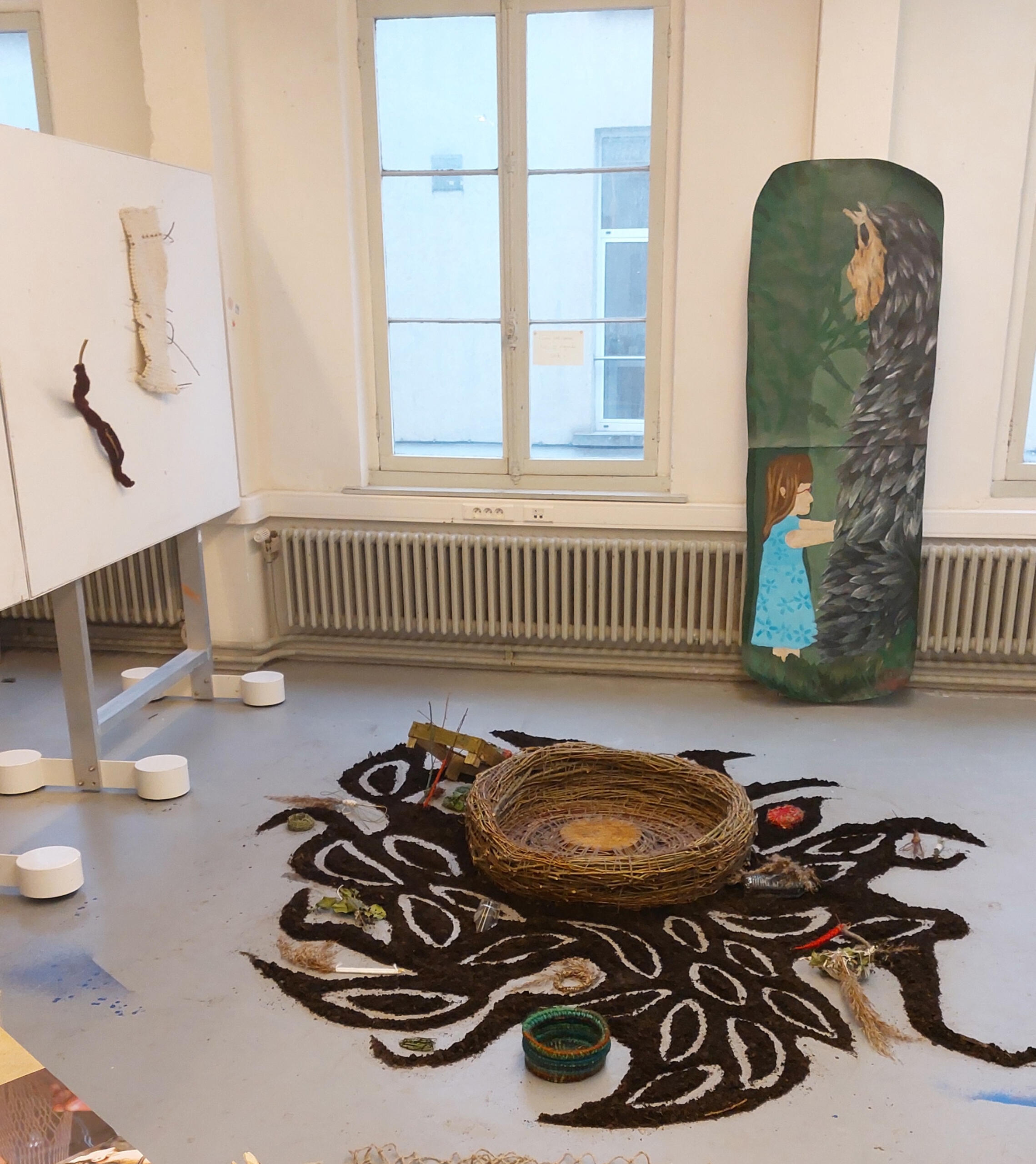
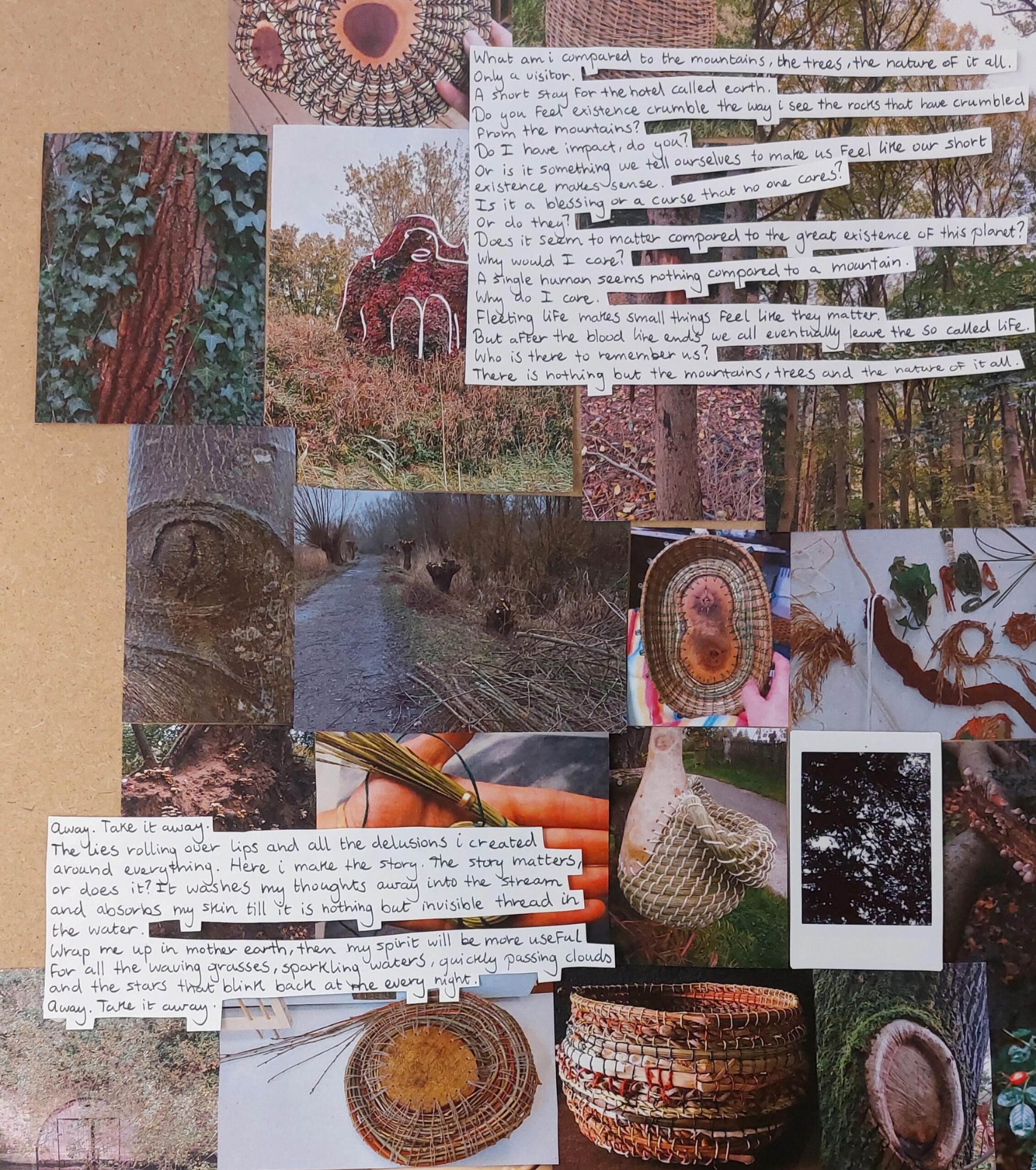
This basketry work serves as a portal between two places: the Bikbergen woods in Huizen and the Stedelijk Natuurreservaat Bourgoyen-Ossemeersen in Gent, Belgium. The story follows me as a child, encountering the spirits of the forest and meeting them again in another lifetime; no longer with visible bodies, but lingering within the woven sticks, reflecting our shared memories in the water. Through this research, I explored the differences between privately owned woodland and protected nature reserves, questioning how much we can alter or take from a landscape and whether it still matters to care for nature if the land has already been shaped and changed by our ancestors. Using the technique of pine needling on a much larger scale, I created a human-sized basket woven from sticks gathered in the reserve, embodying the connection between past and present, memory and material, spirit and earth.
While scrolling here is the soundscape 'OurScape' I recorded while strolling about the nature reserve collecting sticks:
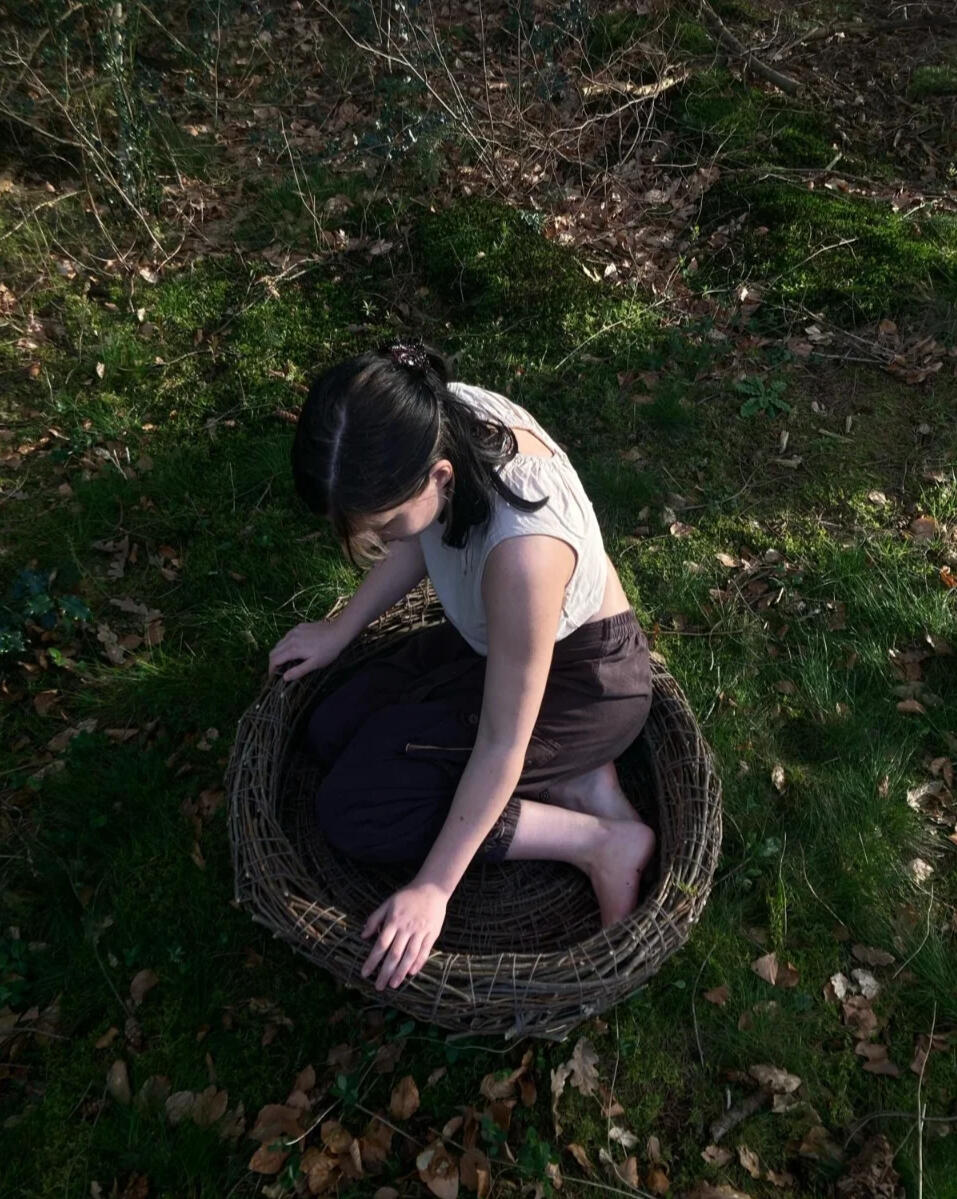
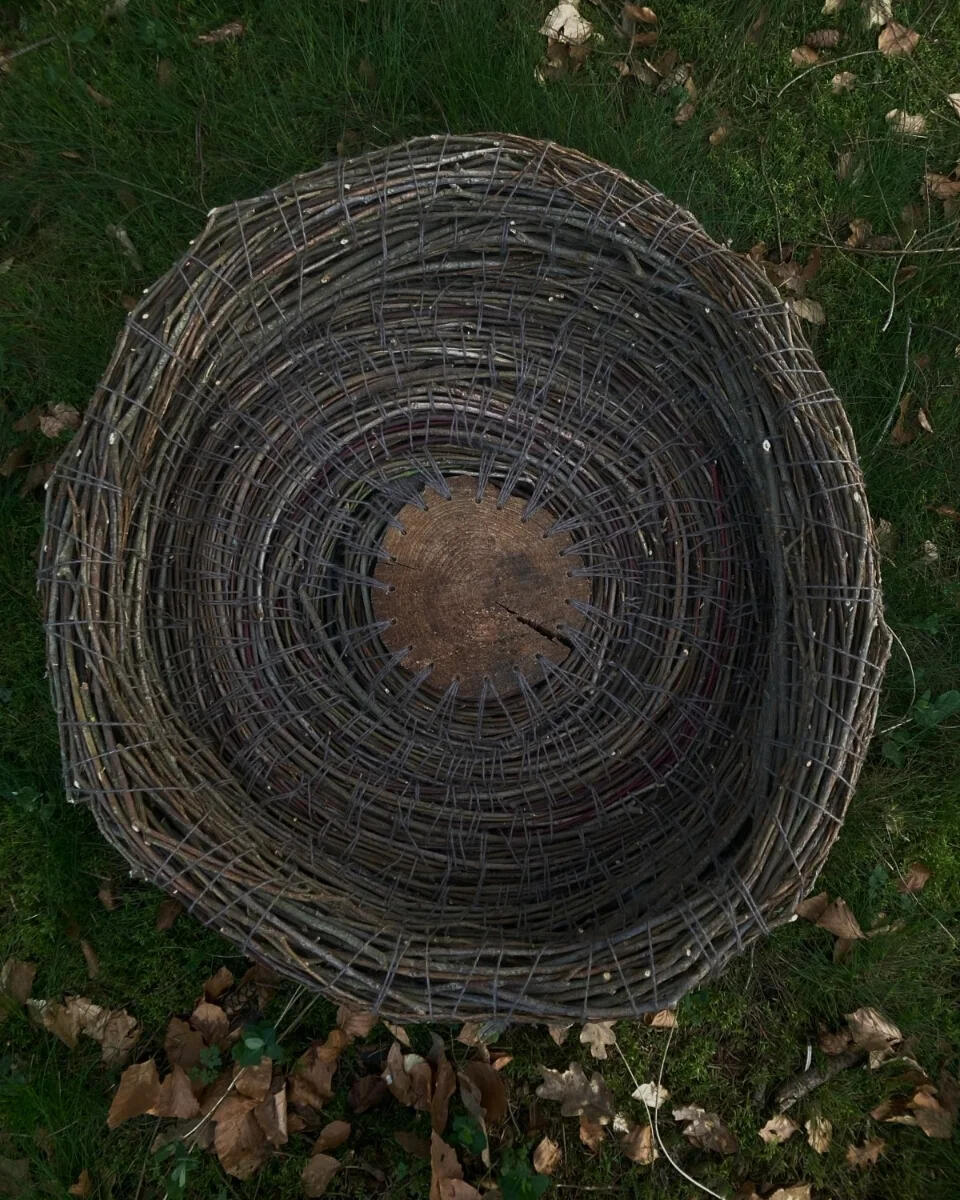
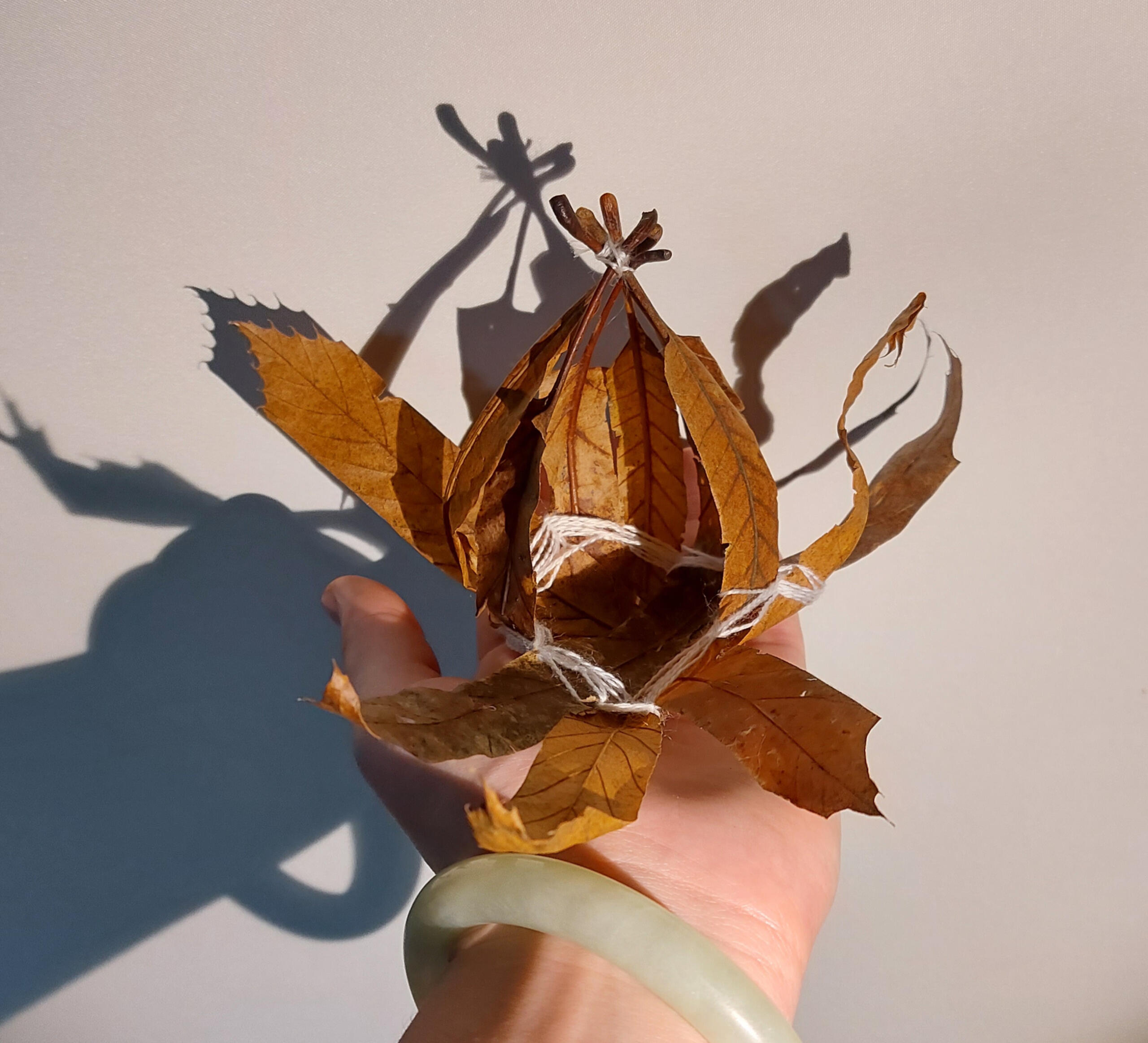
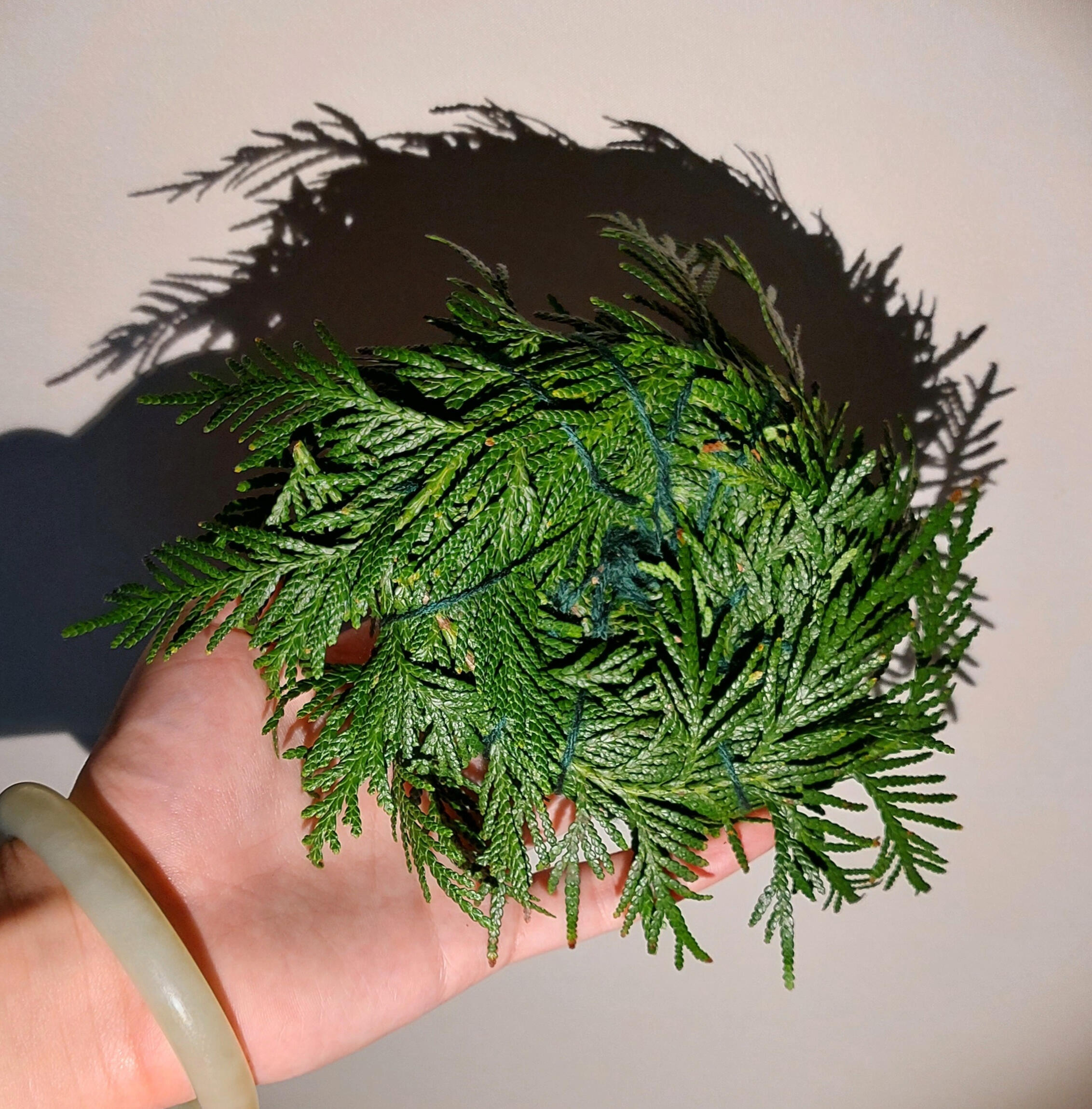
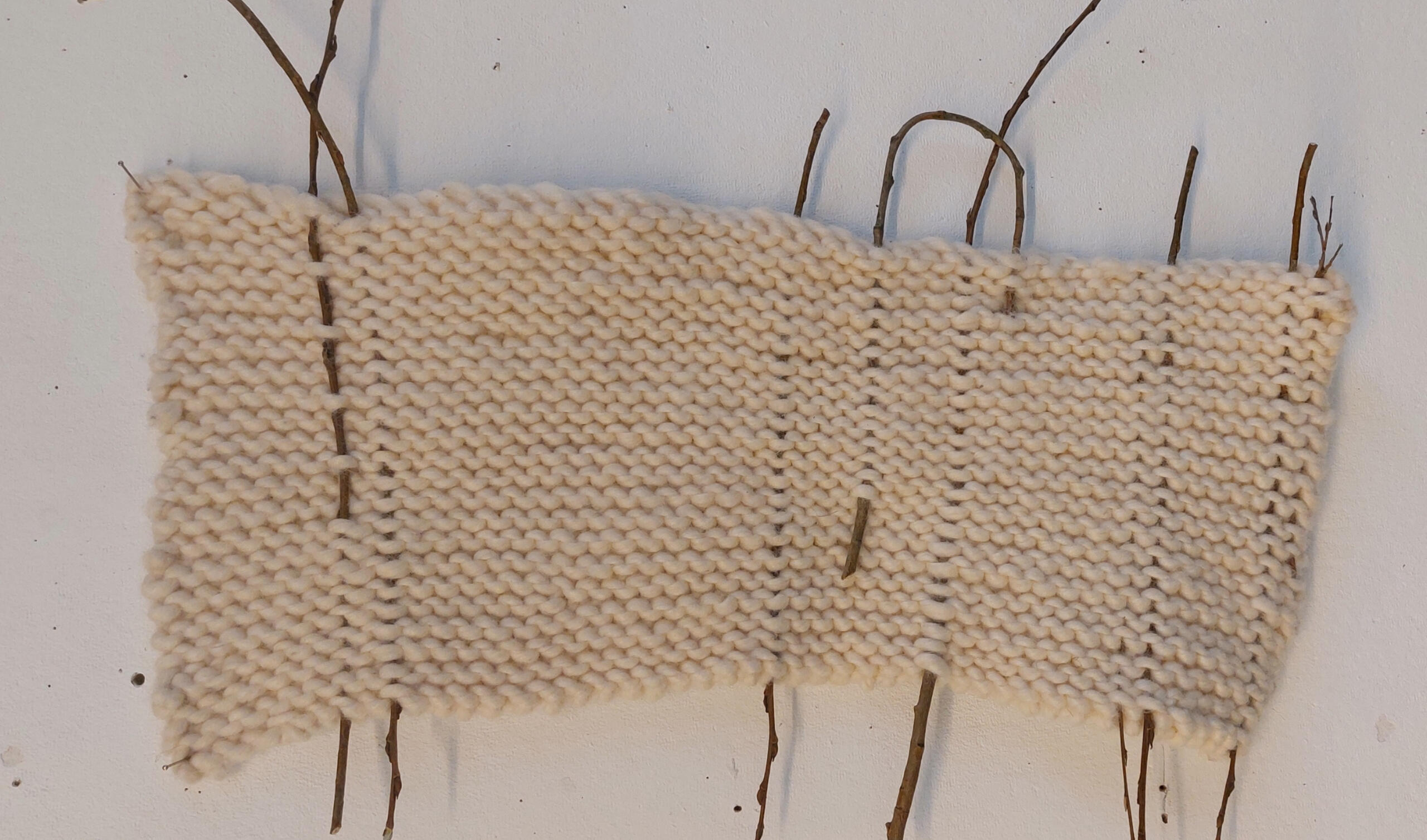
Photos from my assesment at the Sint Lucas in Gent and the process:
Dimensions
the basket: the diameter is 89 cm
tryout with leaves: 10 x 8 cm
tryout with green foliage: 9 x 7 cm
the painting of the child & the watcher: 1.90 x 0.70 meter
knitted piece with twigs: 55 x 22 cm
Internship at the Eerste Bussumse Glashandel
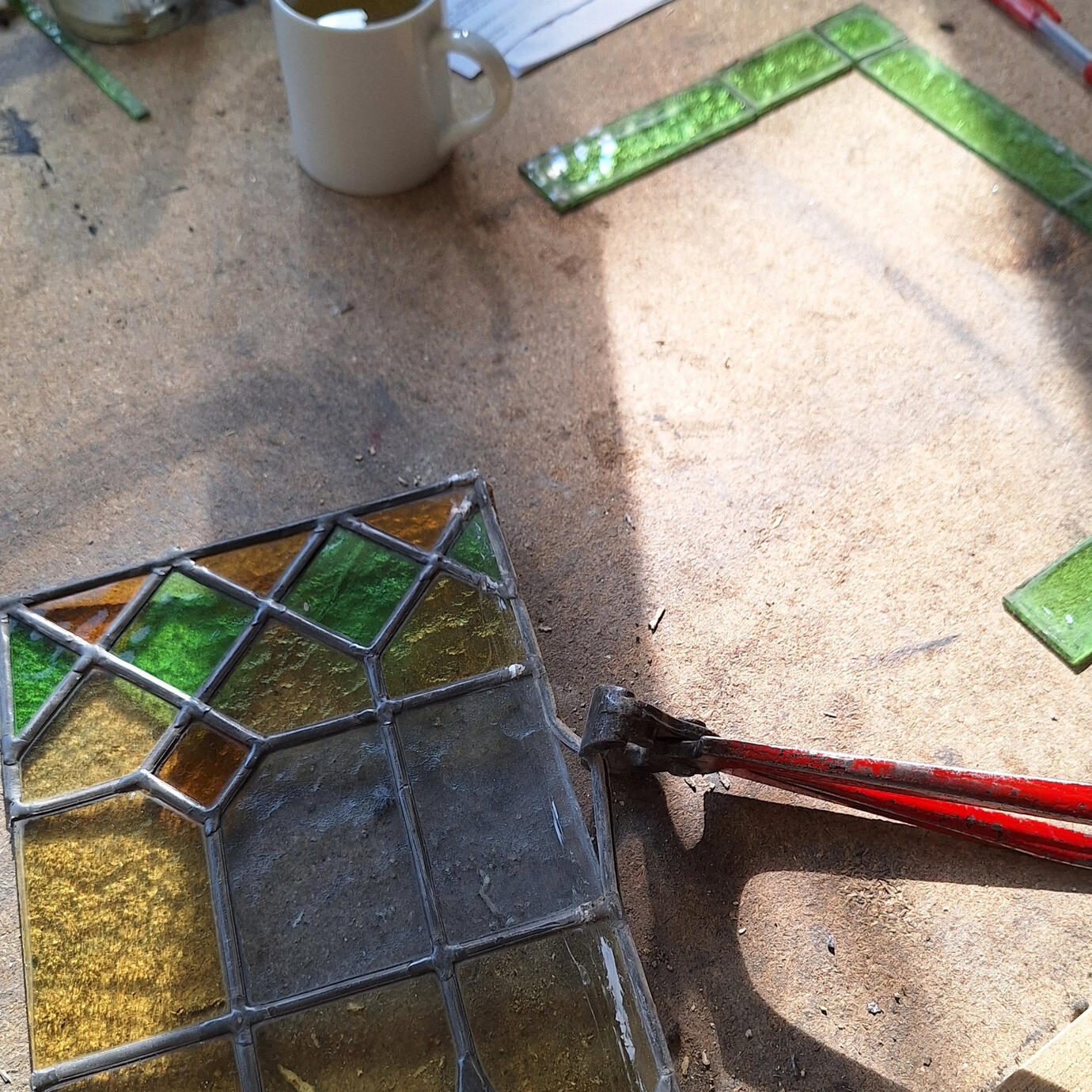
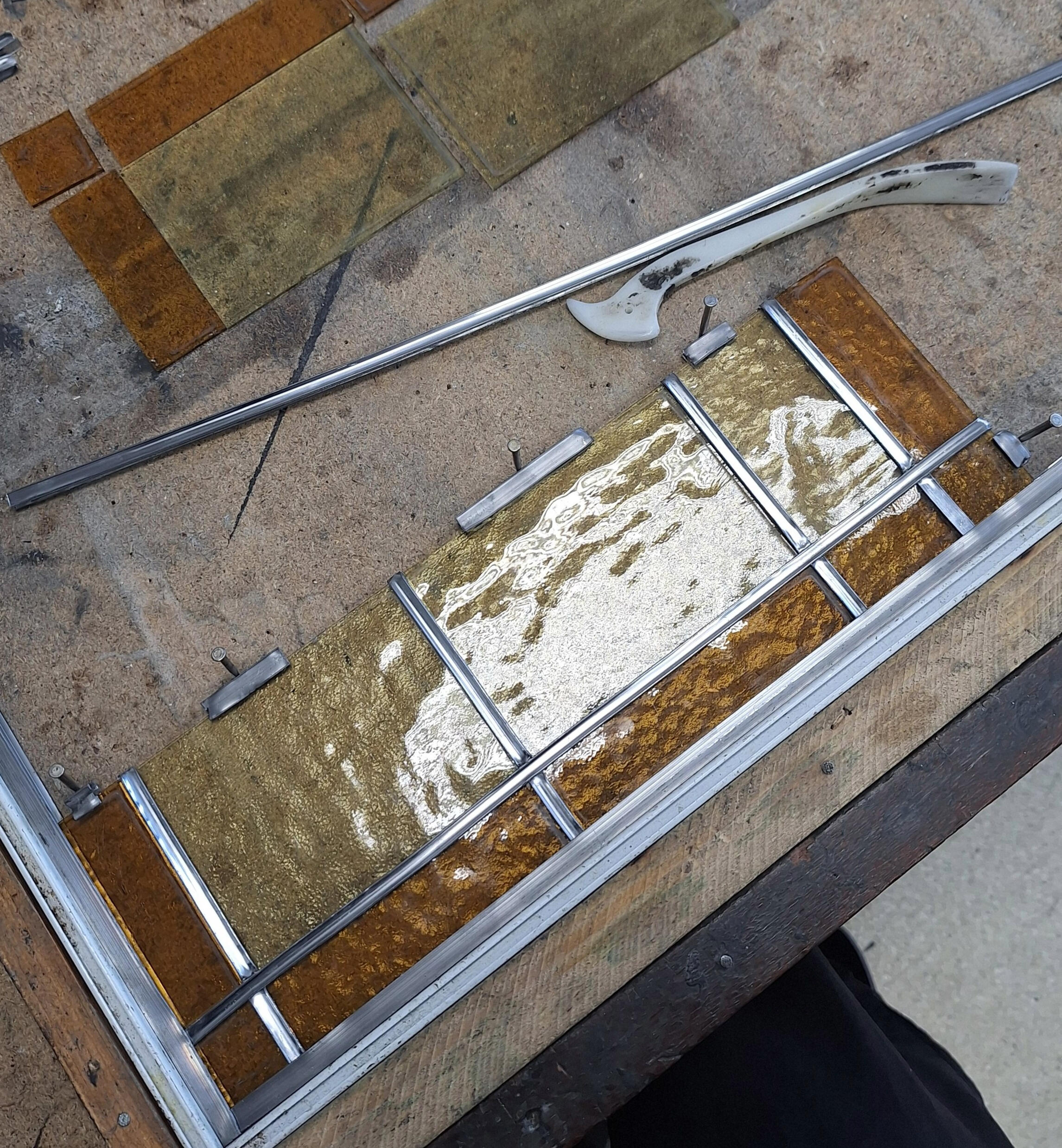
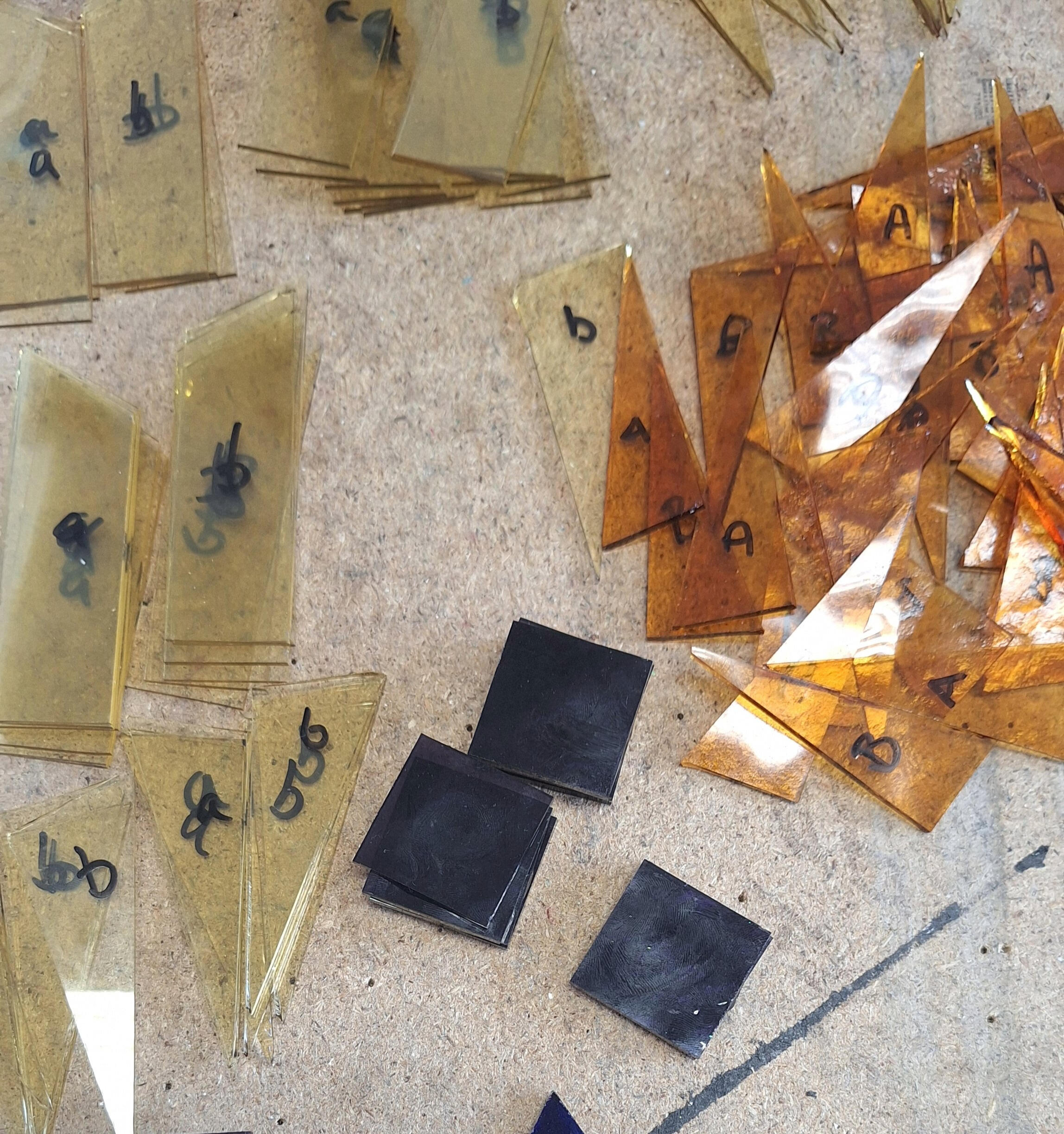
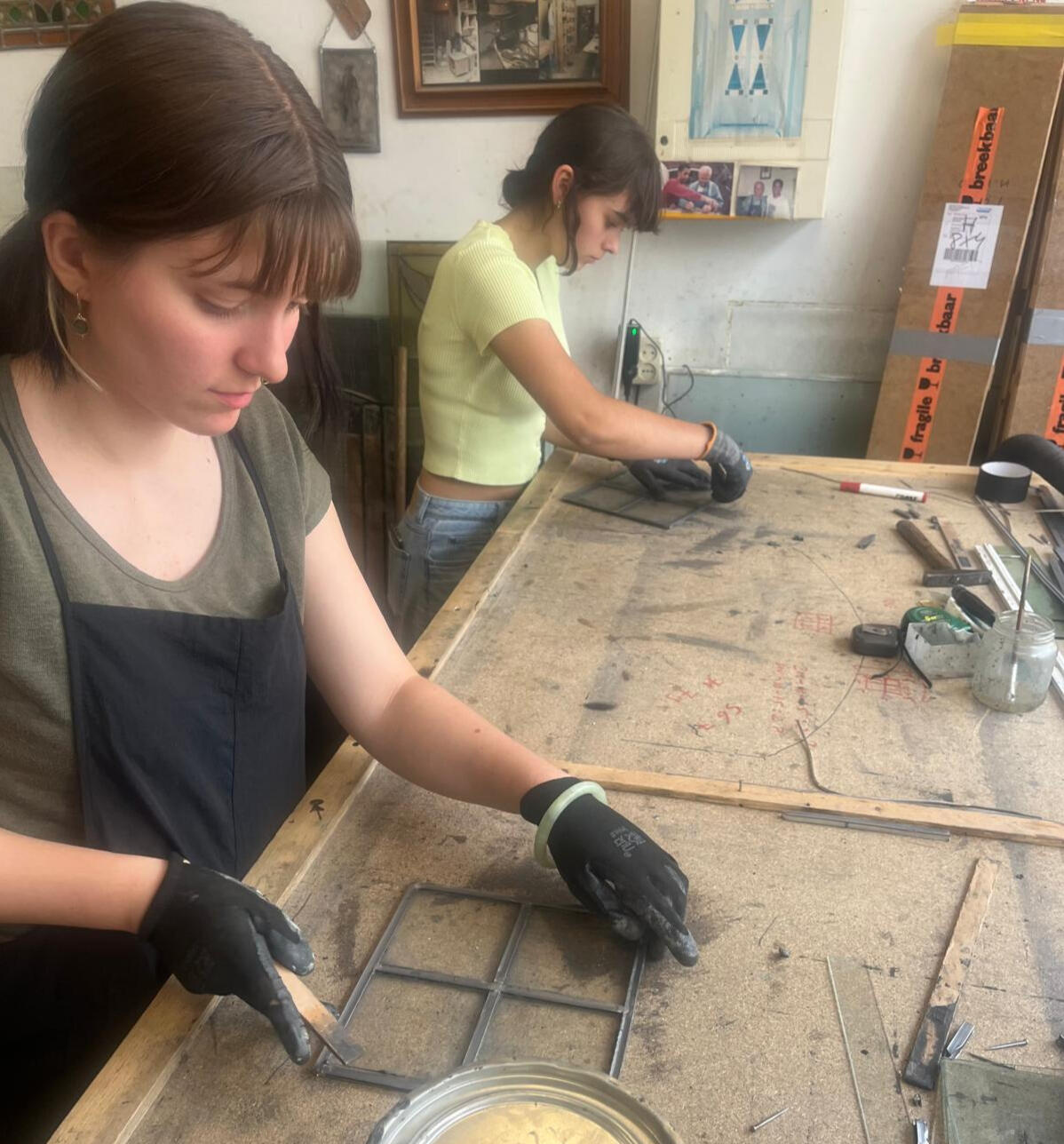
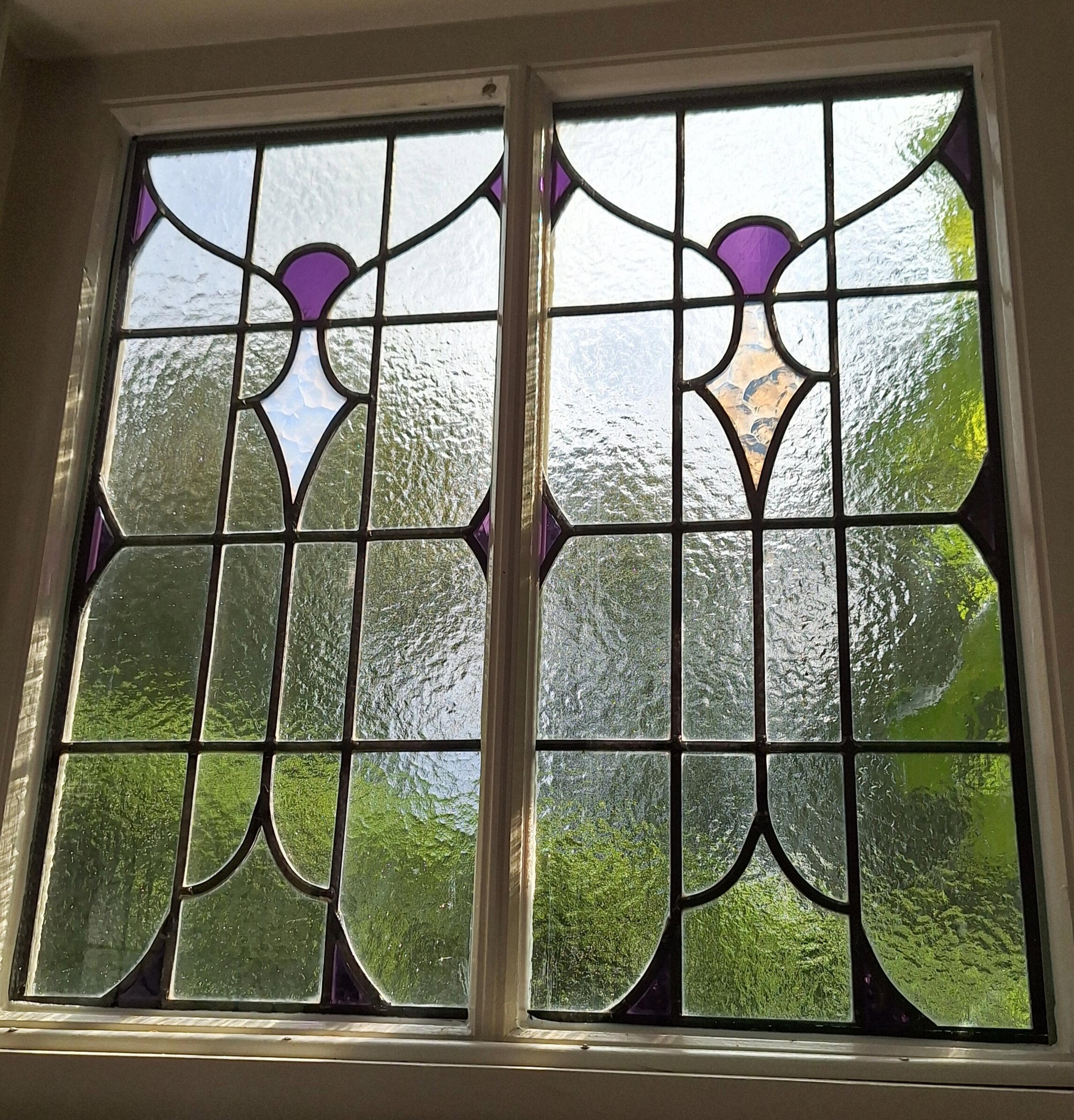
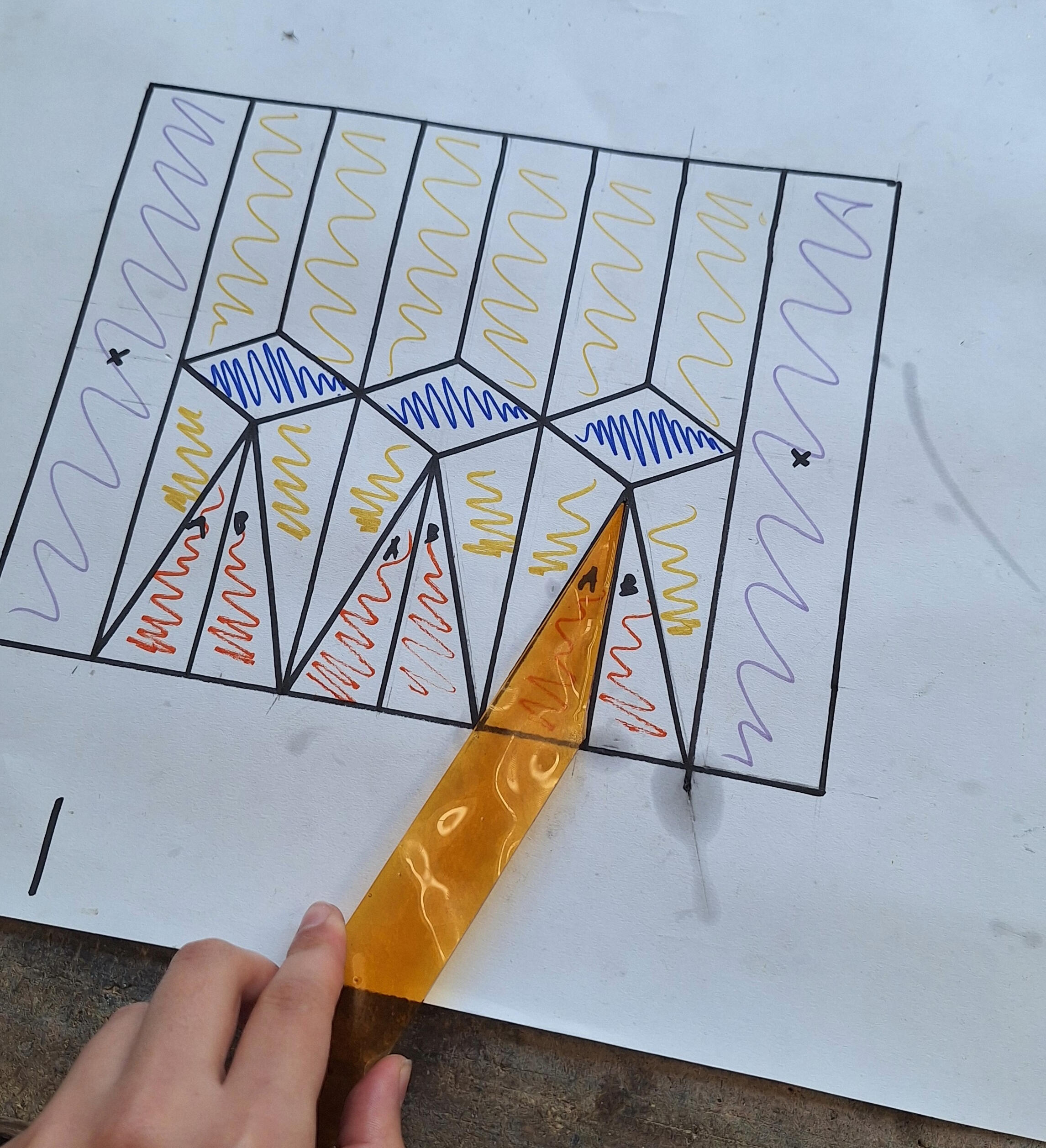
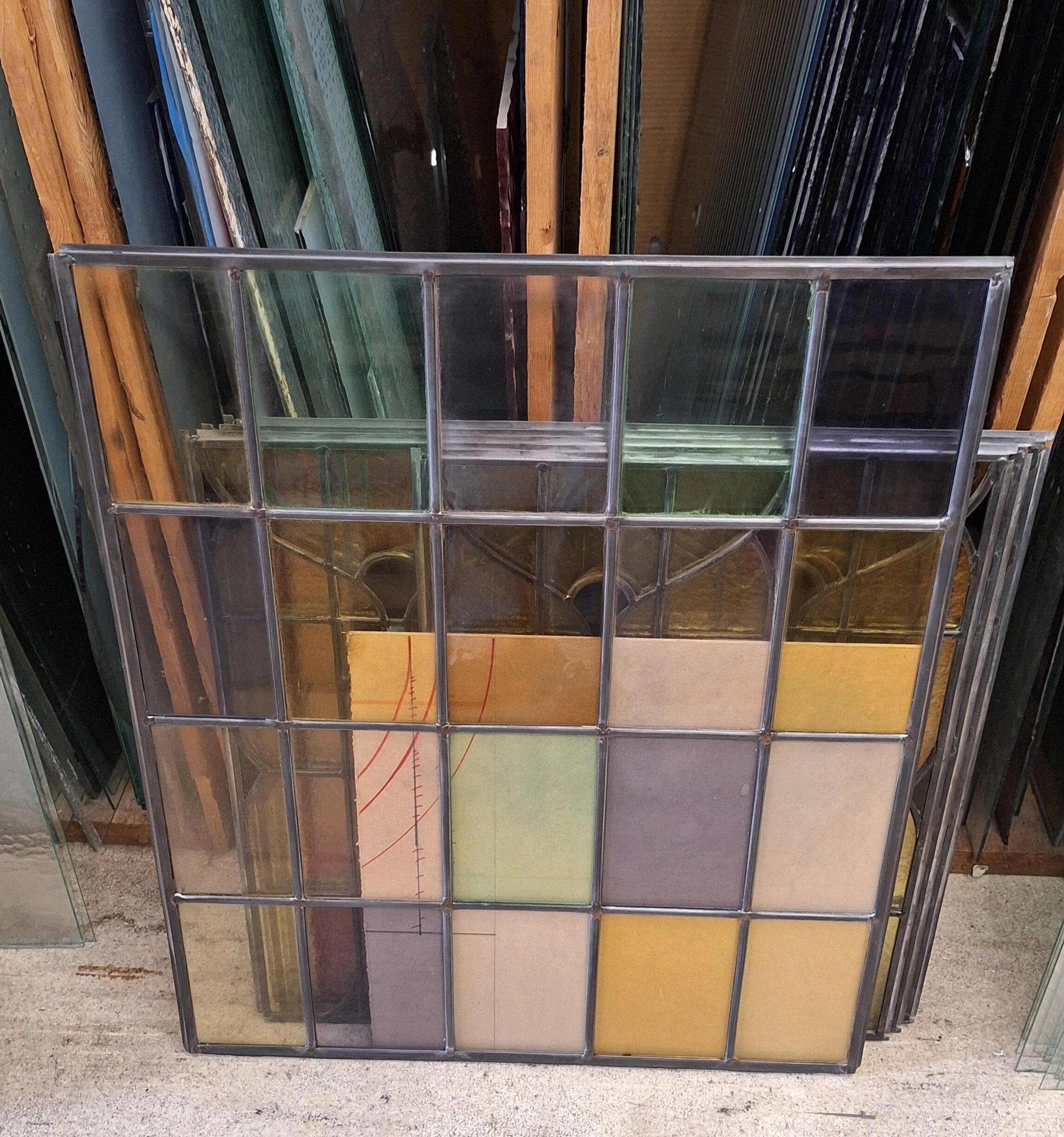
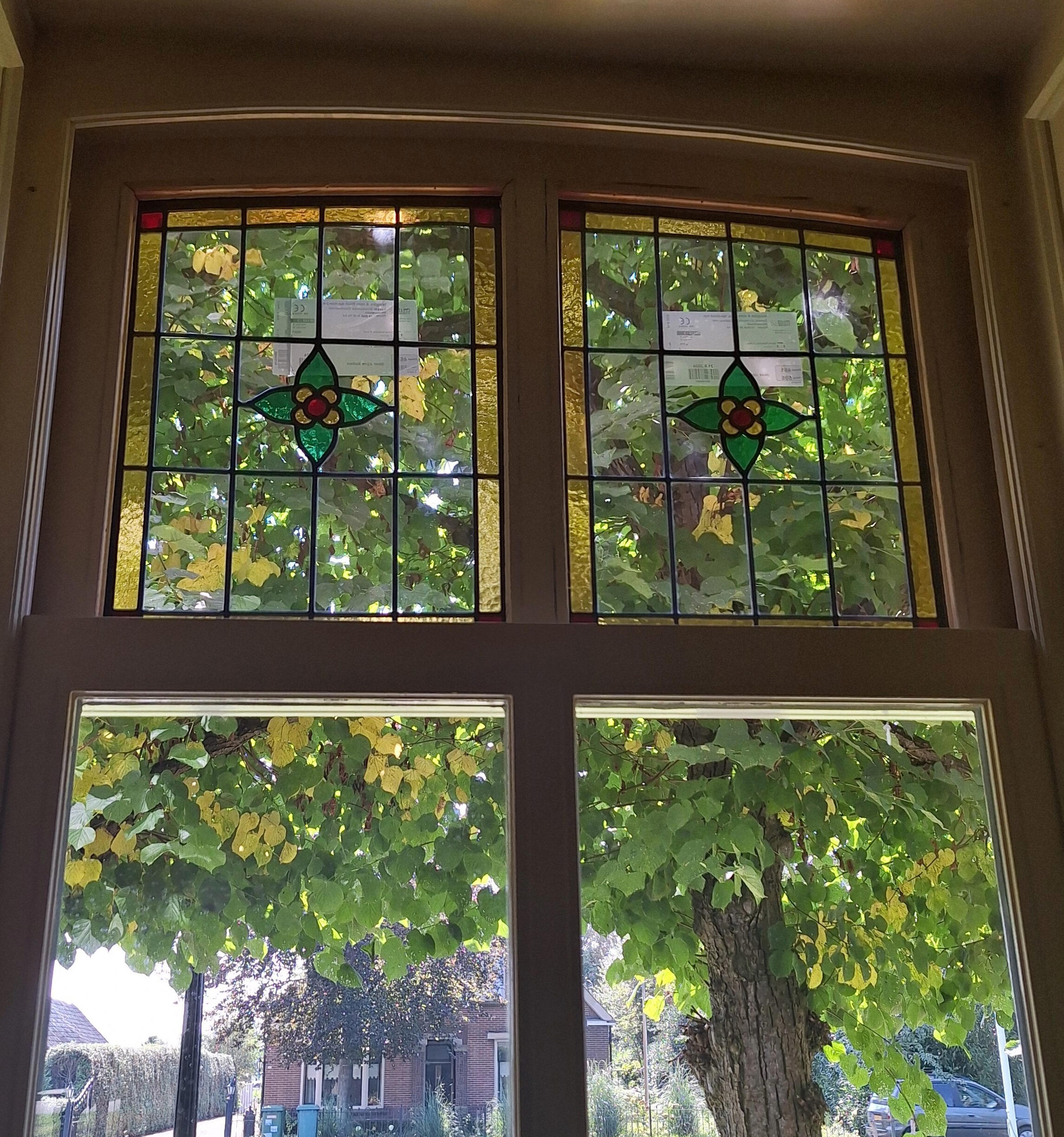
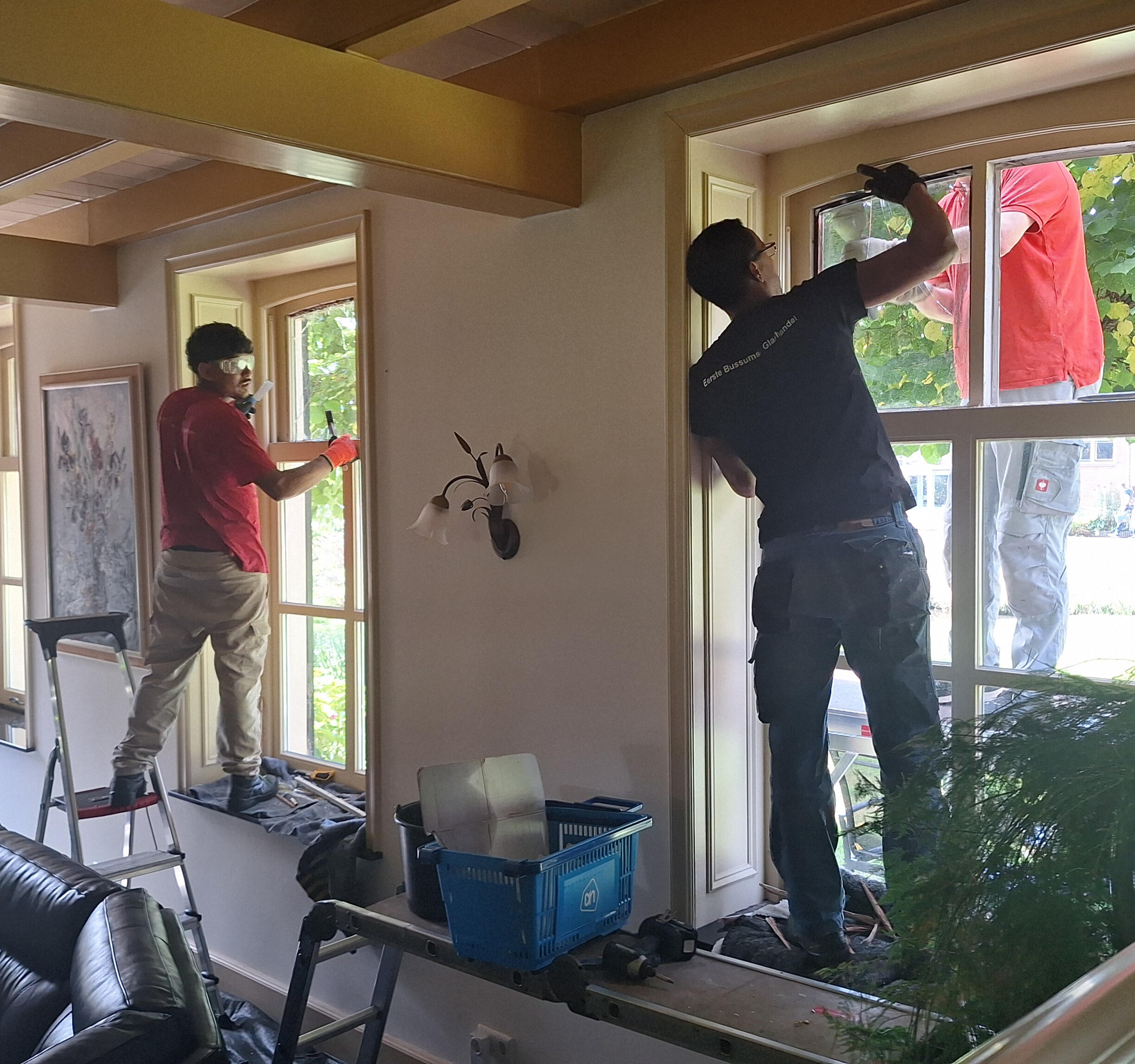
In late summer 2024, I completed a month-long internship at the Eerste Bussumse Glashandel, where I had the opportunity to learn a completely new skillset while working alongside an incredible team. Below, you’ll find a selection of finished pieces and works in progress from my time there.
Lineage
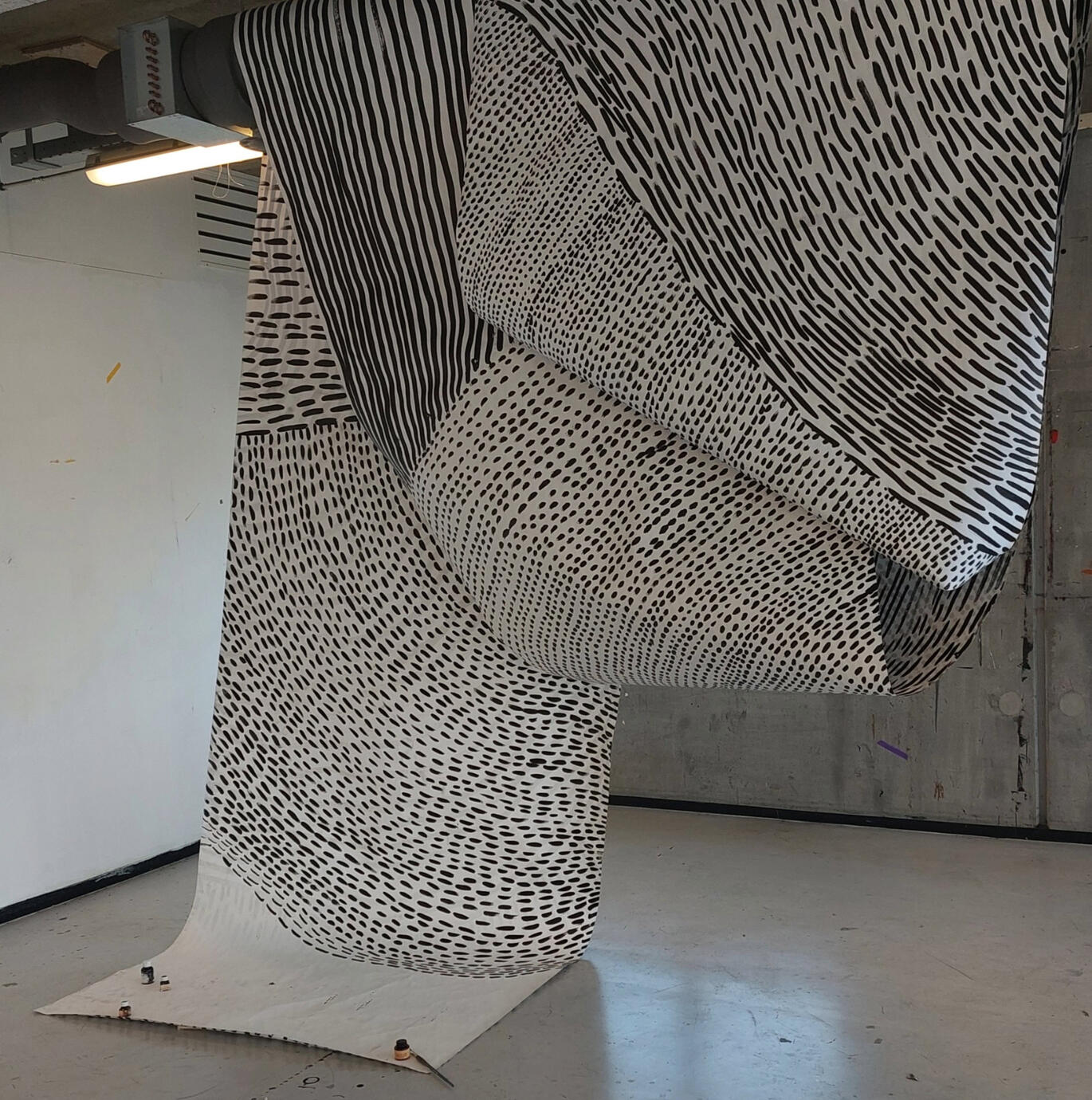
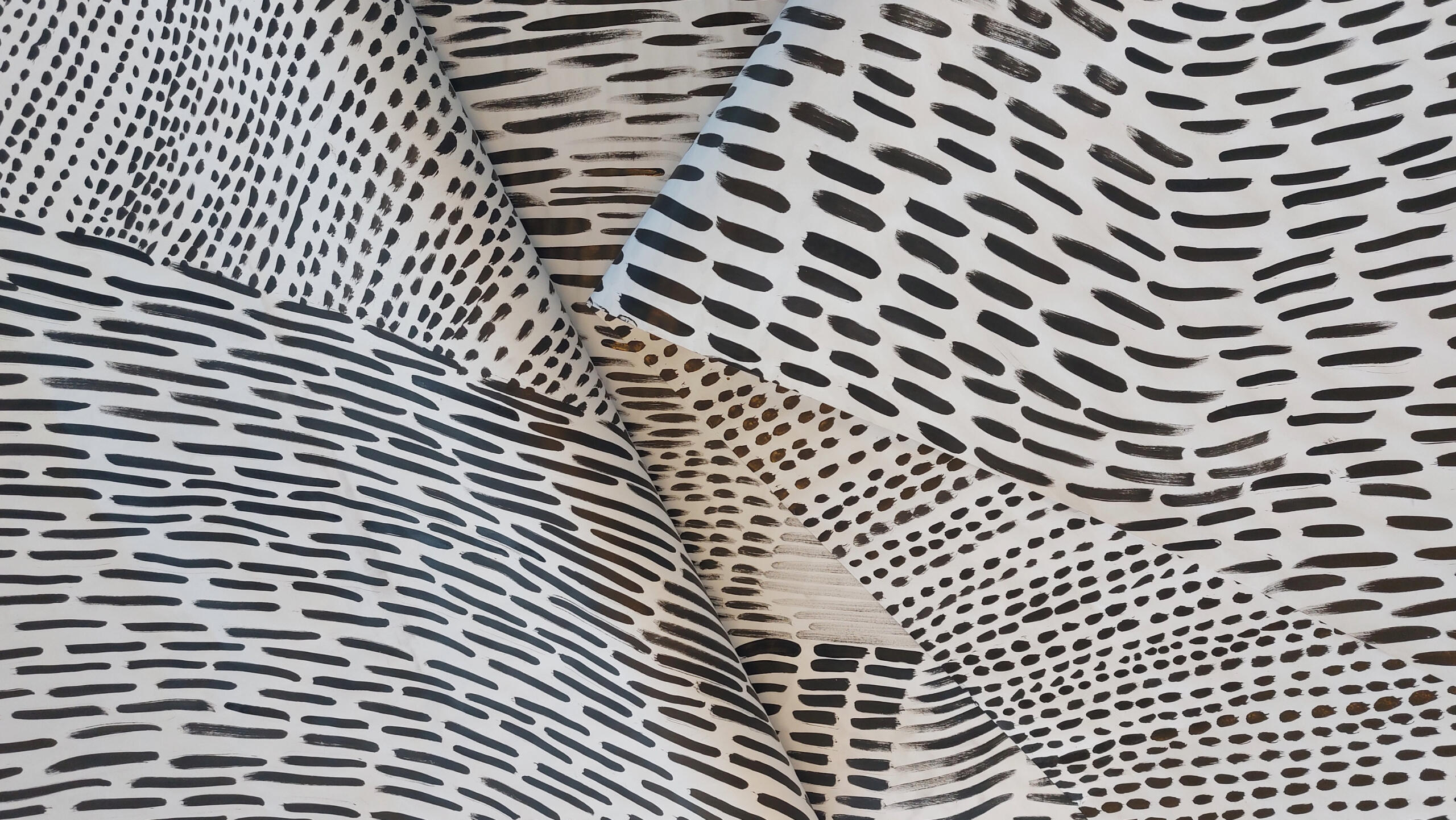
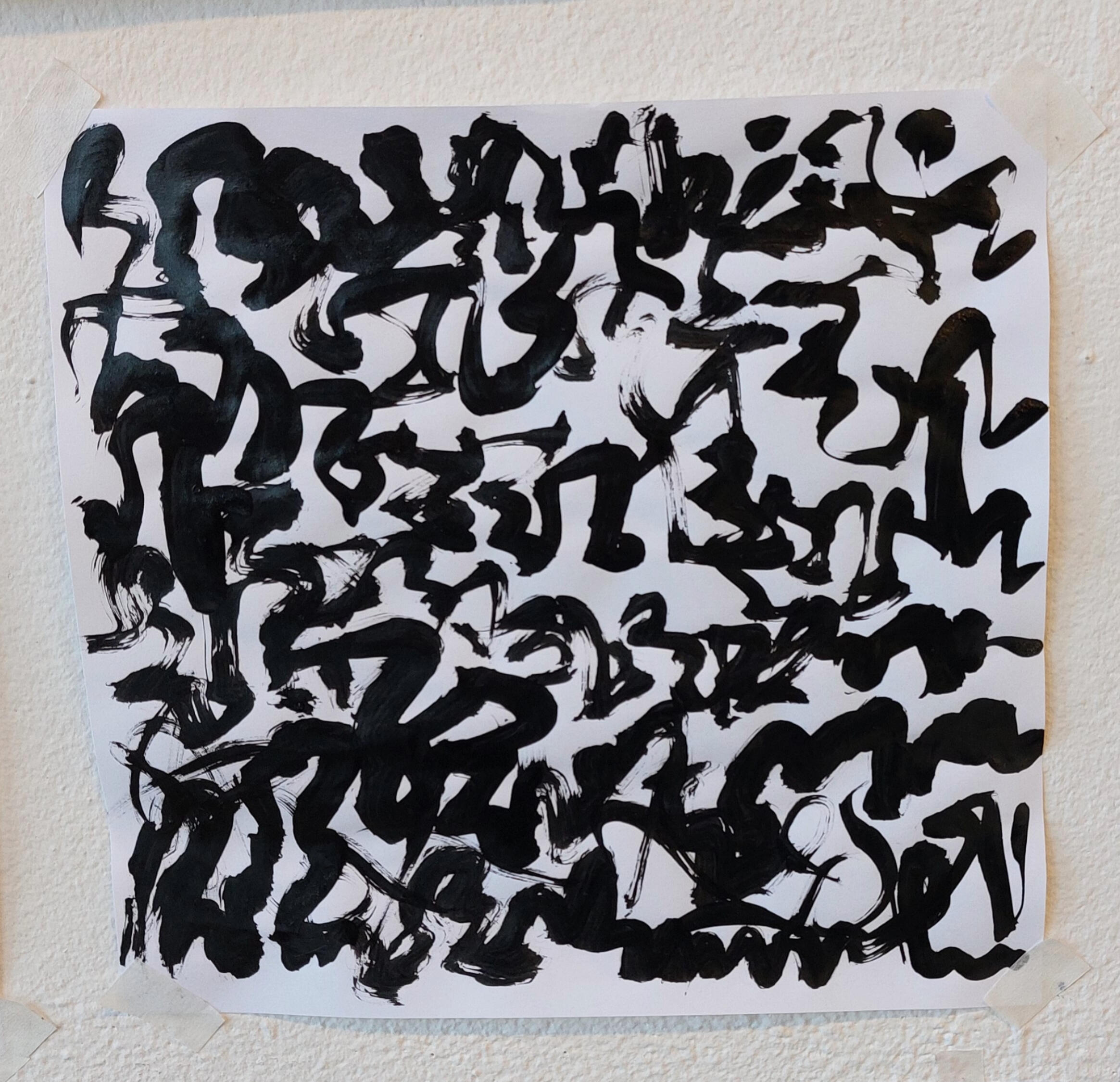
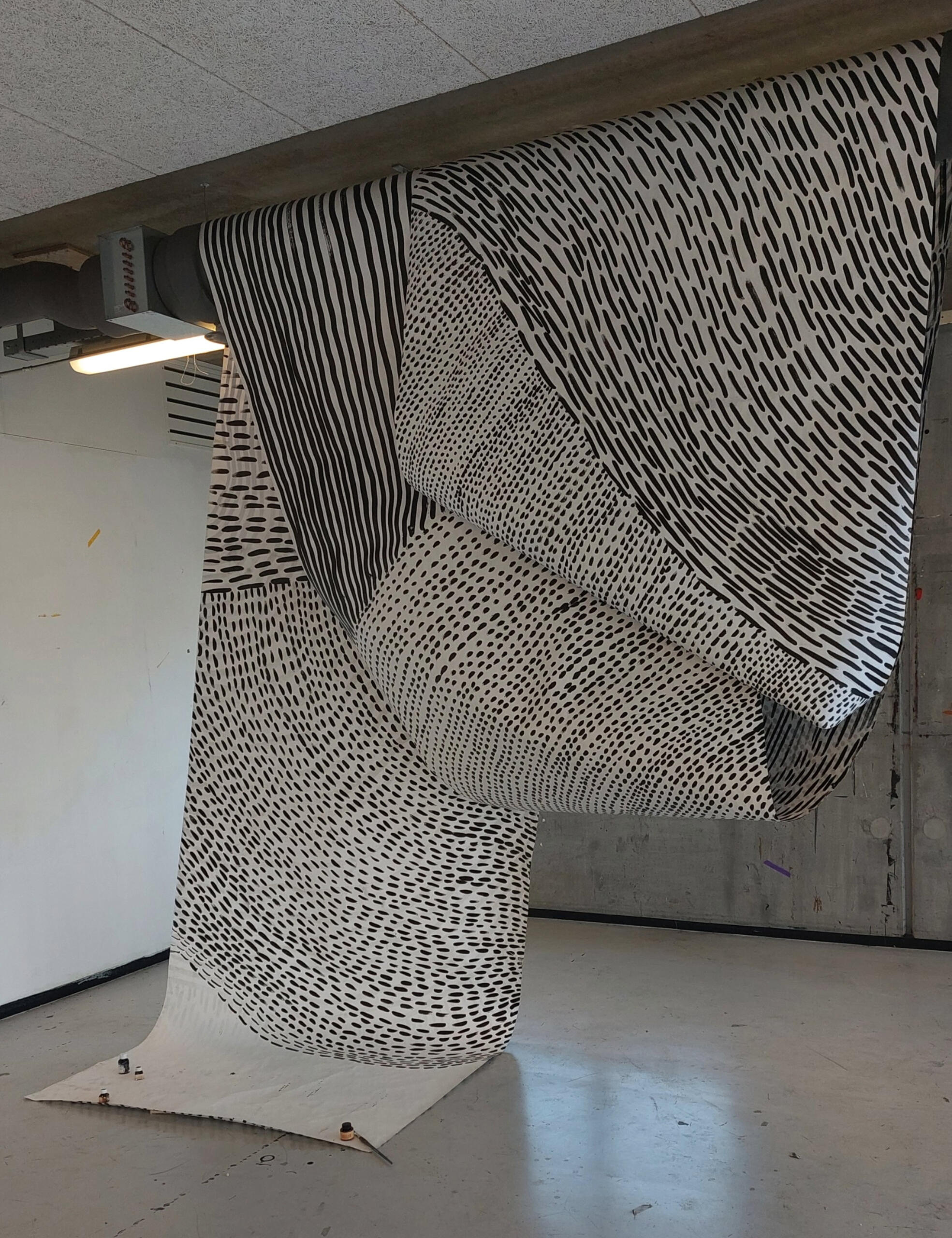
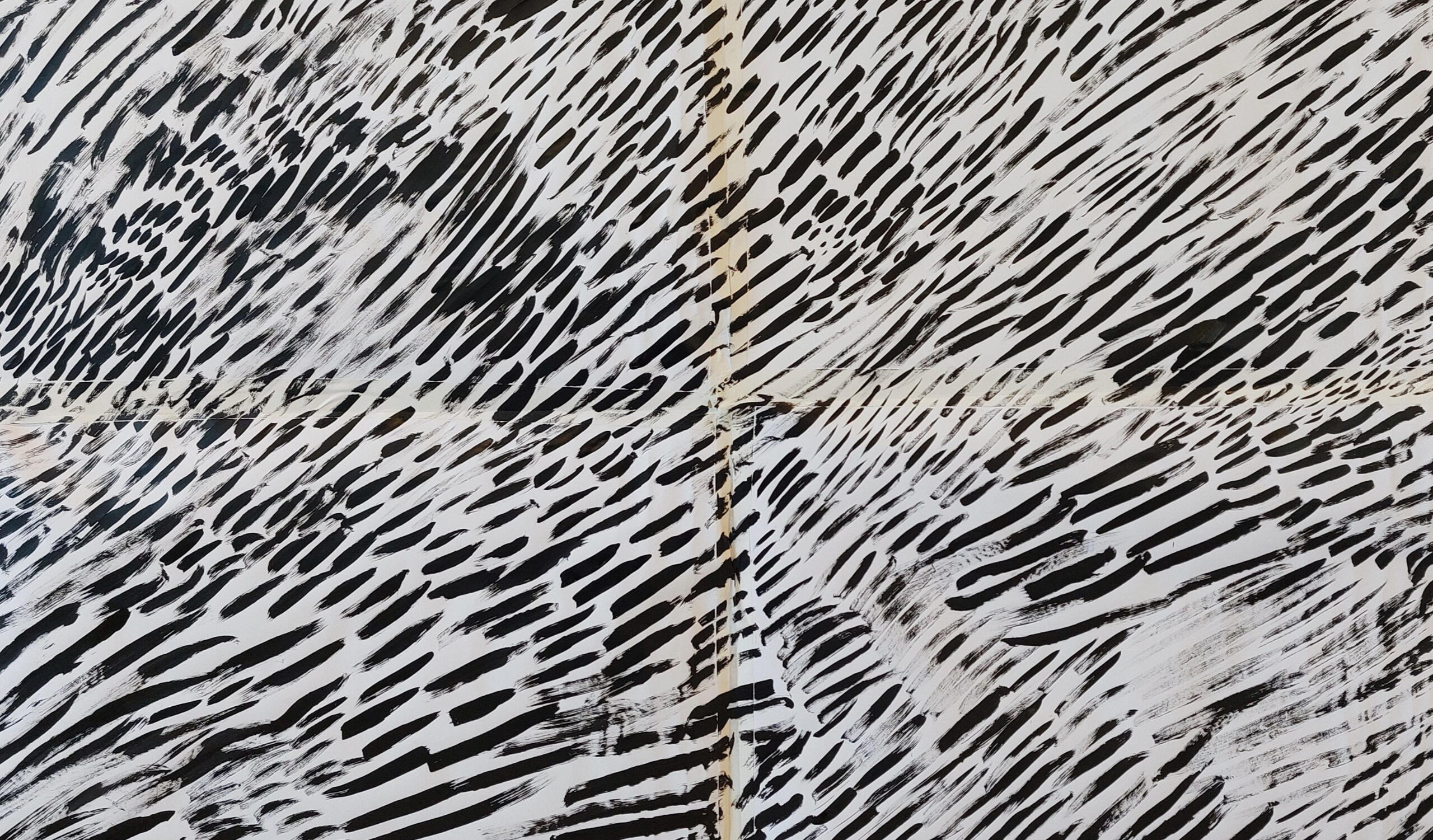
Lines; fluid, restless, and ever-changing, move like wind over water, shaping and reshaping with each passing moment. This work explores the transient nature of mark-making, where every stroke of black ink carries intention, yet remains impermanent, destined to dissolve into the next. Traced on both sides of an immense roll of paper, the lines seep through, blurring the boundary between surface and depth. Suspended in space, the piece interacts with its surroundings, shifting as the air moves, as if breathing. It becomes a meditation on time, presence, and the inevitability of change, where even the boldest lines are never truly fixed.
Dimensions
the hanging striped paper: the whole length of the paper is 10 meters and the width 1.50 meter
waving lines paper: 20 x 20 cm
linework of 4 papers brought together: 1.40 x 2 meter
'I'm trapped in the wrong era and I think everyone can tell'
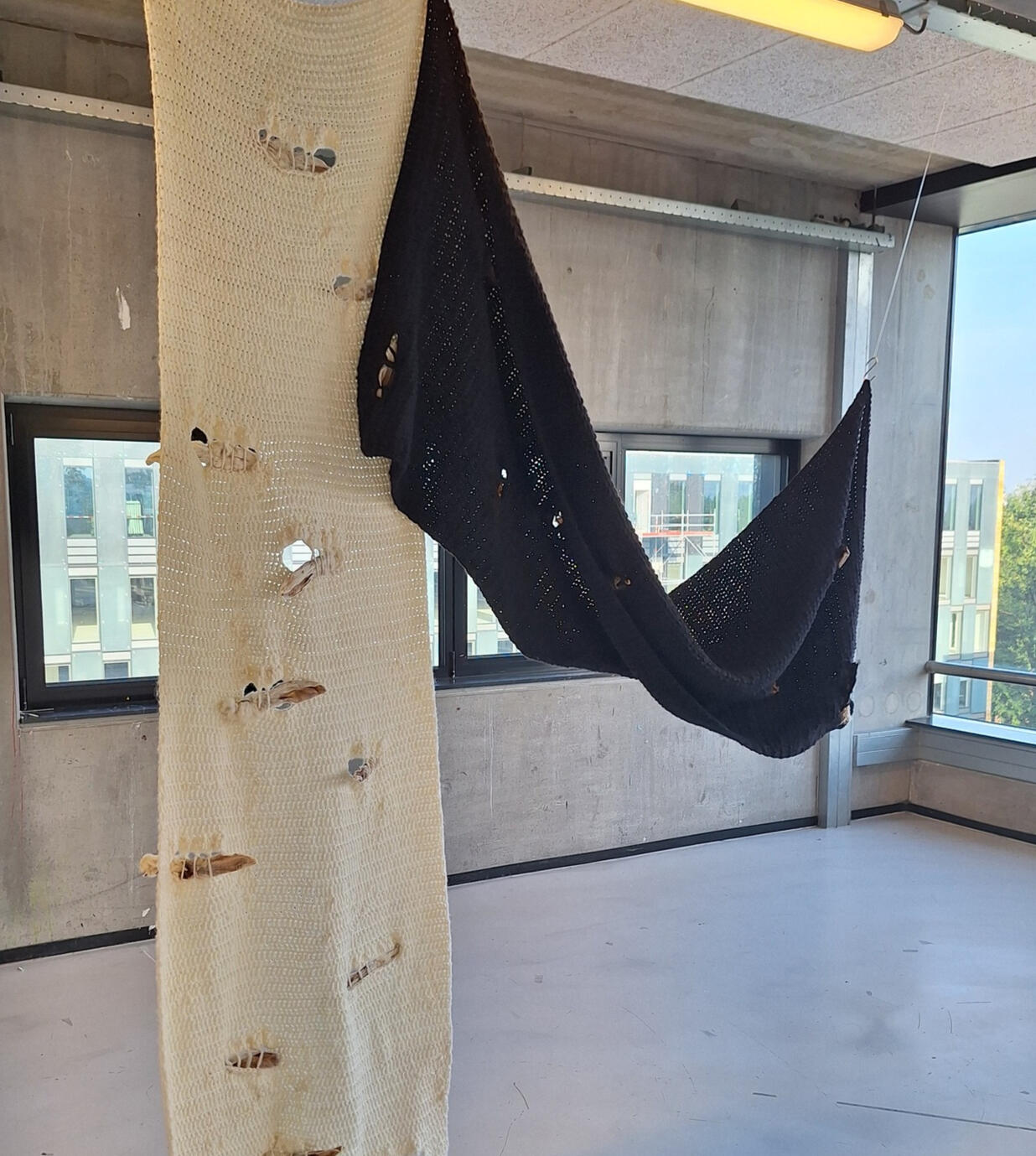
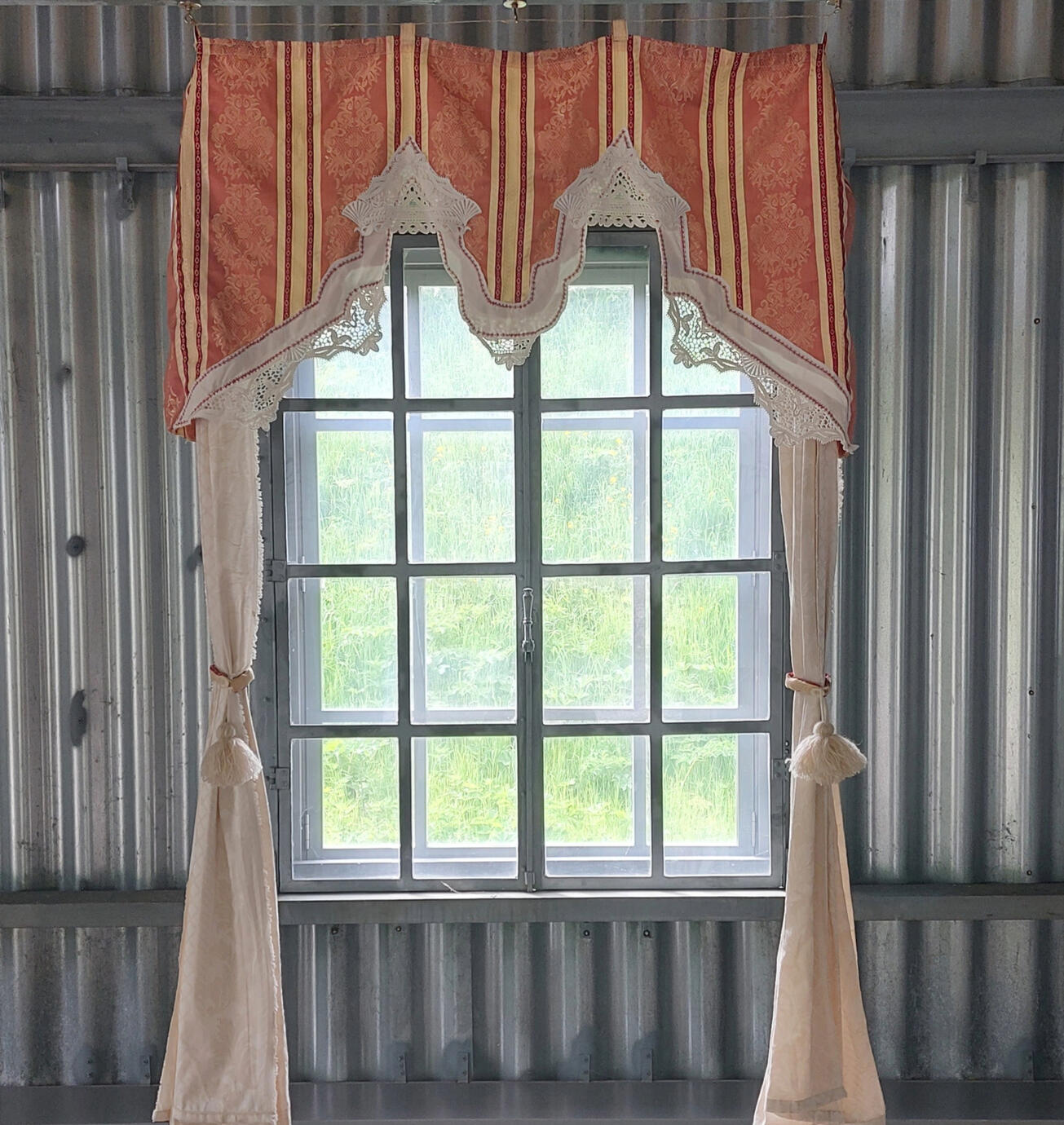
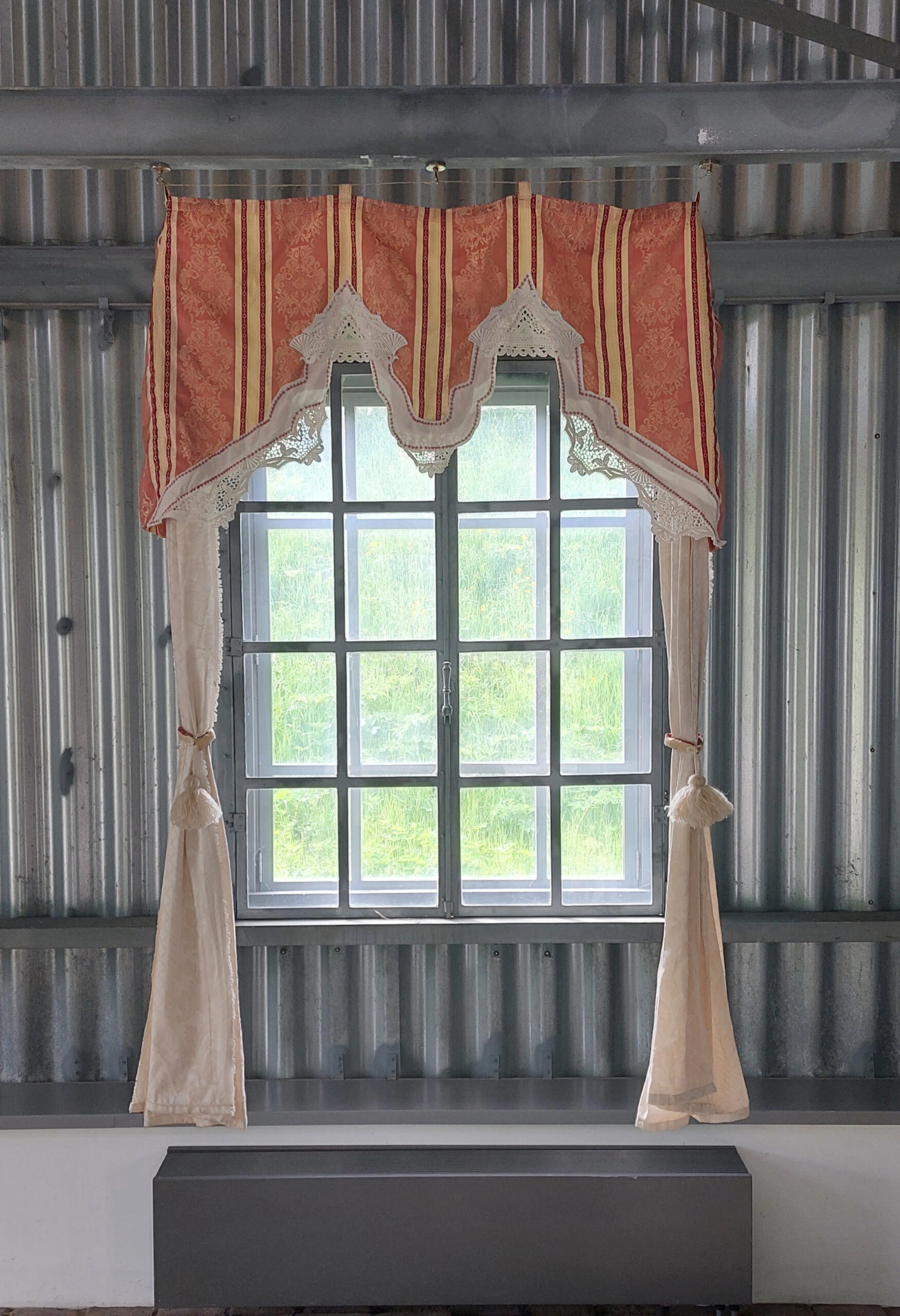
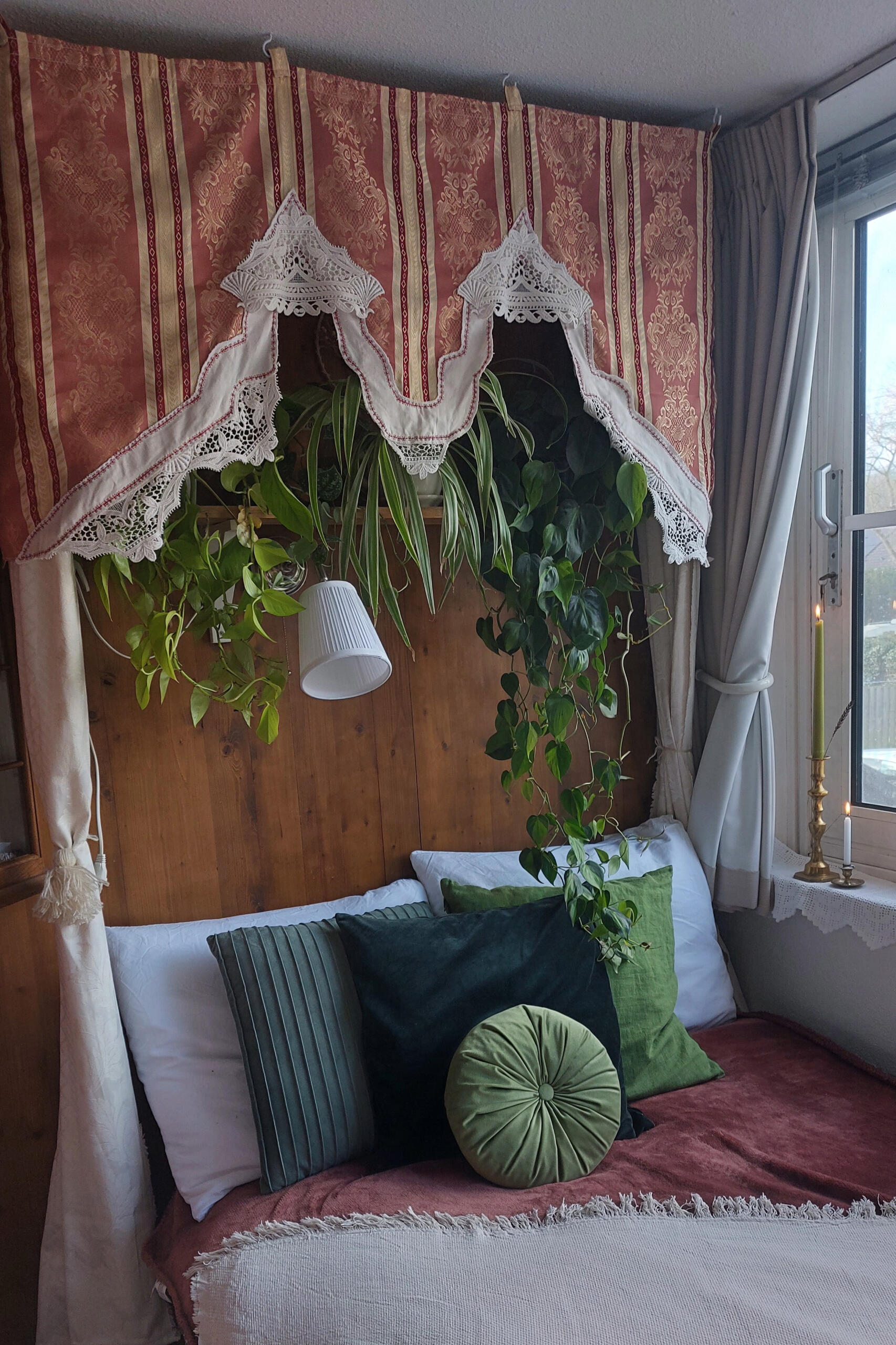
Exhibited at Kunstfort bij Vijfhuizen — Cross Stitch, part of Kunstfort x TXT (May 13 - May 29, 2023)With this work, I wanted to experience another era as closely as possible: stepping into the aesthetics and ideals of the Rococo period, while placing them in dialogue with the present. A curtain or canopy, to me, is like a facade. It reveals, hides, or frames a chosen part of the scenery, shaping what we are allowed to see.At Kunstfort, this canopy hung within the industrial, functional shell of the fort, turning a simple window into a staged view. But the fort itself is also a facade; designed to present the image of a well-protected capital, a symbol of strength meant to safeguard the land. Yet history proved its makers wrong. With the invention of the airplane, the fort lost its defensive purpose almost immediately after completion. Its role became symbolic: its presence more decoration than protection.This connection between the ornamental and the functional, between decoration and defense, flows through the work. The soft, decadent folds of the canopy mirror the fort’s hard walls, both acting as layers between inside and outside, between what is seen and what is hidden. Both the canopy and the fort reveal how facades, whether textile or architectural, shape stories, whether they are domestic fantasies or national narratives of power.
Dimensions
The canopy: 1.95 x 1.13 meter
Too Good to Waste
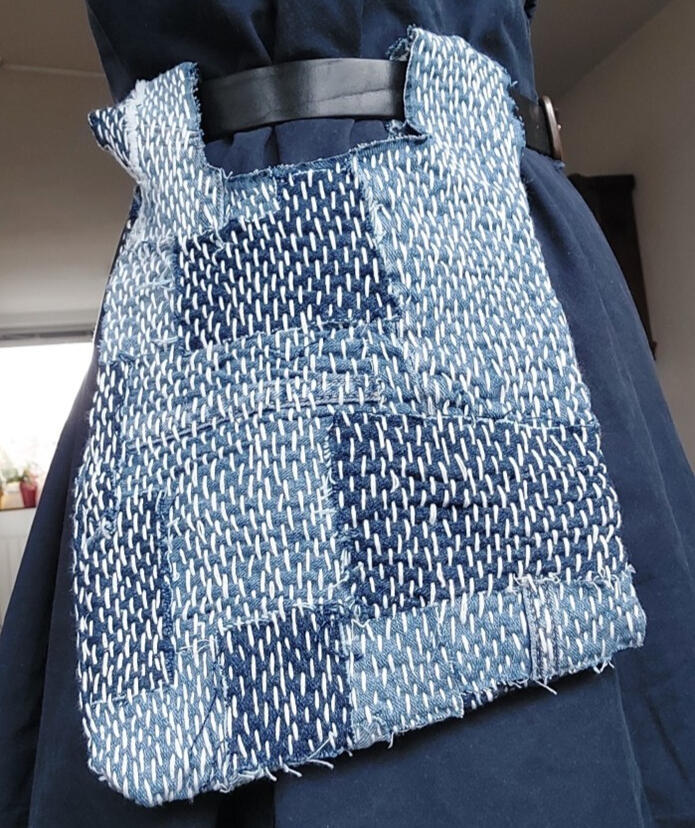
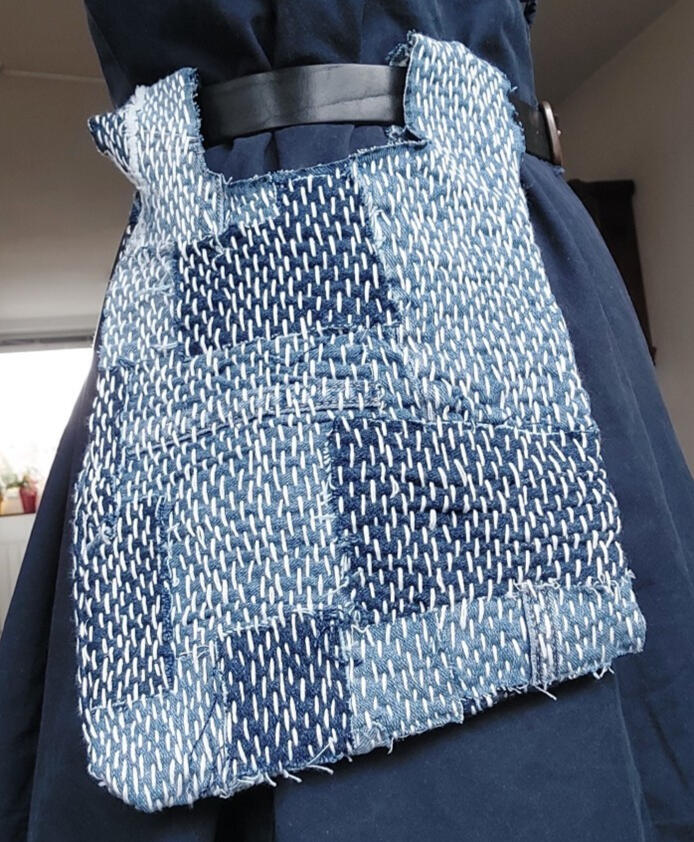
This bag is a tribute to boro, the Japanese art of mending and reusing fabric, embodying resilience, sustainability, and history. Rooted in the Edo period (1603–1868), boro was born from necessity, as people carefully stitched and layered textiles to extend their lifespan, turning repair into an art form. Made from repurposed denim with sashiko-style embroidery, this bag carries that tradition forward, each stitch reinforcing both function and story. Designed to hold wool, it allows me to work while walking, blending utility with heritage.
Dimensions
the boro bag: 34 x 23 cm
Farspeakers
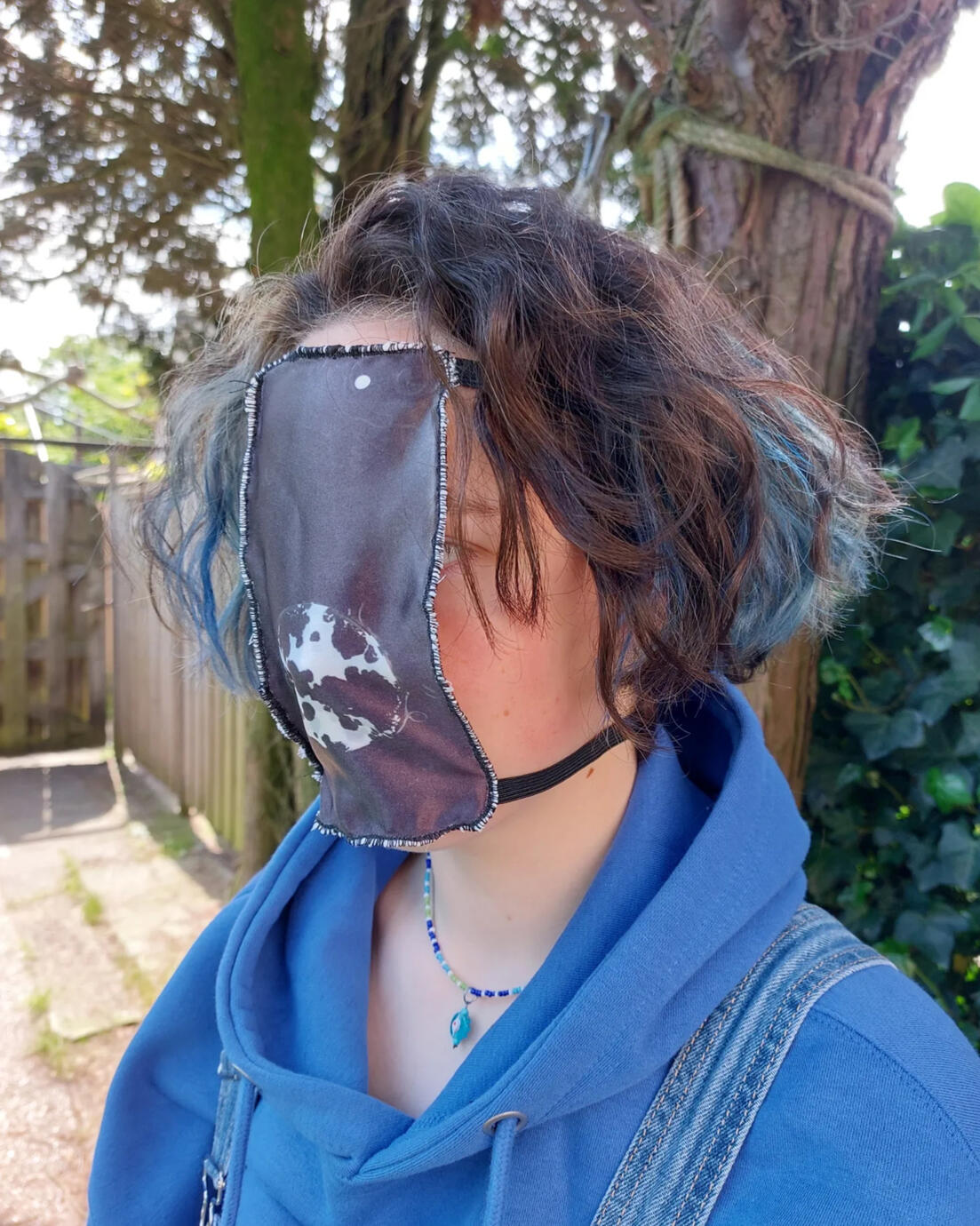
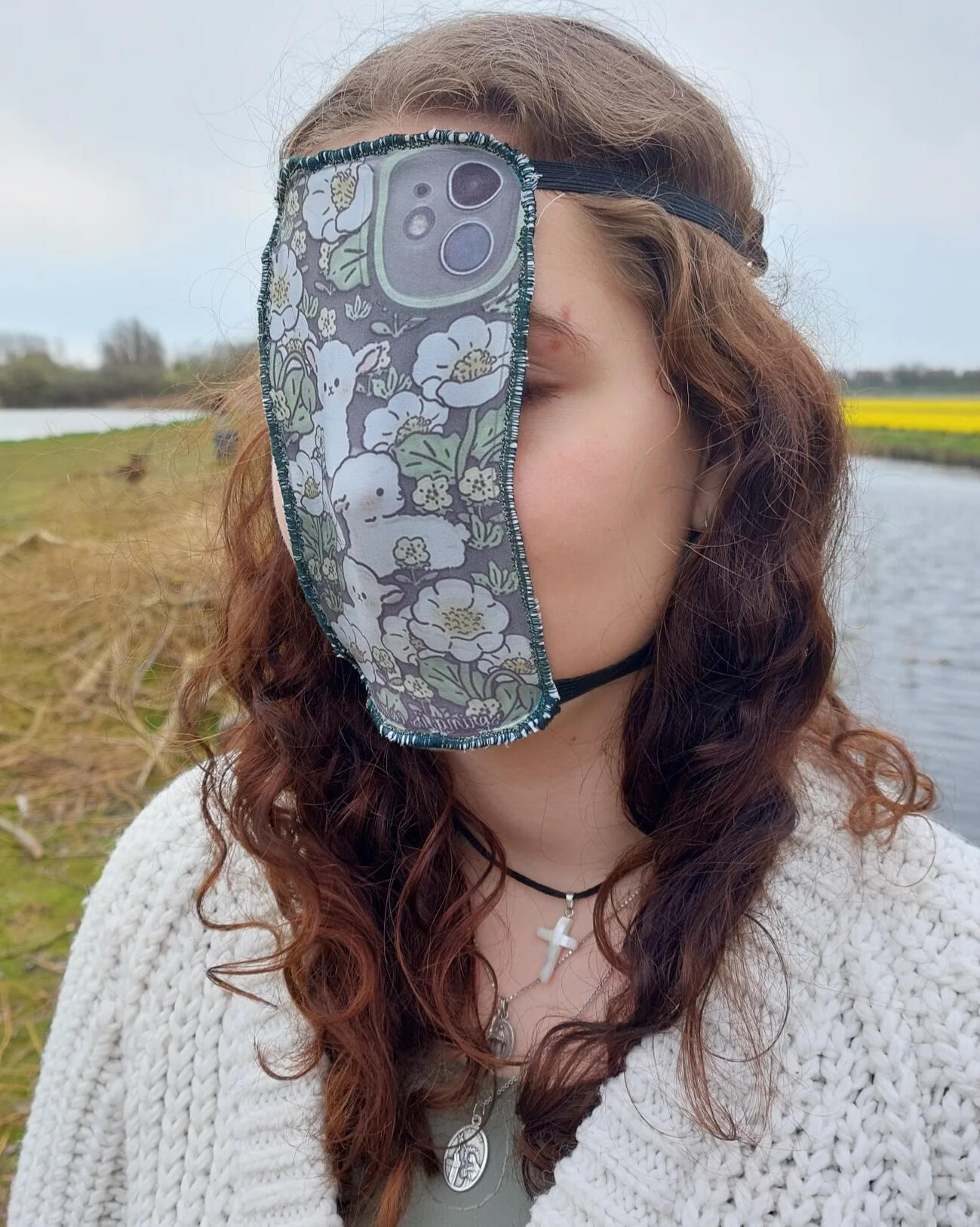
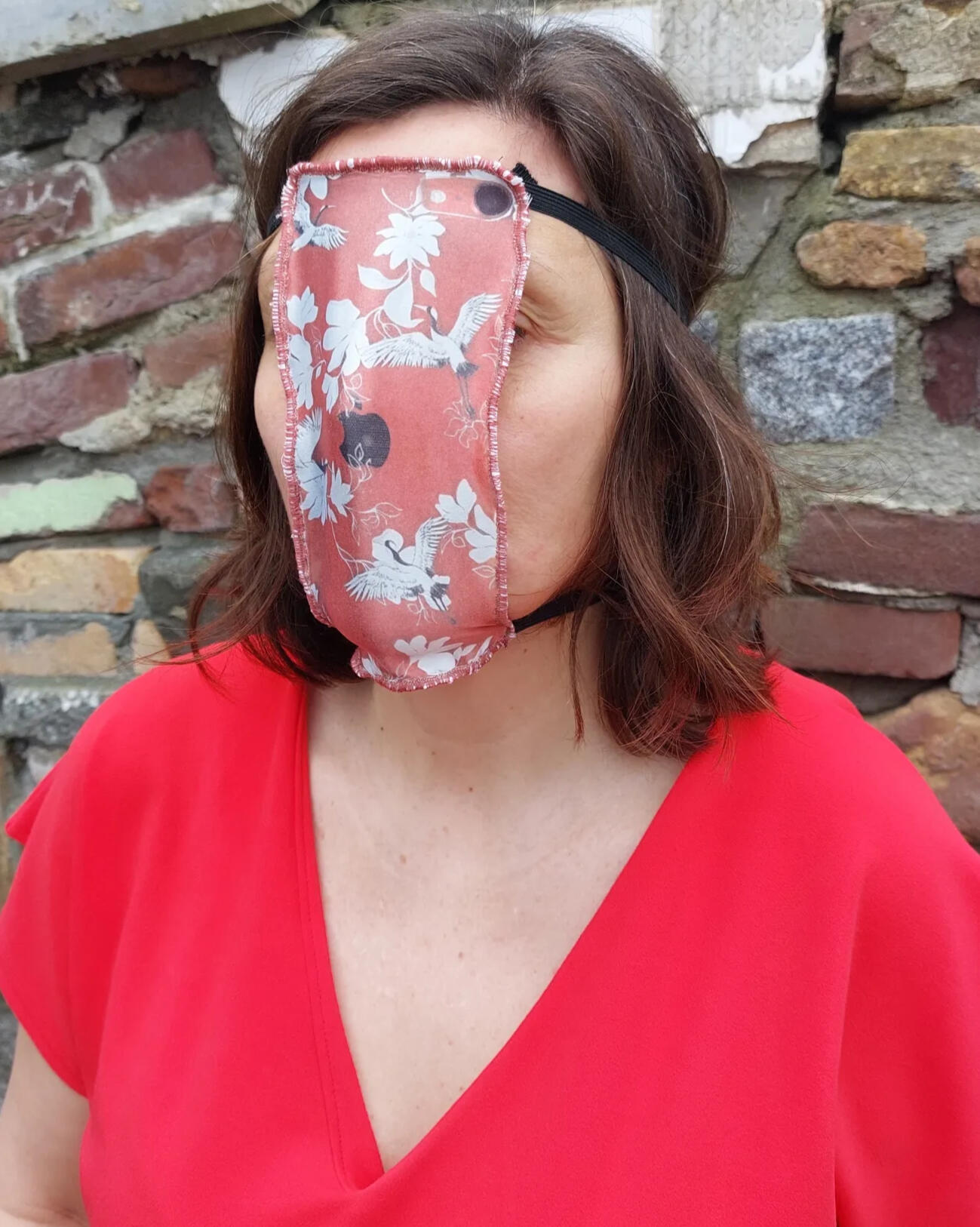
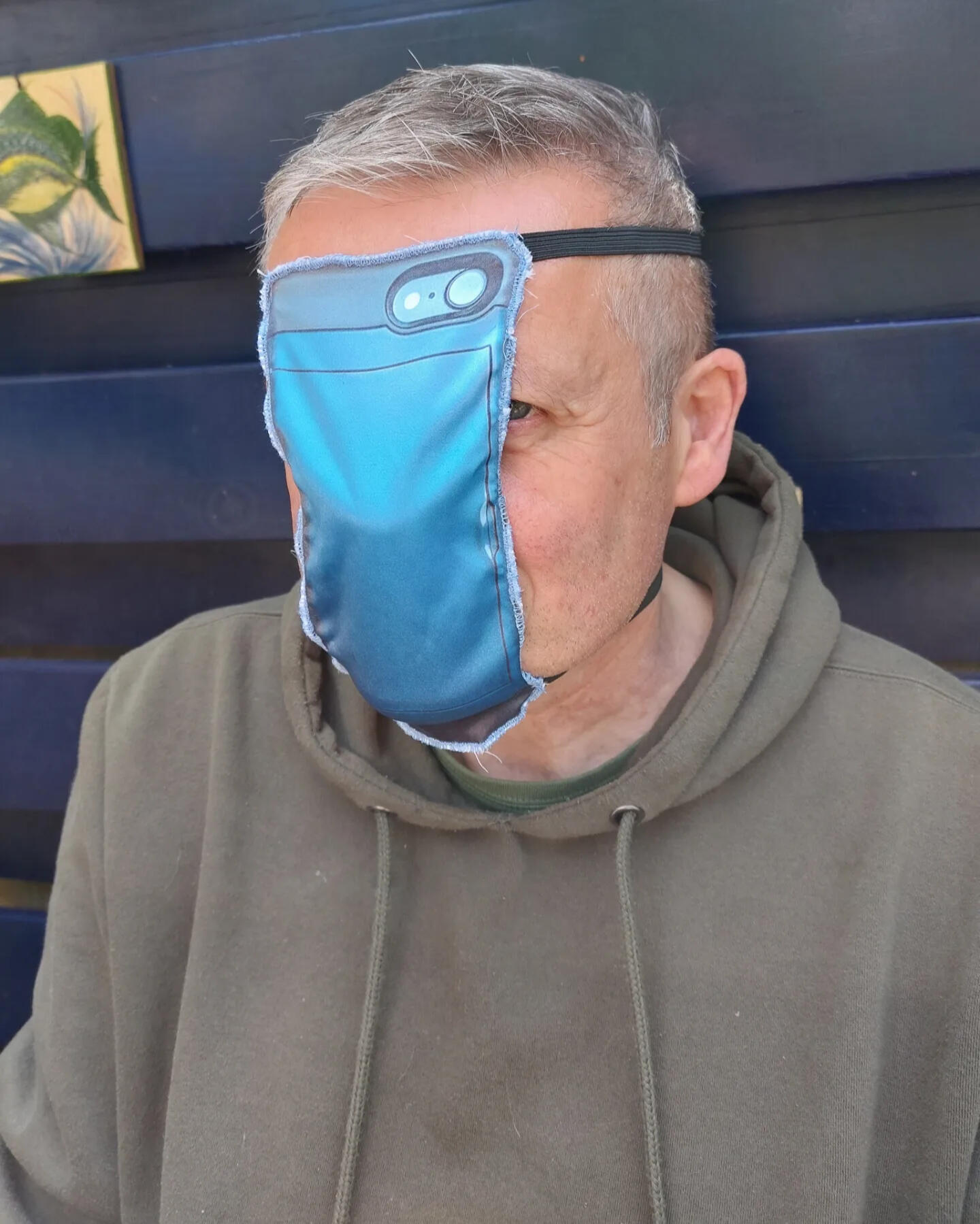
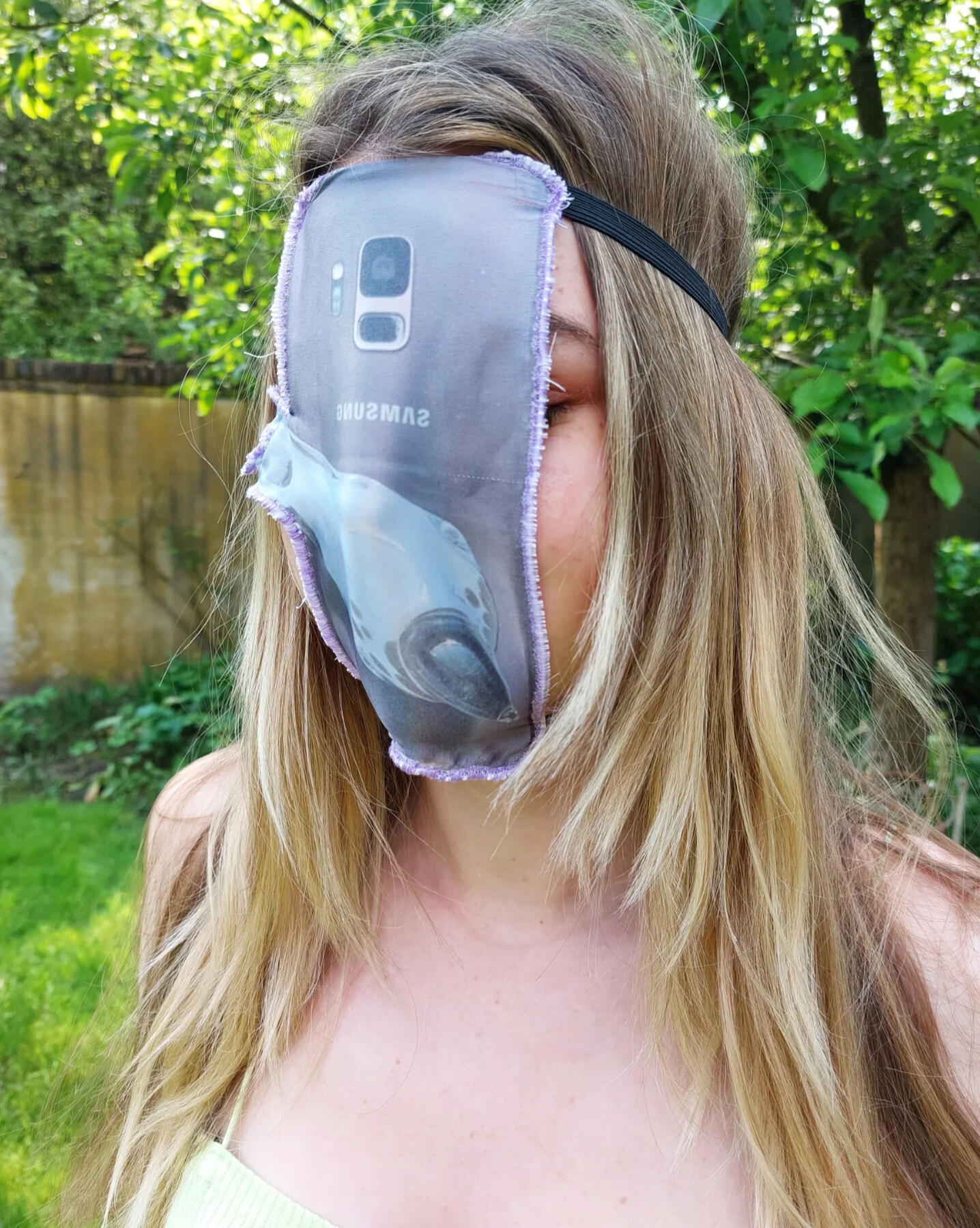
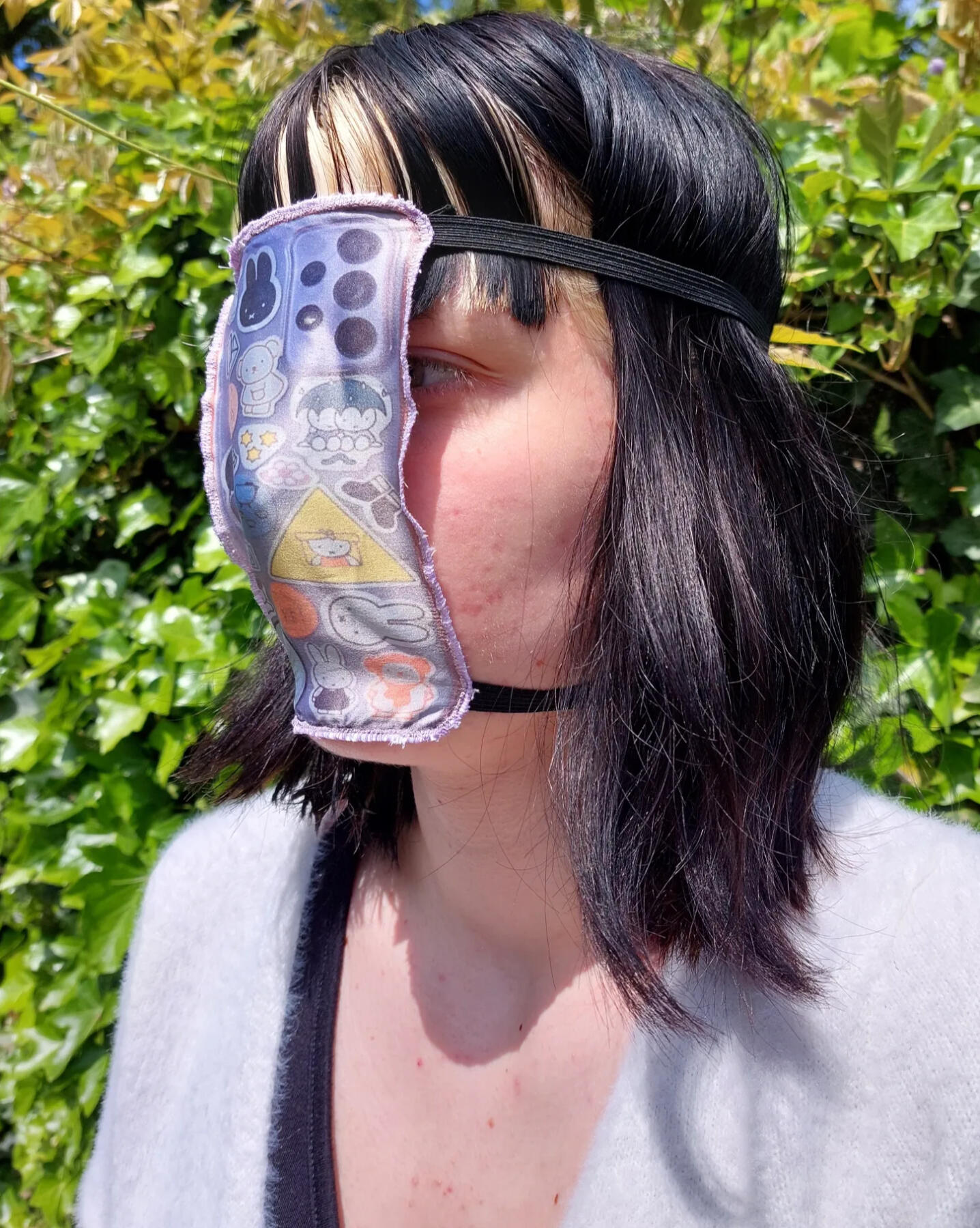
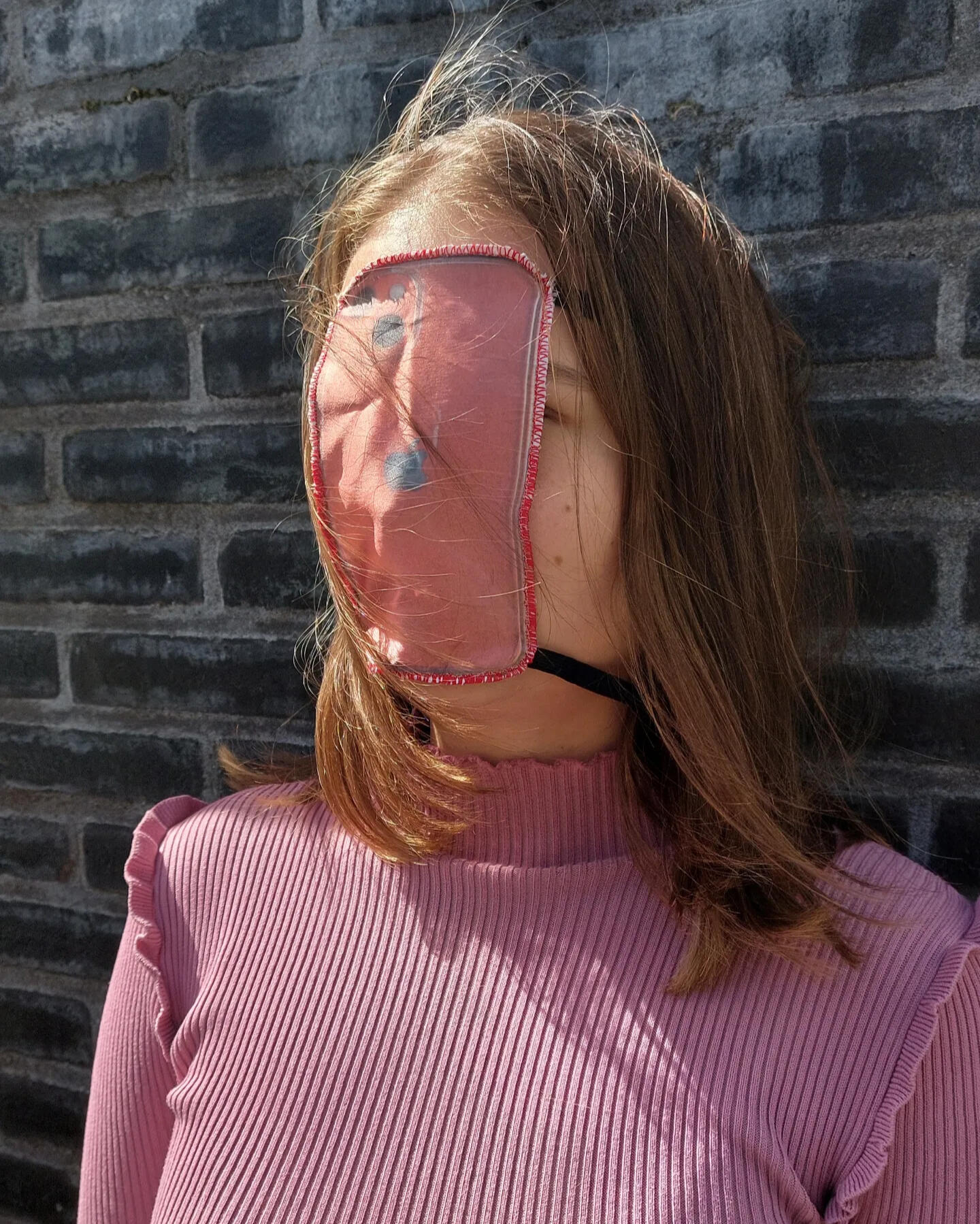
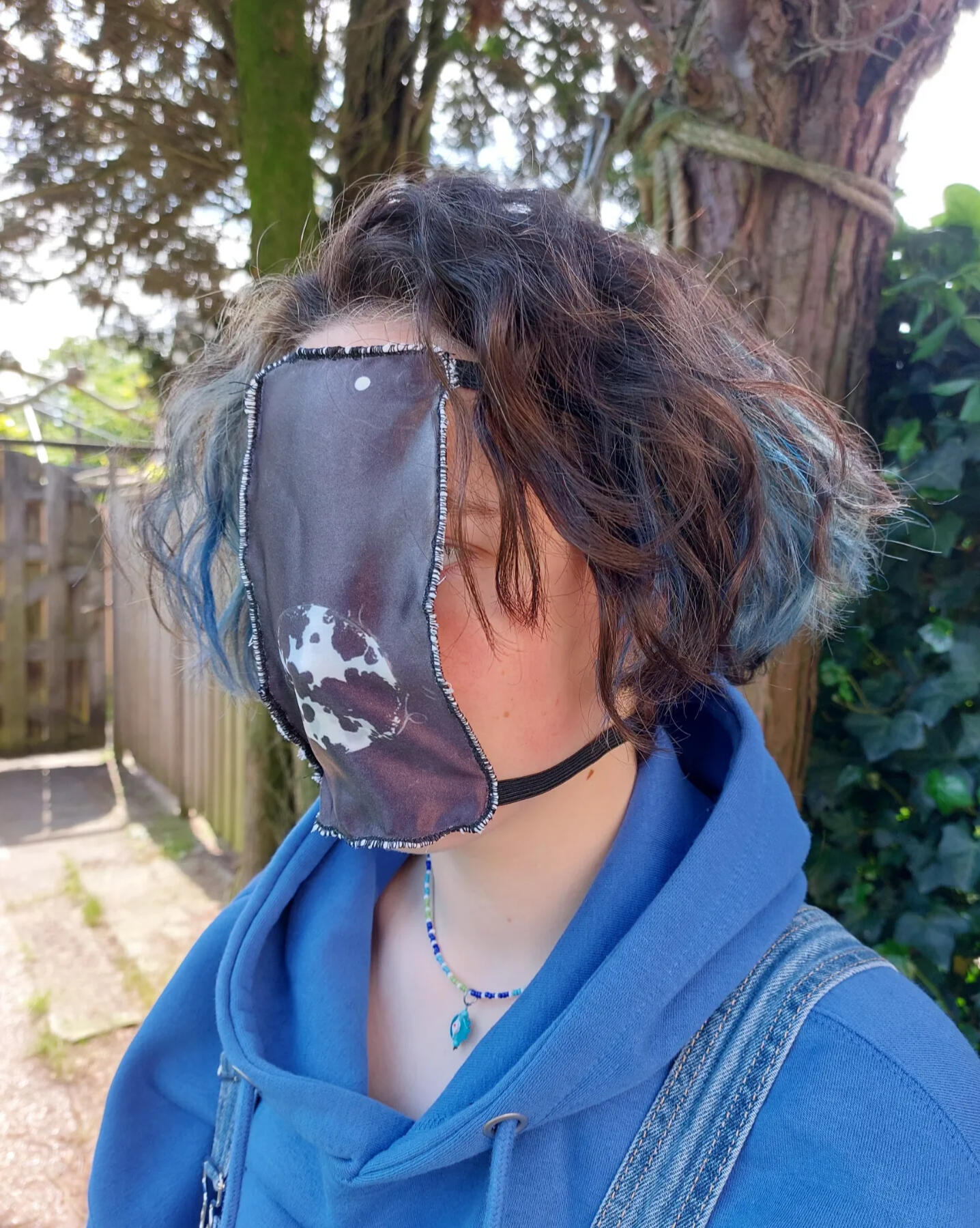
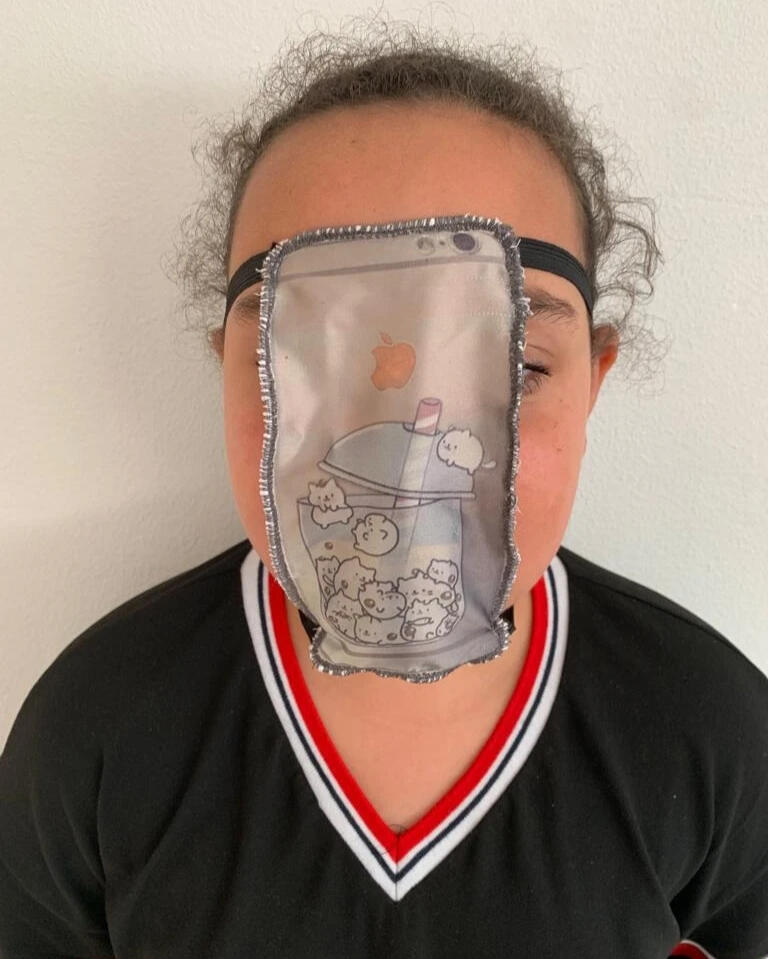
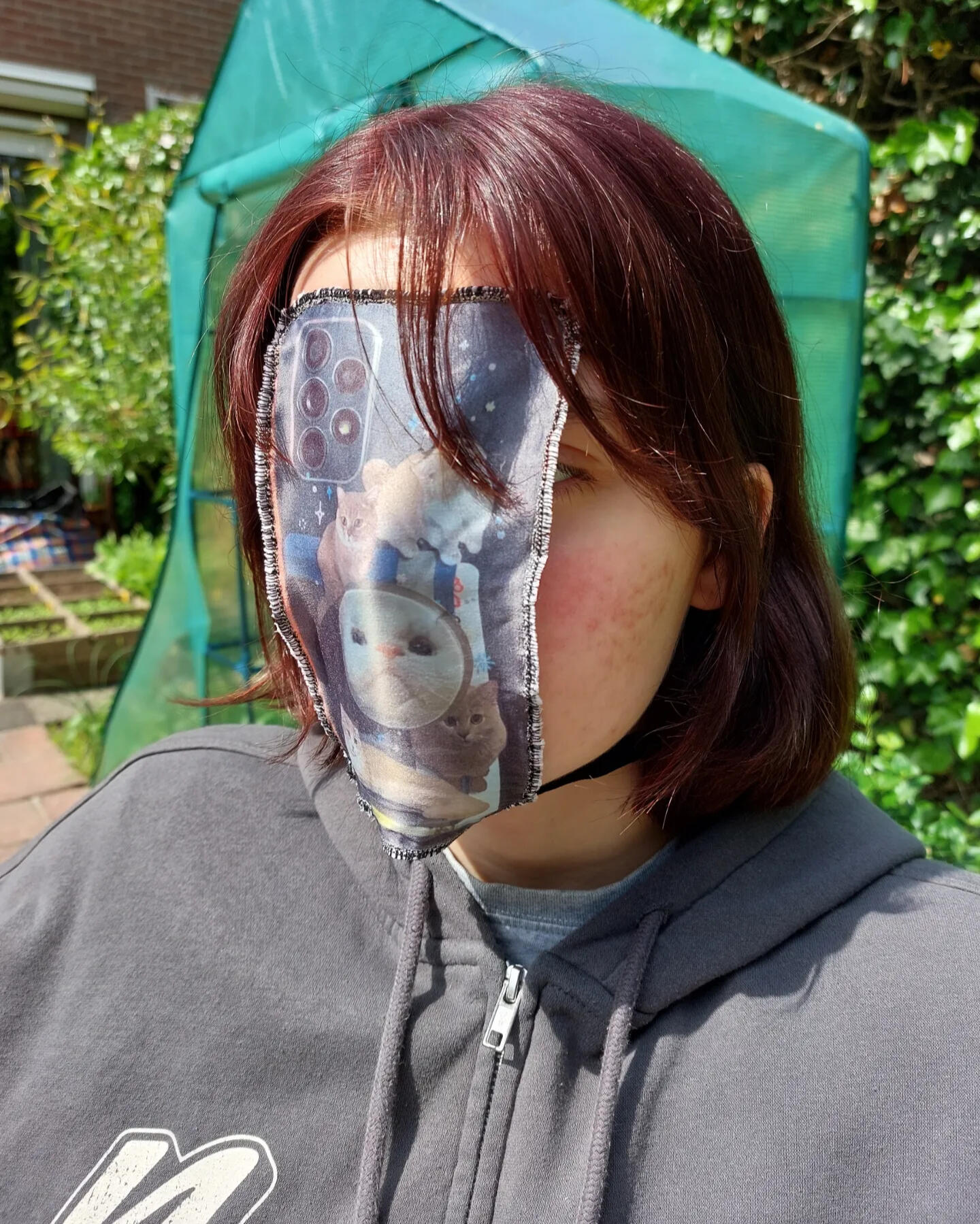
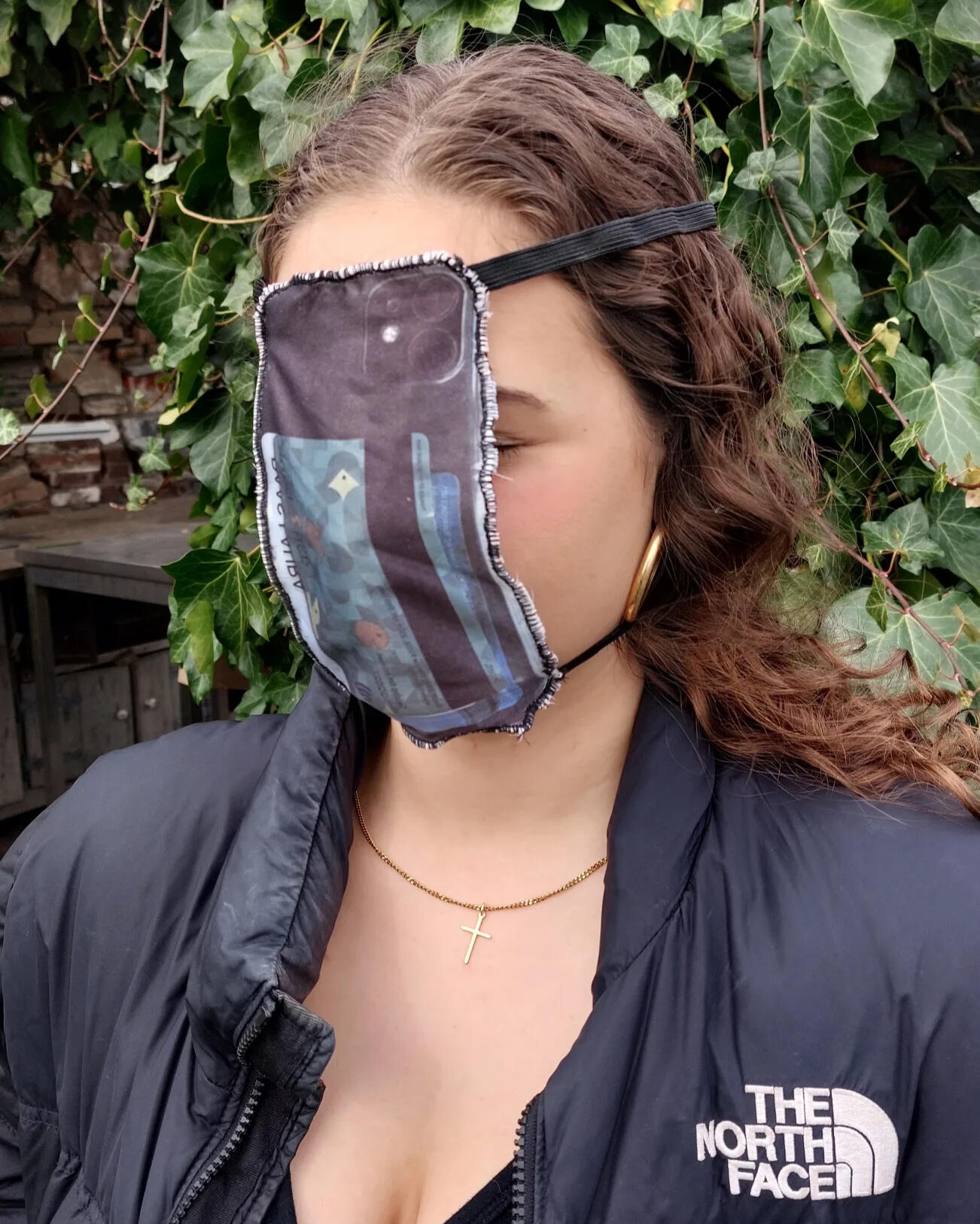
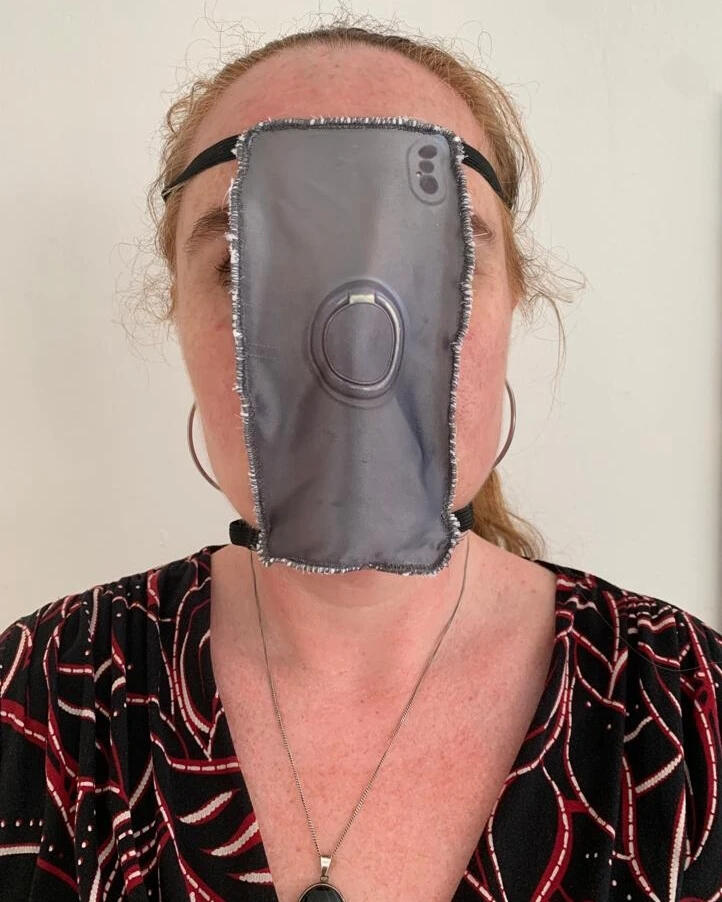
In this series, the phone becomes more than just a tool for connection, self-expression, and escapism; it transforms into a shield, a mask that merges with the wearer while obscuring a part of their identity. Phones allow us to dream, to create, and to communicate, yet they can also serve as a barrier, something we hide behind in moments of uncertainty. By camouflaging the phone within fabric and form, this work explores the tension between presence and absence, visibility and concealment. As the device blends seamlessly with the user, it replaces the face, our most human feature, prompting reflection on how technology shapes both our interactions and our sense of self.
Dimensions
For each phone mask, the dimensions were made altered to the length, the width, and around the head measurements of each person.
Veil & Reveal
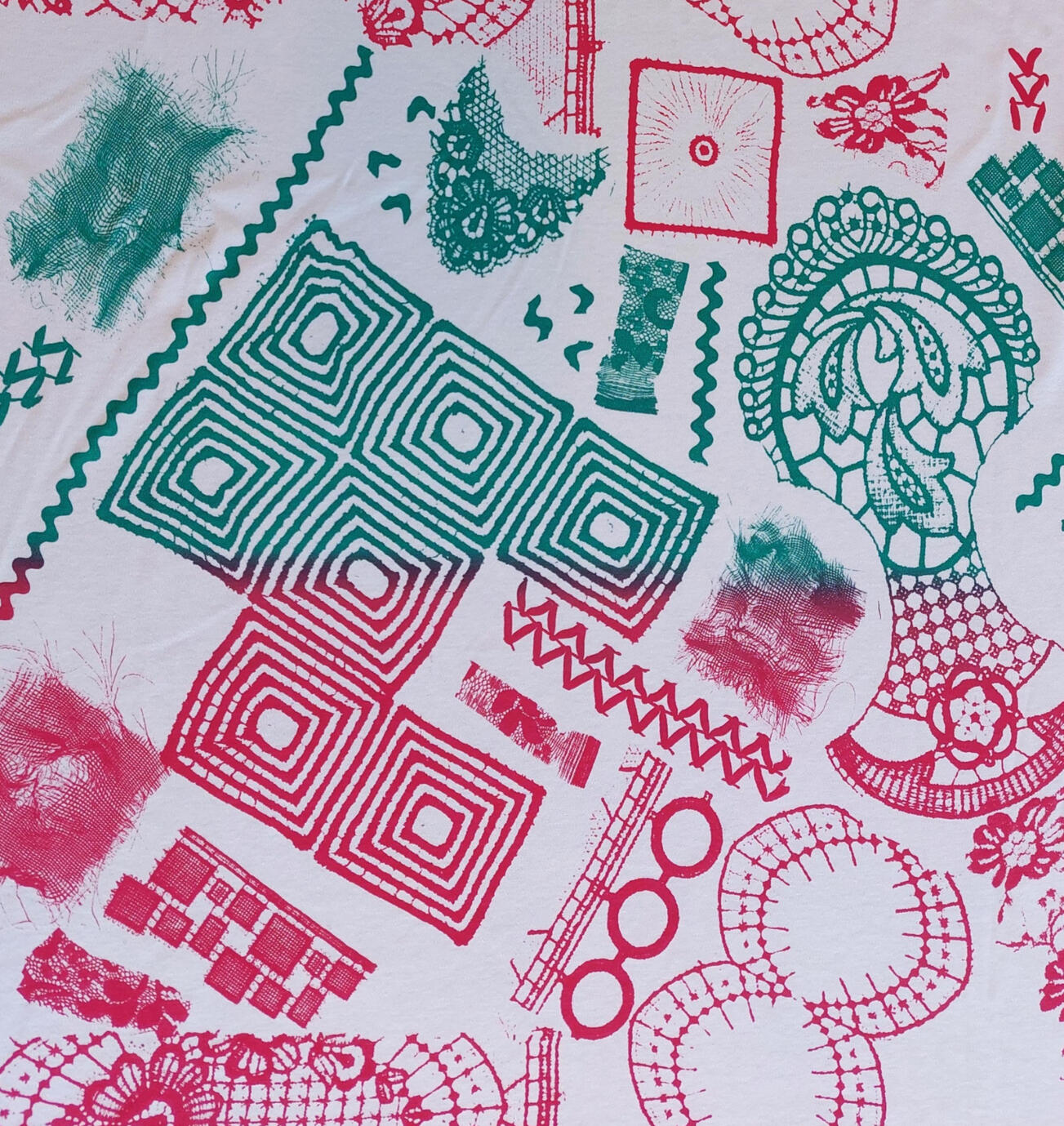
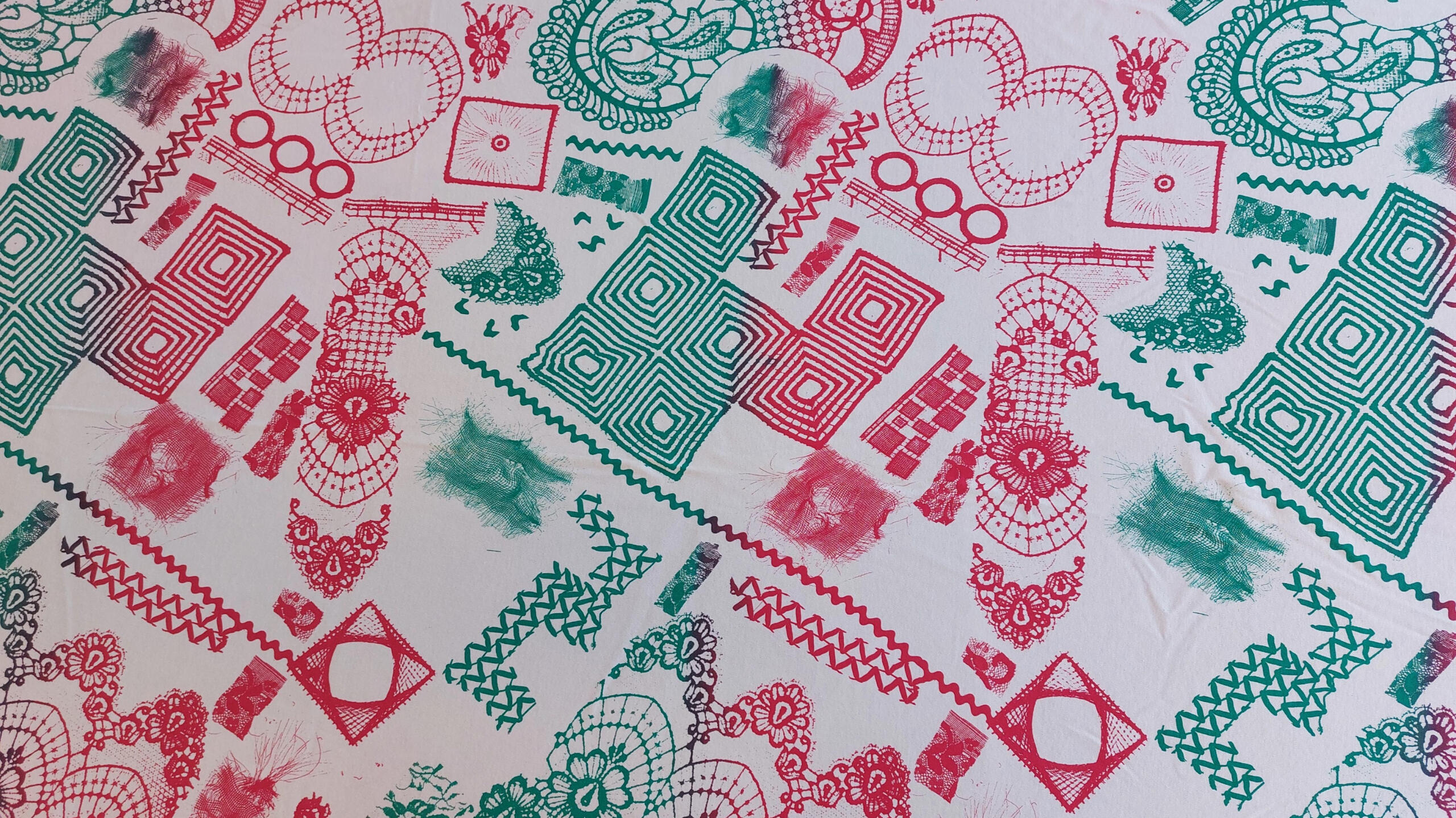
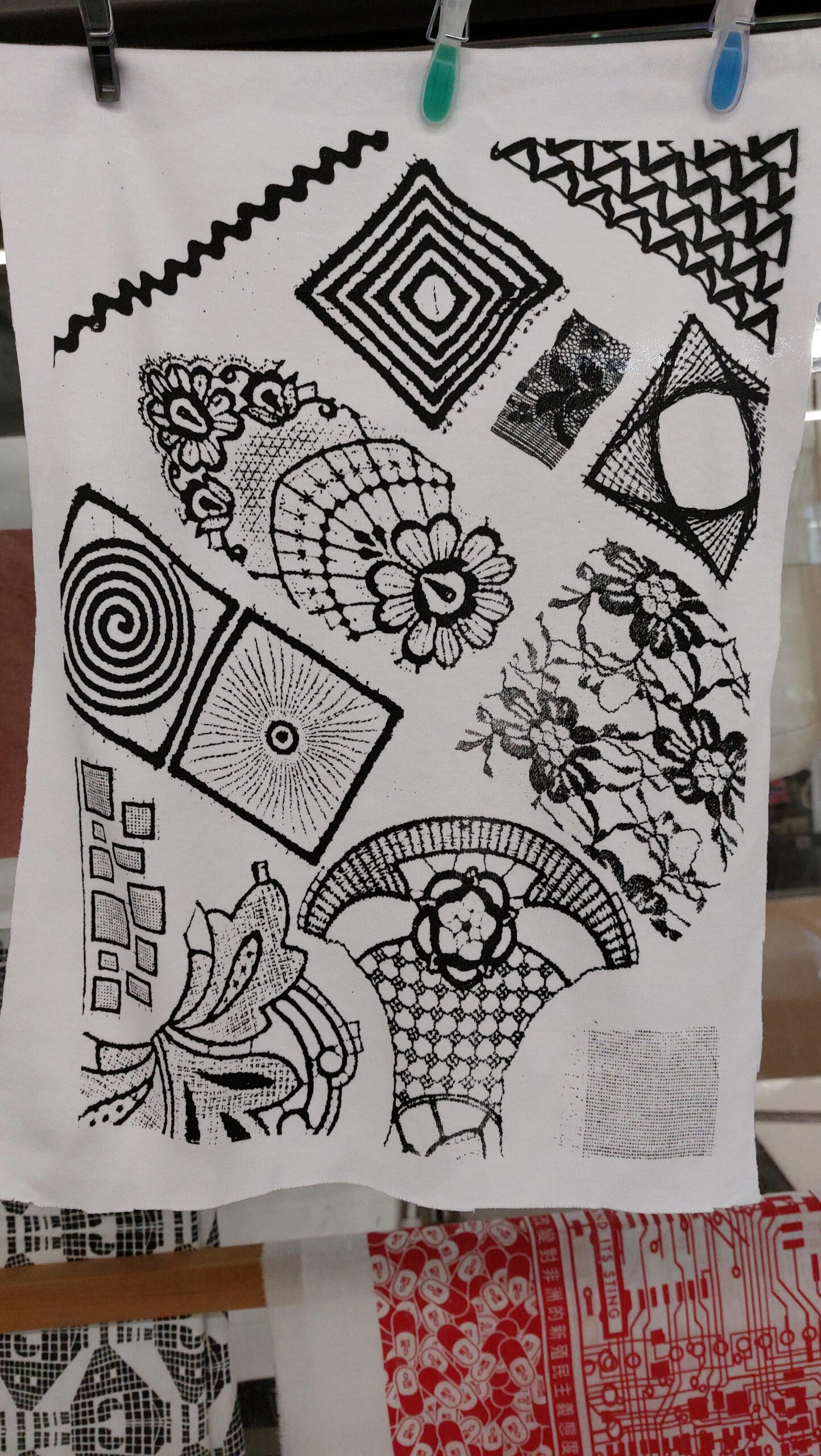
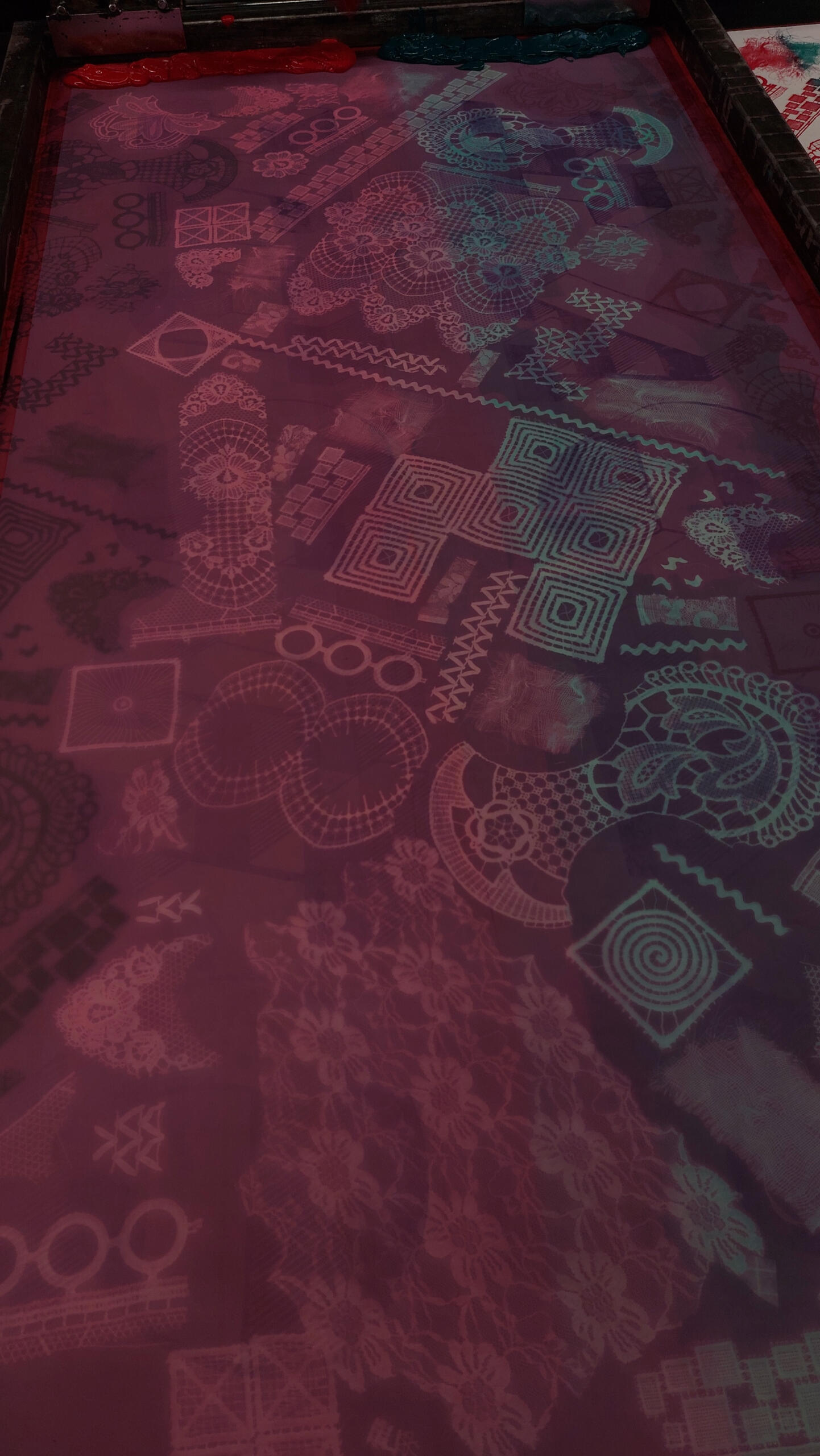
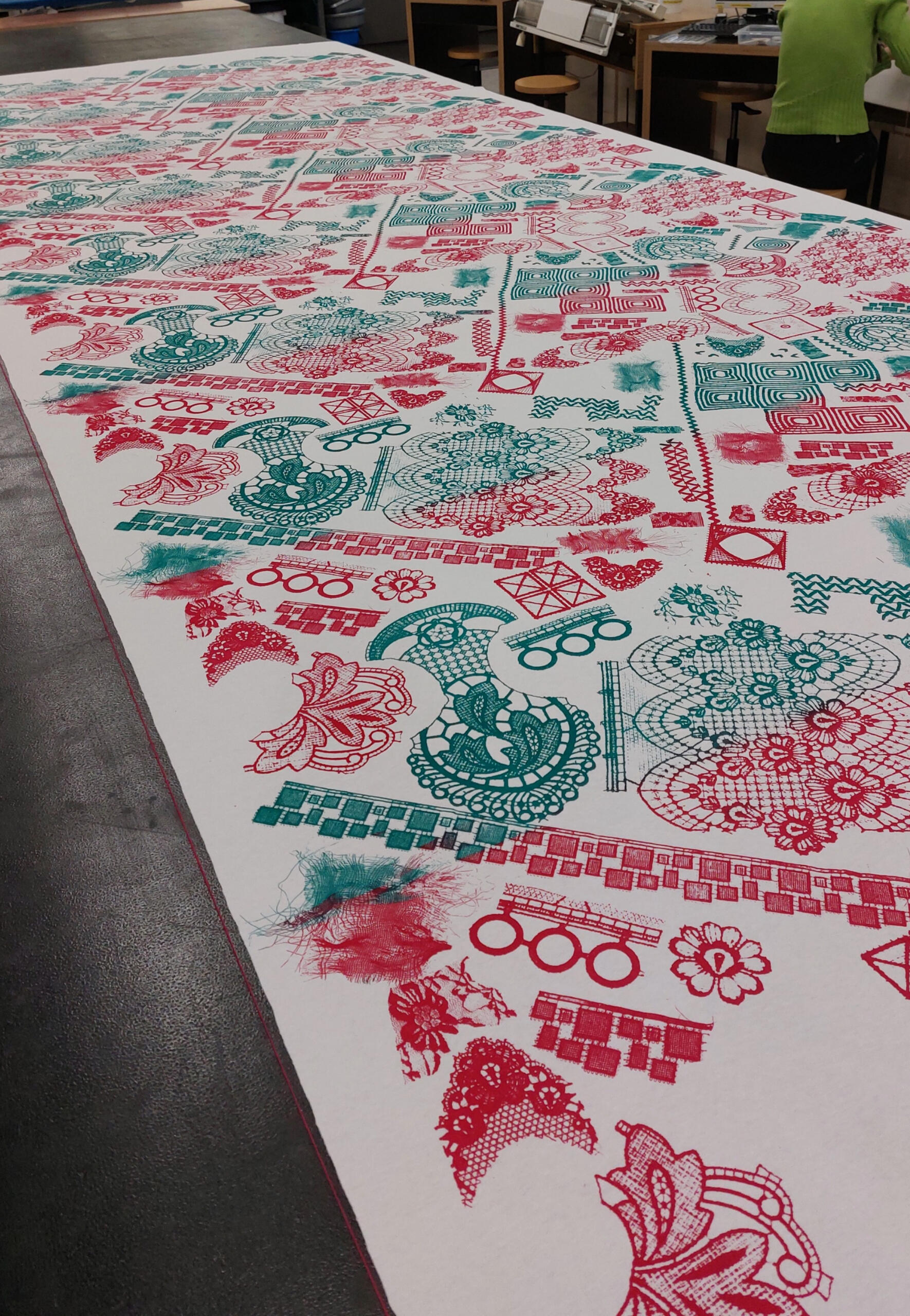
This meters-long camouflage-style pattern was created in collaboration with my classmate Ondine by exposing lace onto a screen and printing it in multiple colors. Lace is a fabric that constantly plays between concealment and revelation, always balancing the seen and unseen. With this piece, we chose to uncover the hidden intricacies of lace, bringing its delicate details to the surface and revealing what is often left unnoticed.
Dimensions
The big camouflaged fabric: 5 x 1 meter
Online Home
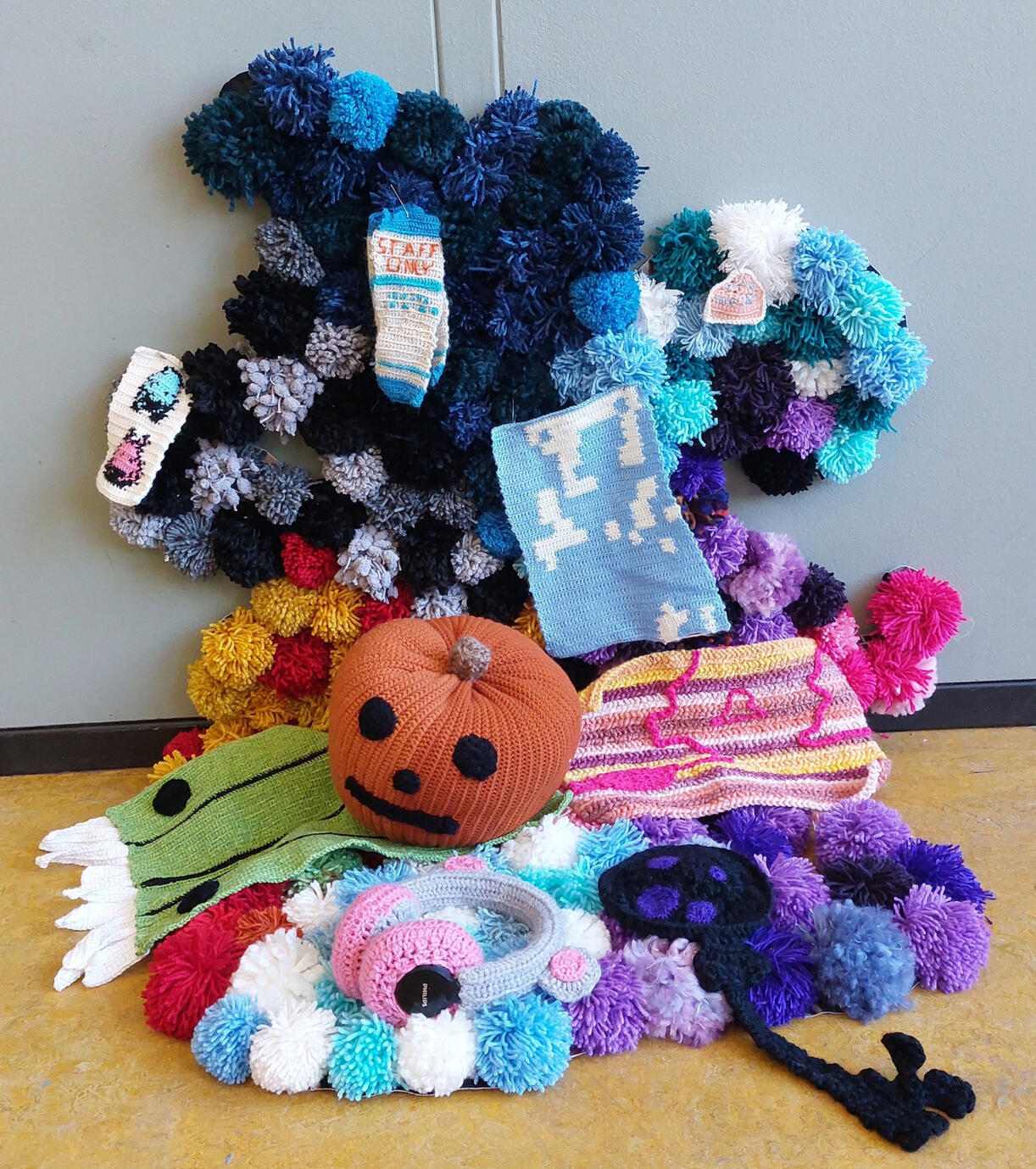
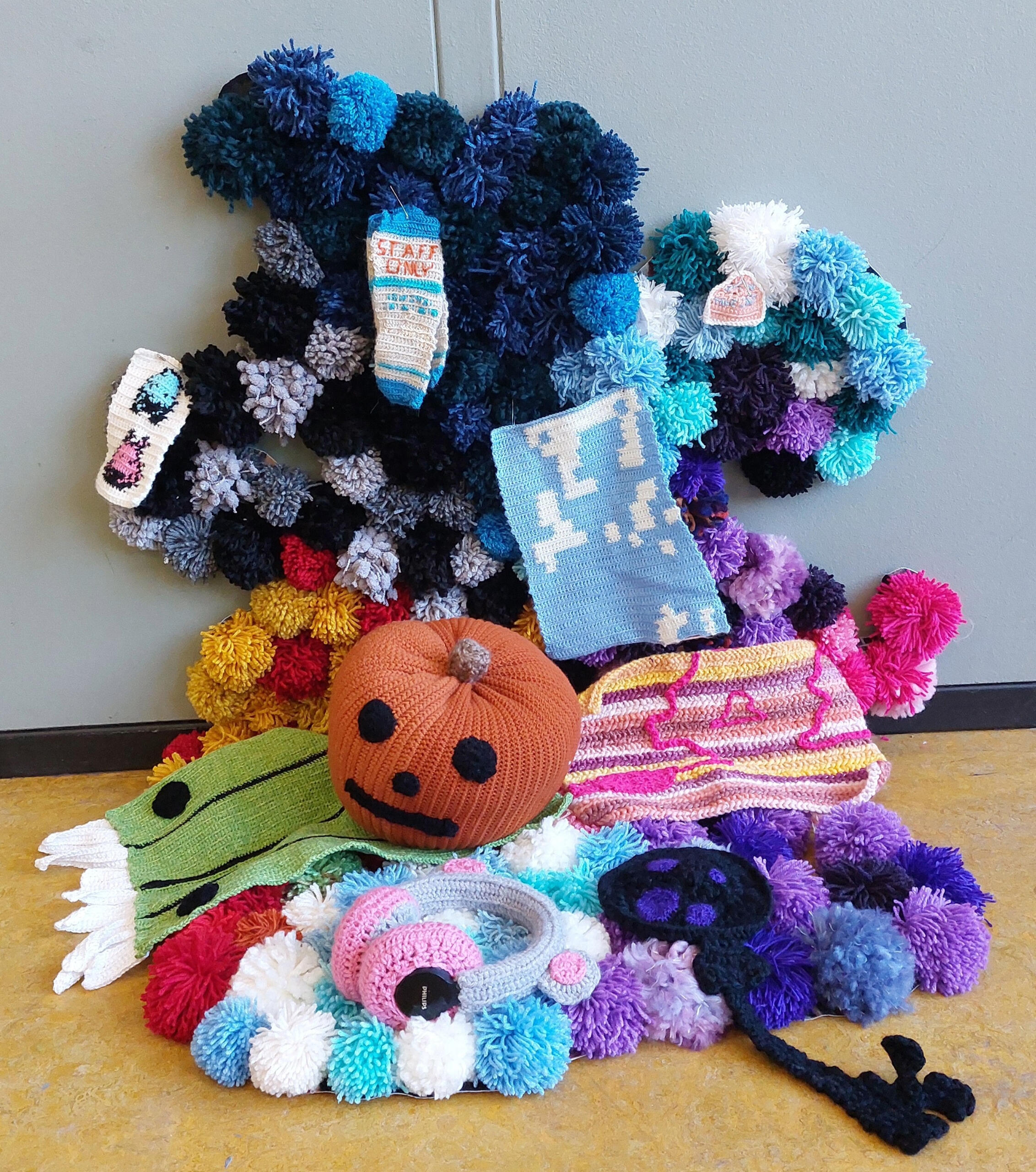
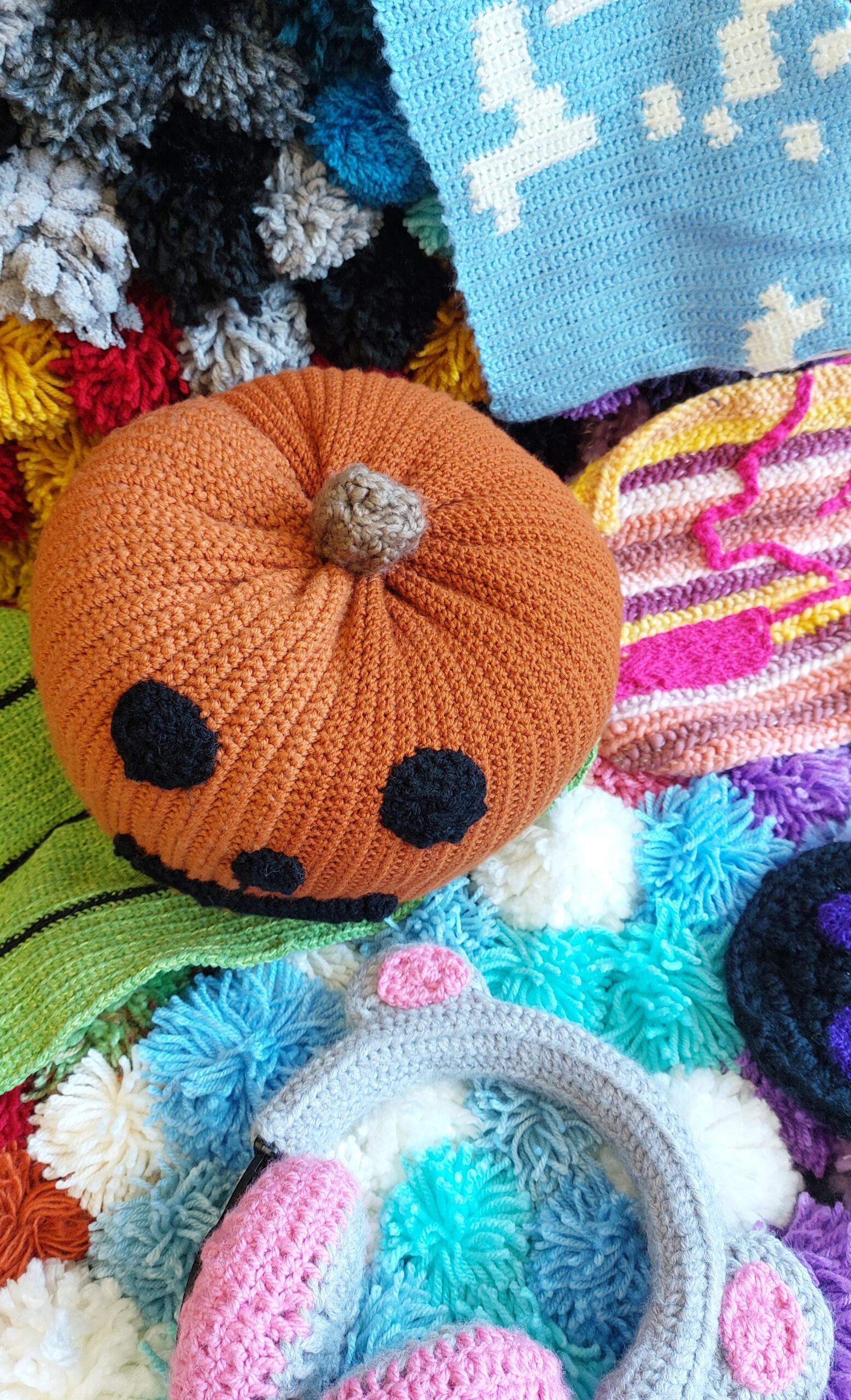
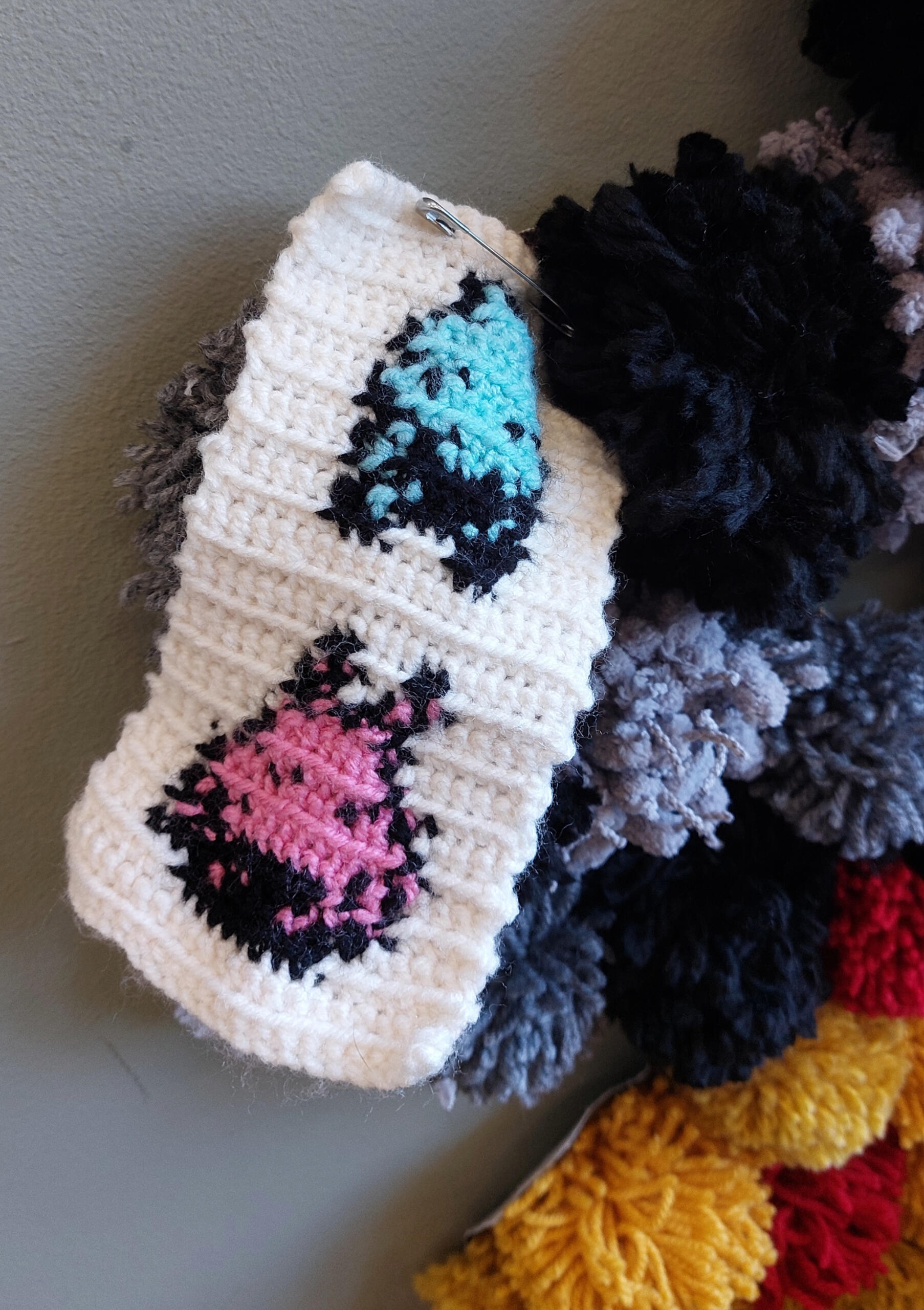
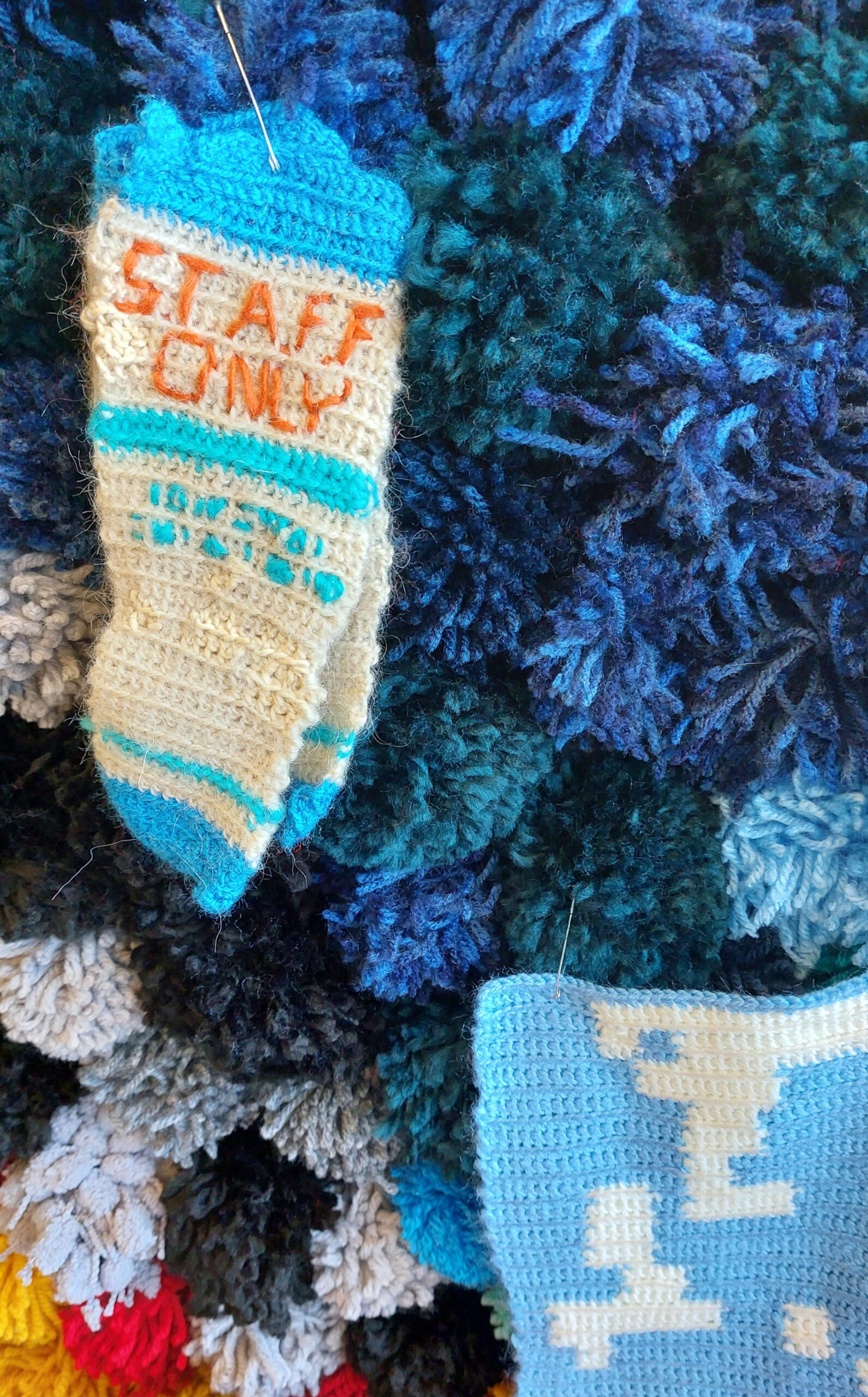
Growing up with the internet means navigating its vast mazes, discovering stories, games, and worlds that become more than just entertainment, they become a part of you. This piece explores the nostalgia woven into digital experiences, where media and childhood memories intertwine to create a sense of home. Inspired by Over the Garden Wall, Coraline, Wonder Egg Priority, Alice in Wonderland, Space Invaders, Spiritfarer, Minecraft, Animal Crossing, and Five Nights at Freddy’s: Security Breach, the work captures the comforting yet surreal essence of these worlds. Through soft textures and handcrafted forms, it reflects how the internet’s curated chaos shapes identity, blurring the line between reality and the imagined spaces we return to, time and time again.
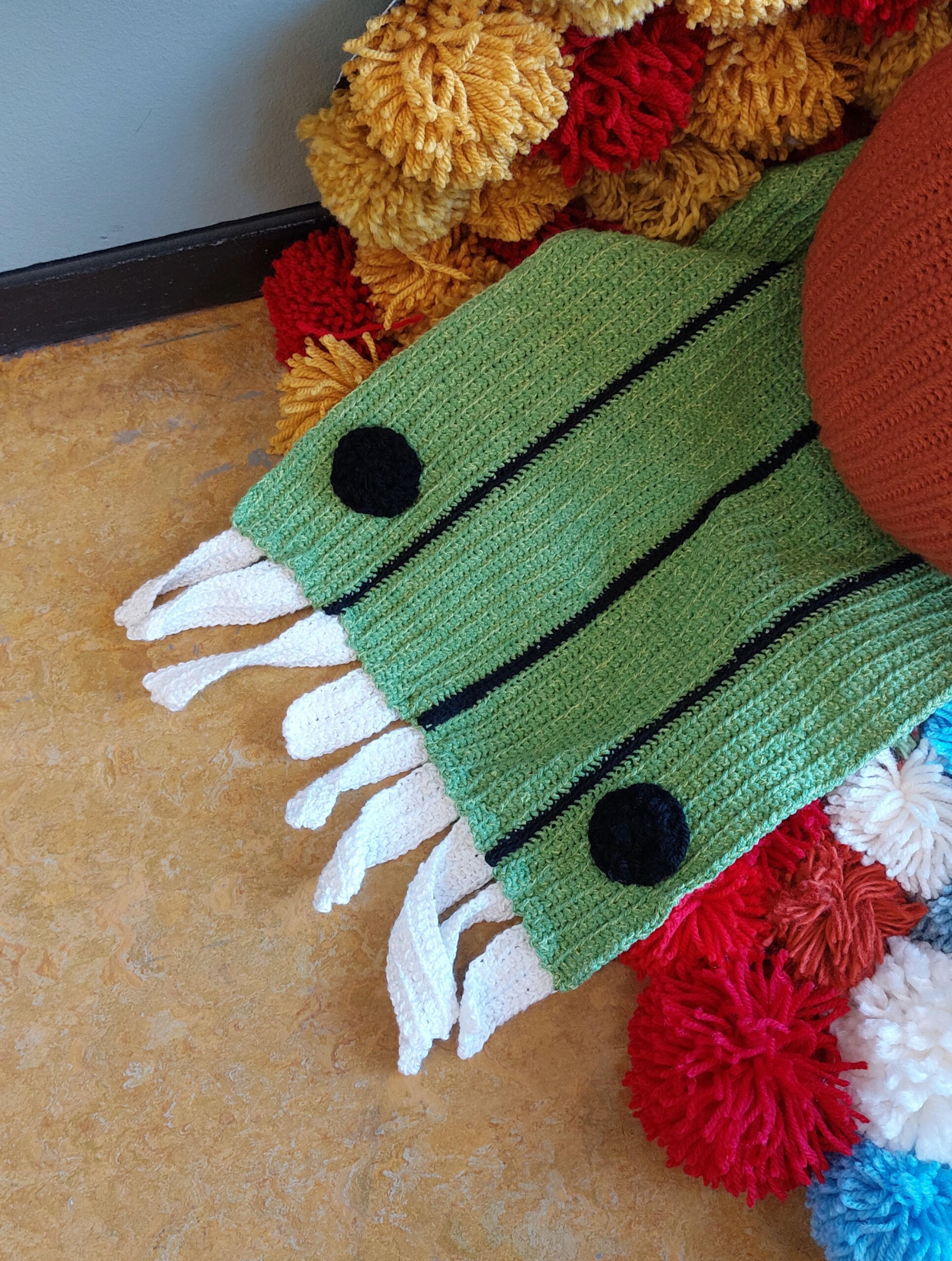
Dimensions
the hight of the whole work: 76 x 80 cm
the pumpkin: wrapped around its 78 cm
the 'staff only map': not opened its 18 x 6 cm, opened its 18 x 18 cm
the space invaders monsters: 16 x 7 cm
Alice's cookie: 9 x 6.5 cm
the minecraft sky: 26.5 x 19 cm
the landscape from spirit farer: 20 x 17 cm
the key: the length is 27 cm, the diameter of the head piece is 15 cm
the green monster: 54 x 29 cm
the headphones: 20 x 17 cm
YouScape
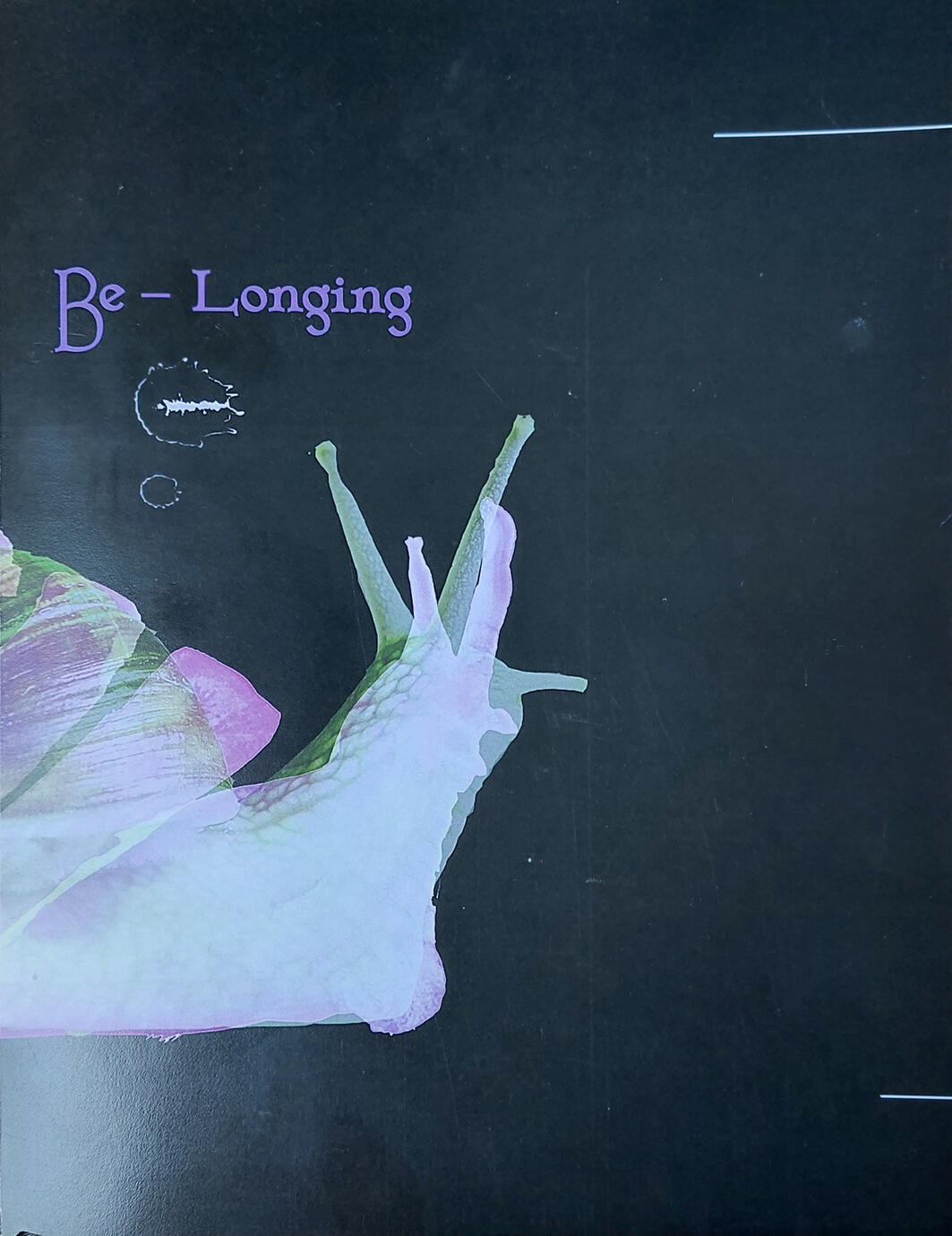
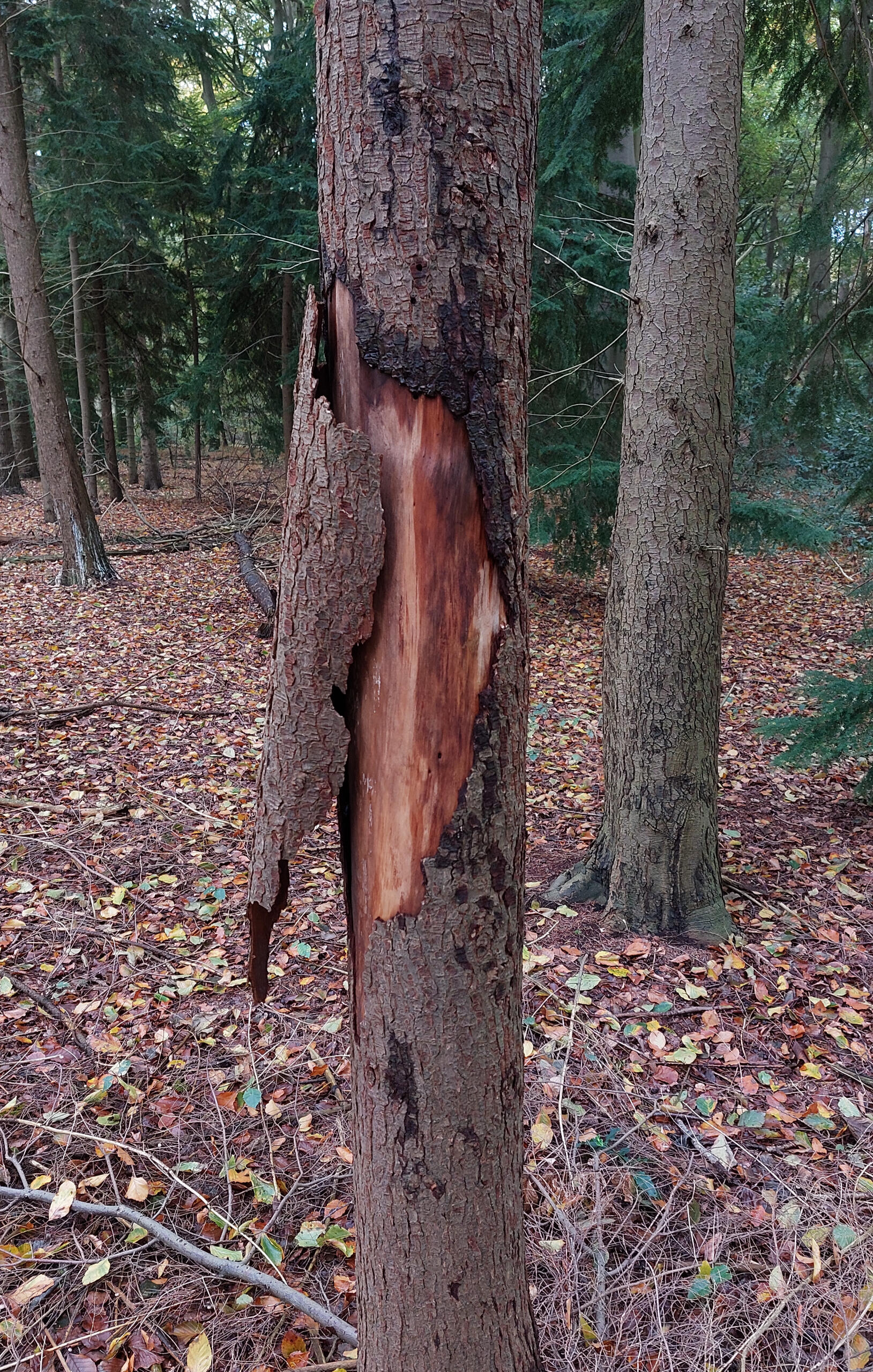
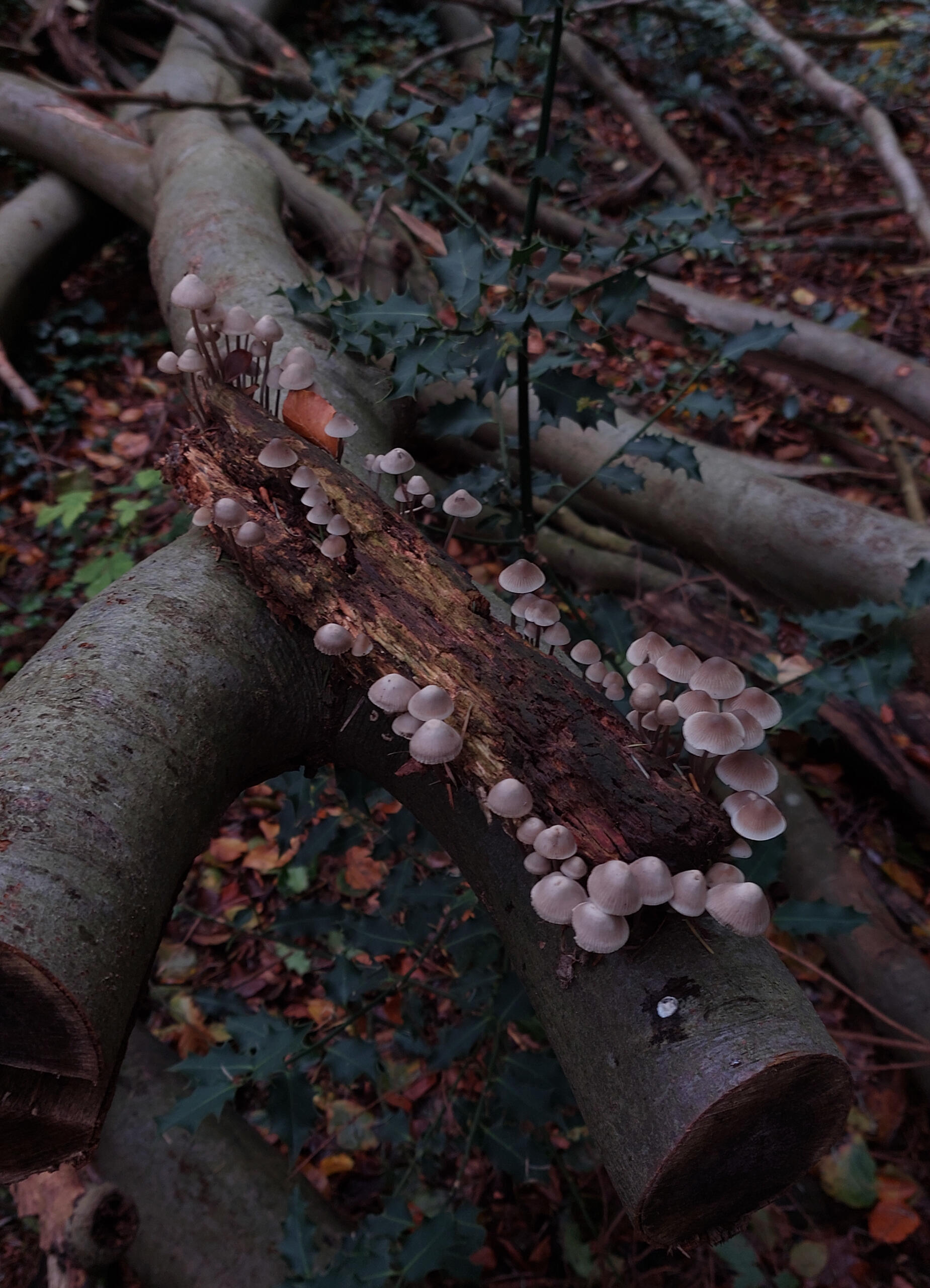
This soundscape was recorded in my favorite woods in my hometown, Bikbergen. It features the Be-longing book, a project from my camouflage class. Below, you can watch a flip-through of my section, accompanied by the audio file and images of the surrounding landscape, capturing the atmosphere that inspired this work.
Ganagi: Wonders of an Unknown Land
This book was made together with Olga and Anna in a beyond methods class. Its a fairytale style booklet, that is meant for a younger audience. Down below you can find a reading of it by me!
Dimensions
the book: 17,5 x 16,5 cm
Commencement Rock - Graduation project at Gerrit Rietveld Academie
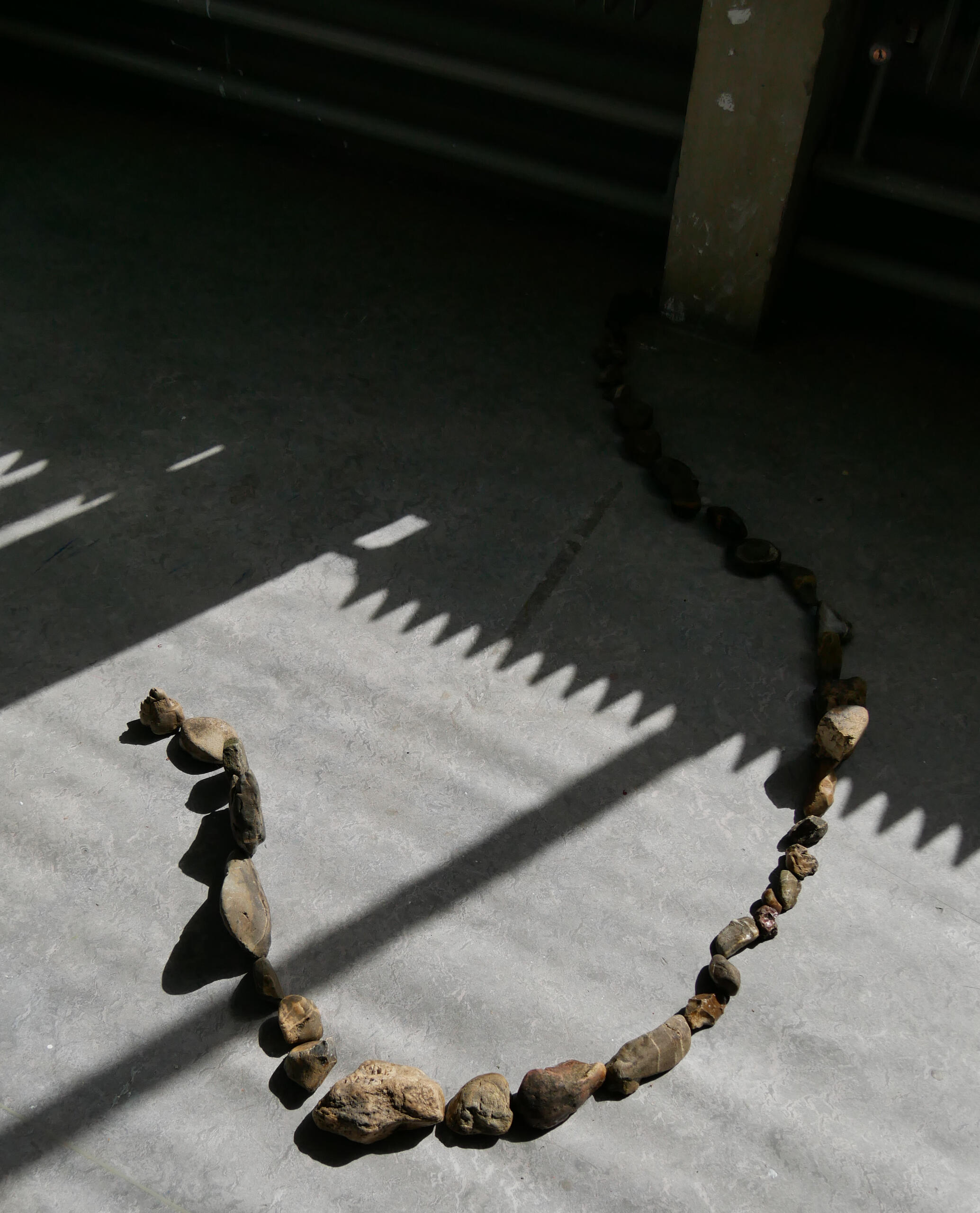
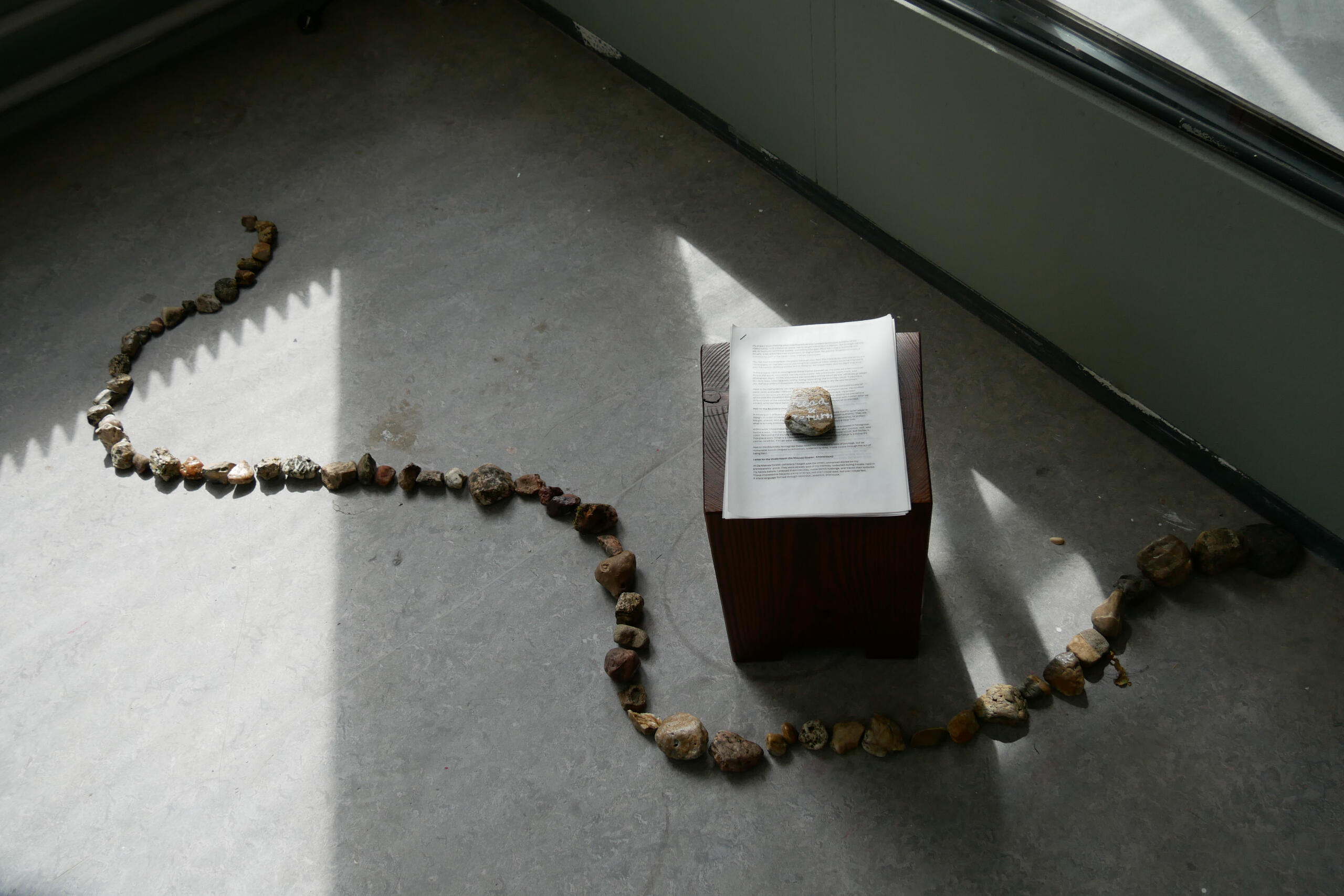
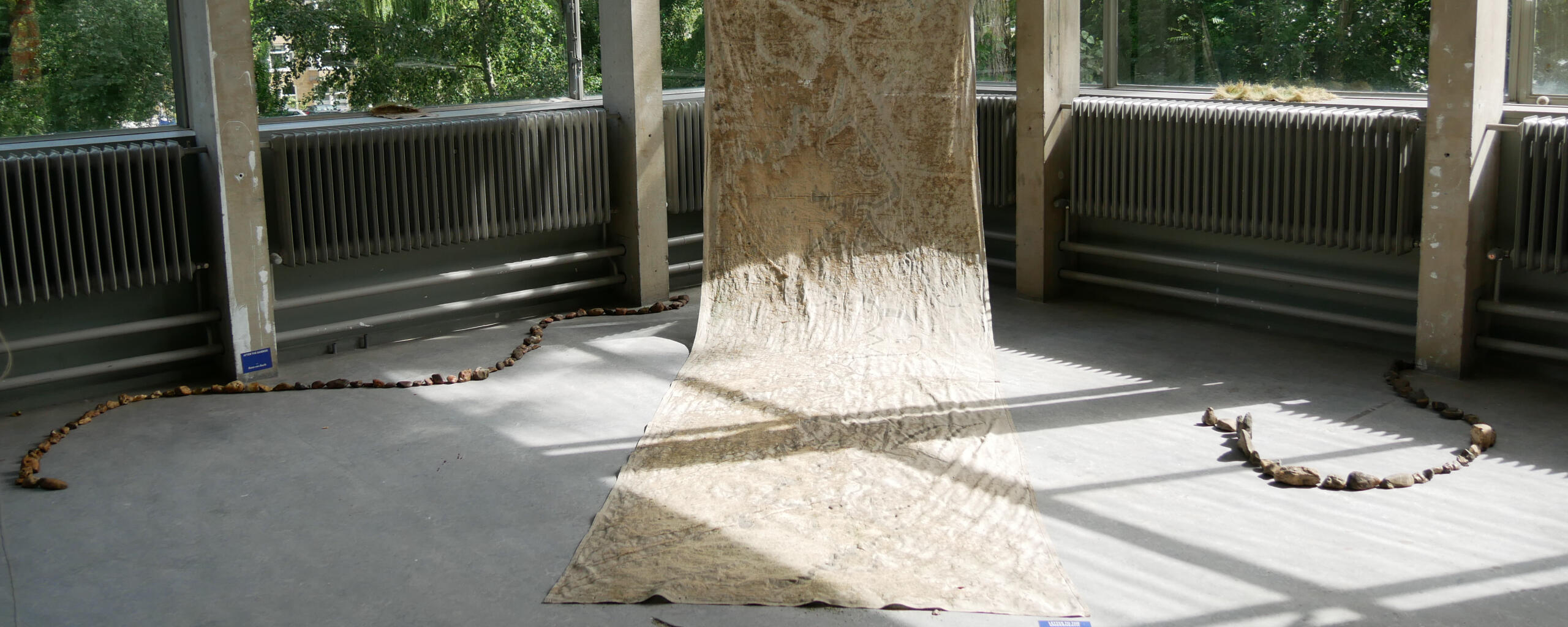
My graduation work explores how human actions shape, claim, and transform the natural world, especially the bodies of nature we often overlook: rocks, soil, and the land beneath our feet. This project connects three places in the Netherlands: Trompenburg, De Nieuwe Ooster, and the Hartelkanaal. Through textile installations, my work explores our relationship with matter: what we extract from the earth, what we leave behind, and what we transform into points of connection.
Heir to the Boundary
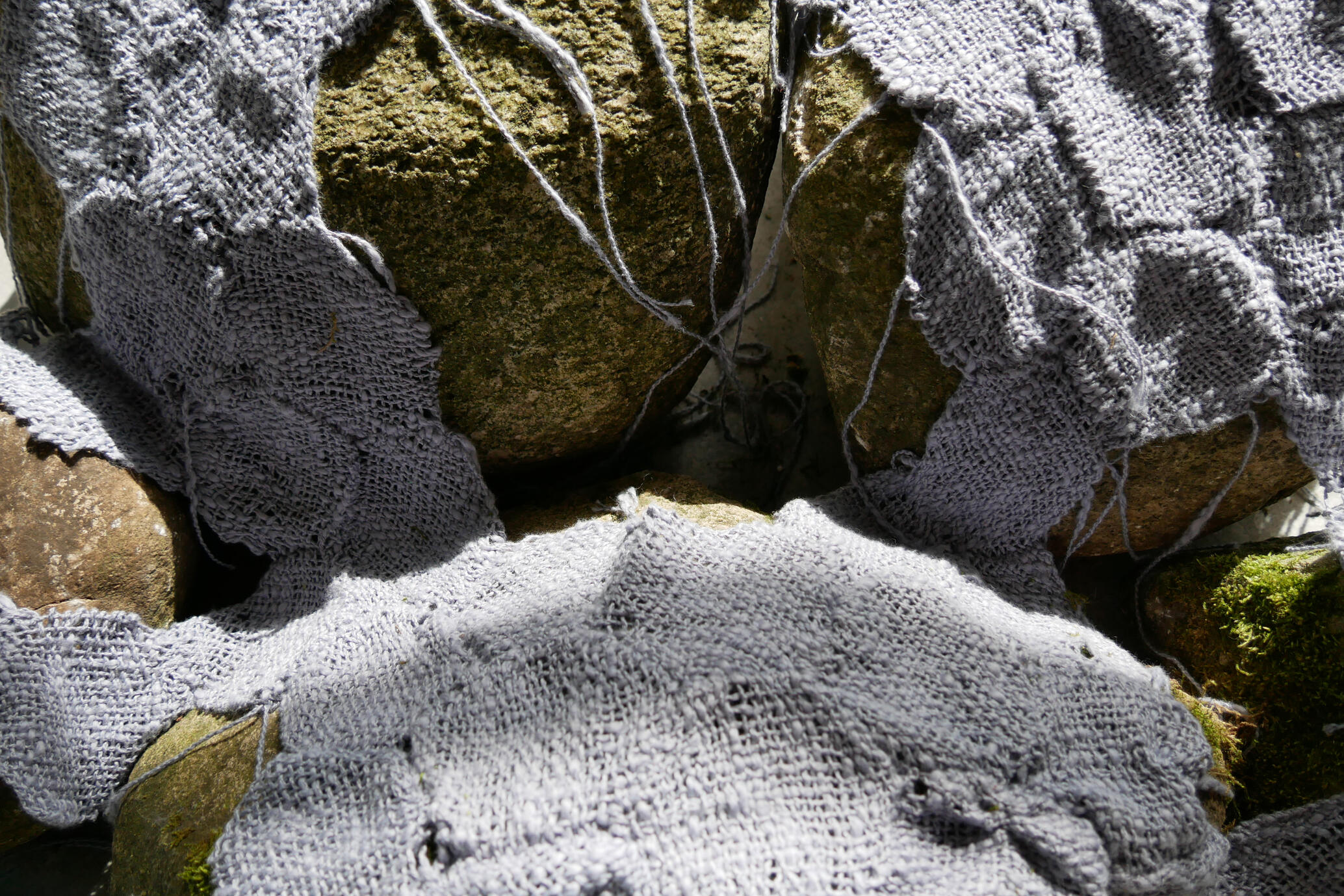
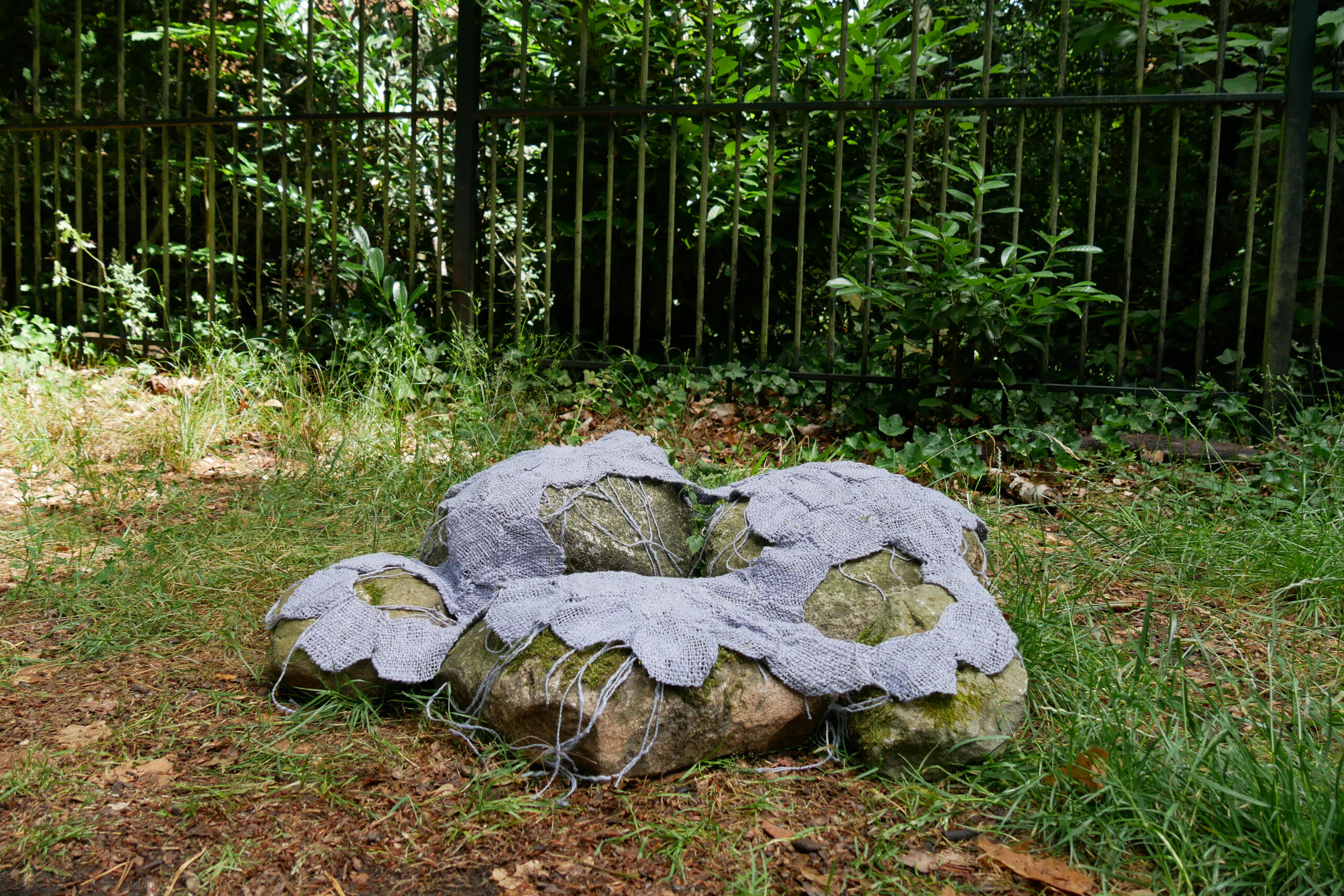
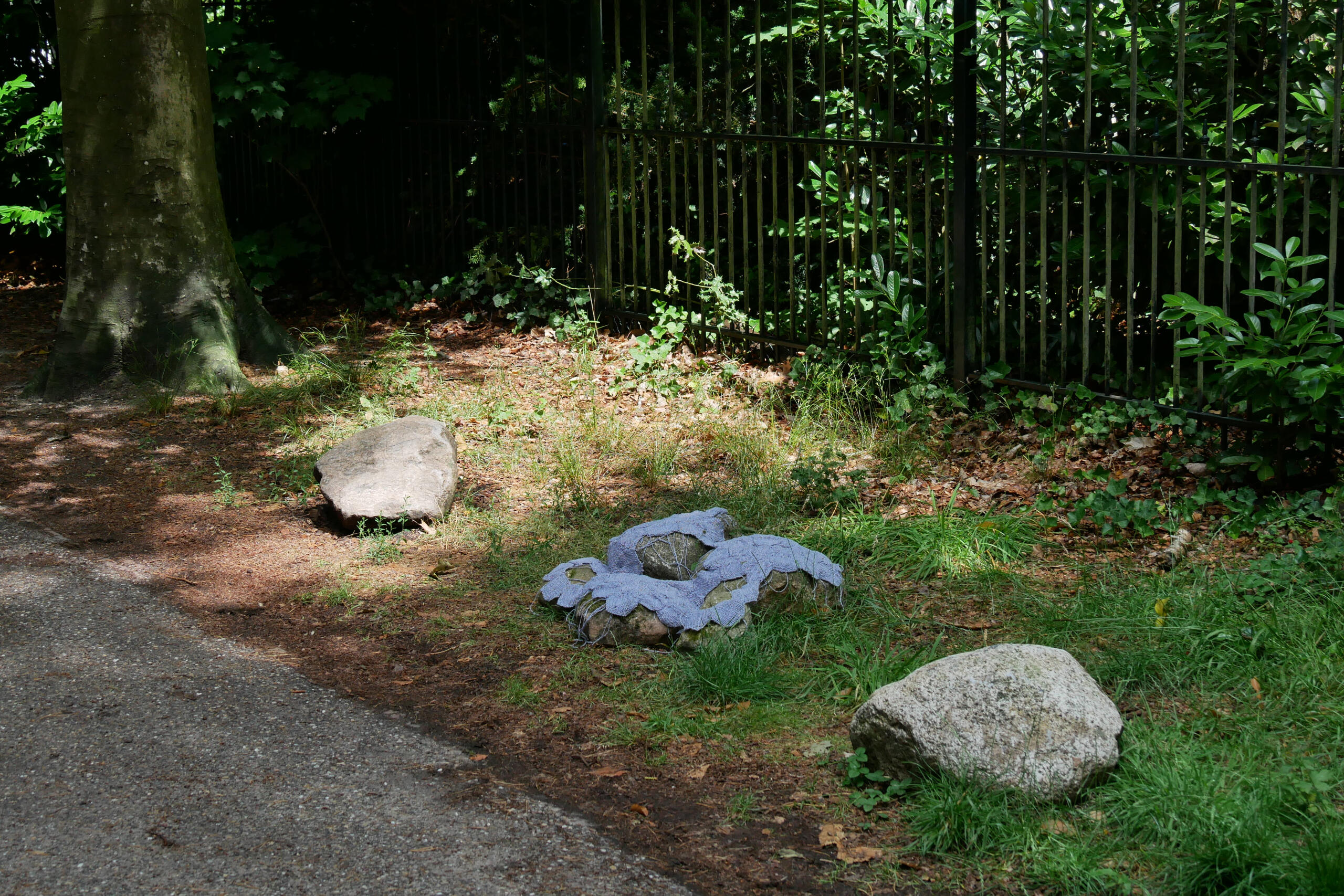
In Hilversum’s affluent Trompenburg neighborhood, where control takes the form of quiet design, stones do more than decorate; they assert authority. Purchased, placed, and aligned, they edge paths and lawns to signal ownership, to protect what is already protected. They do not speak, yet their silence draws a line. In my work, I responded by softening them. Each stone is wrapped in hexagonal textile scales, structures drawn from both bee systems and camouflage patterns. It has grown a new skin, leaving behind its old protective armour. The fabrics are porous, soft, and open, replacing the language of resistance with one of transformation. They do not repel touch; they invite it. This work asks: What is a boundary if it no longer holds its previous function? What is a stone if it can be cared for? Heir to the Boundary reimagines these rocks not as static markers of privilege, but as vulnerable bodies; shaped by extraction, softened by time, and made newly visible through the act of being held.
Letter to the Underneath
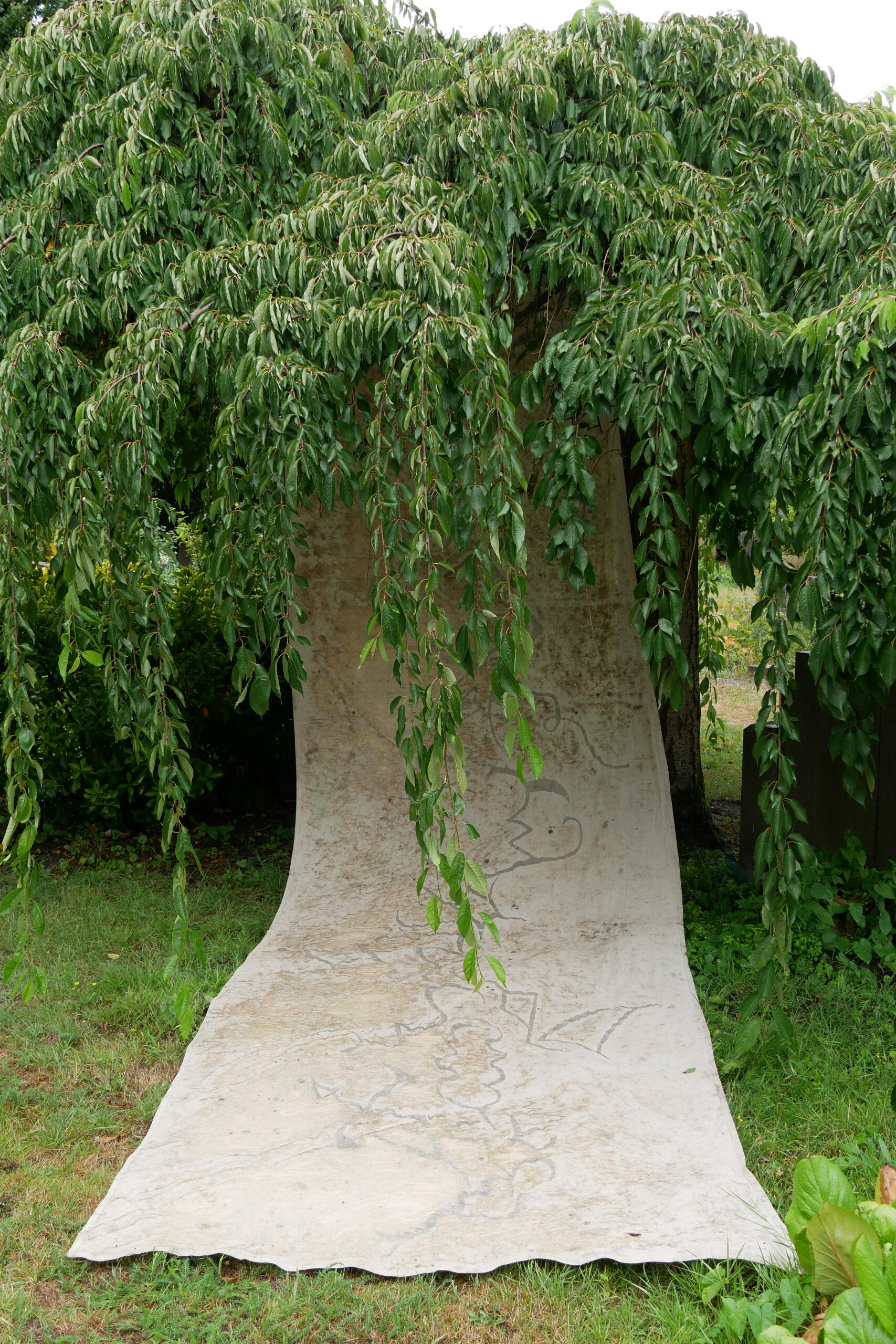
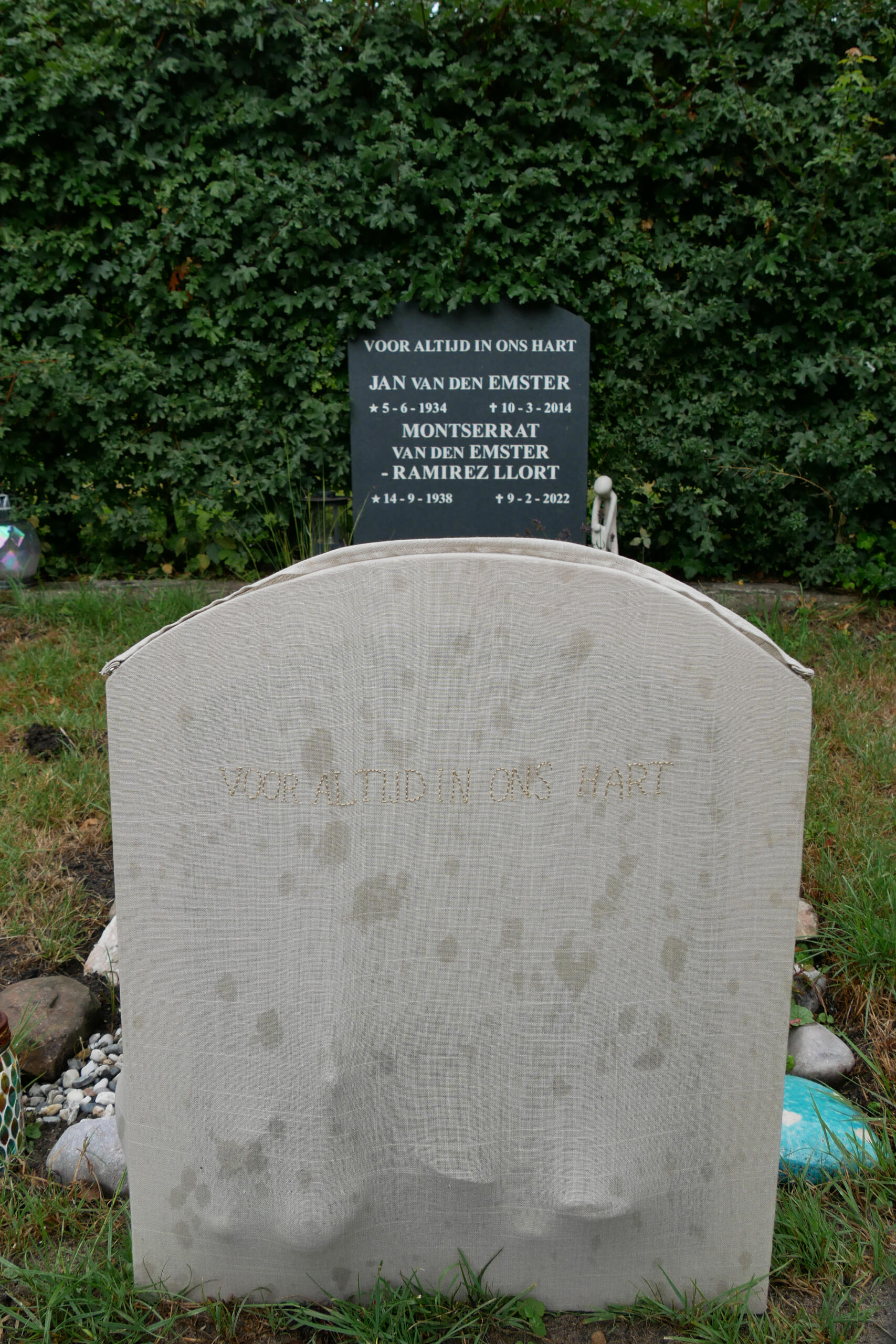
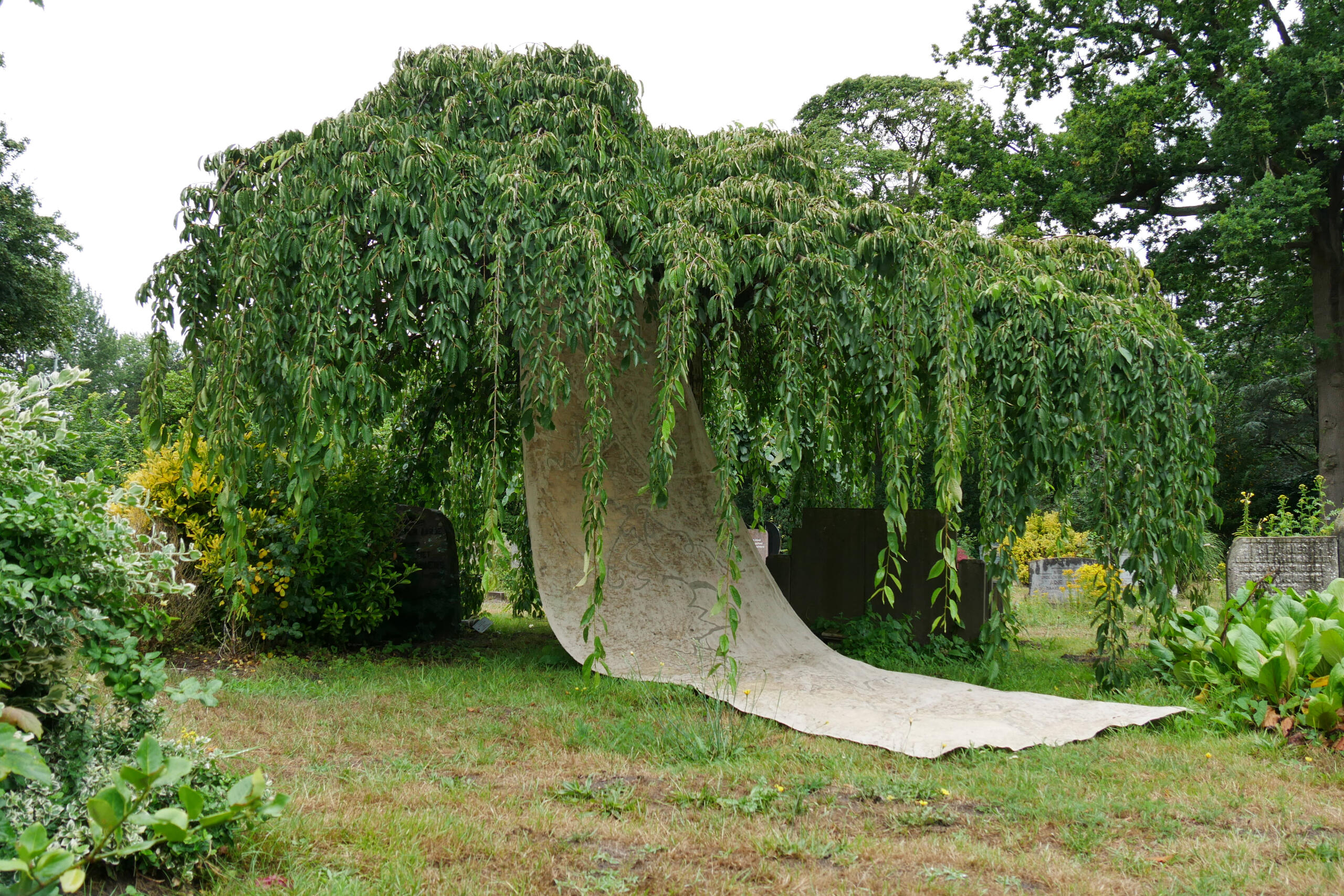
At De Nieuwe Ooster cemetery in Amsterdam, I turned to the small, unmarked rocks resting on my grandparents’ grave, which I had gathered previously on my travels. They became the starting point of my work. I pressed these rocks into clay, made pencil rubbings, and traced the quiet sigils that surfaced. In their marks and repetitions, I began to read a pattern, a kind of personal script written through absence and touch. I transferred this language onto linen using batik, a process of wax, heat, and time. Then grass was allowed to grow through the fabric, growing along the pattern, gently erasing and remaking it. This mirrored the slow reclamation of the cemetery itself, where nature reaches for the body as memory recedes. Care here is seldom permanent. Remembrance requires labor. In this context, the rock no longer guards or marks; it listens. It doesn’t speak in declarations, but in erosion, slowly eating away at its skin. Letter to the Underneath wonders how grief endures not in monuments, but in materials that move, settle, and remain with us even as forgetting begins.
After the Barrier
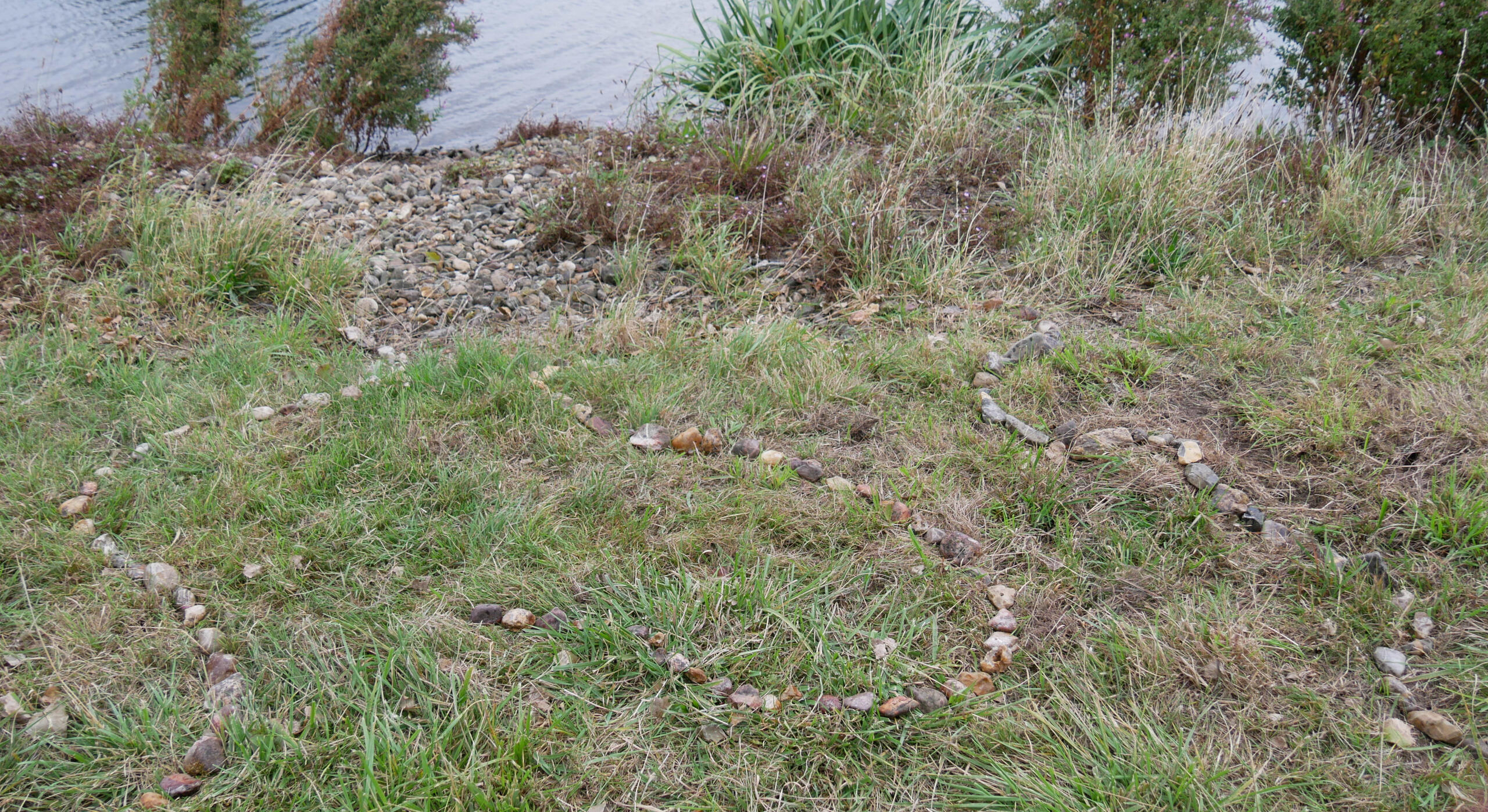
In Spijkenisse, the Hartelkanaal cuts through industrial terrain, where infrastructure and water meet under quiet enforcement. Cargo ships carry coal and raw materials past stones that are lining the canal; barriers that keep humans out, commerce in, and water contained. These rocks, embedded in the edge of movement, are rarely noticed, but they have witnessed everything that passes. I gathered some and brought them inside, reconstructing a fragment of shoreline within an interior space. On their undersides, I applied a thin skin of bioplastic, made from potato starch, vinegar, and glycerin, creating a translucent surface that mimics the motion of water. This delicate coating holds a memory of where the tide once touched and withdrew. The stones no longer repel. They no longer divide. After the Barrier reimagines its former role, not as a force of exclusion, but as a vessel of quiet protection, flowing between the other installations, connecting them through what remains after division yields to care.
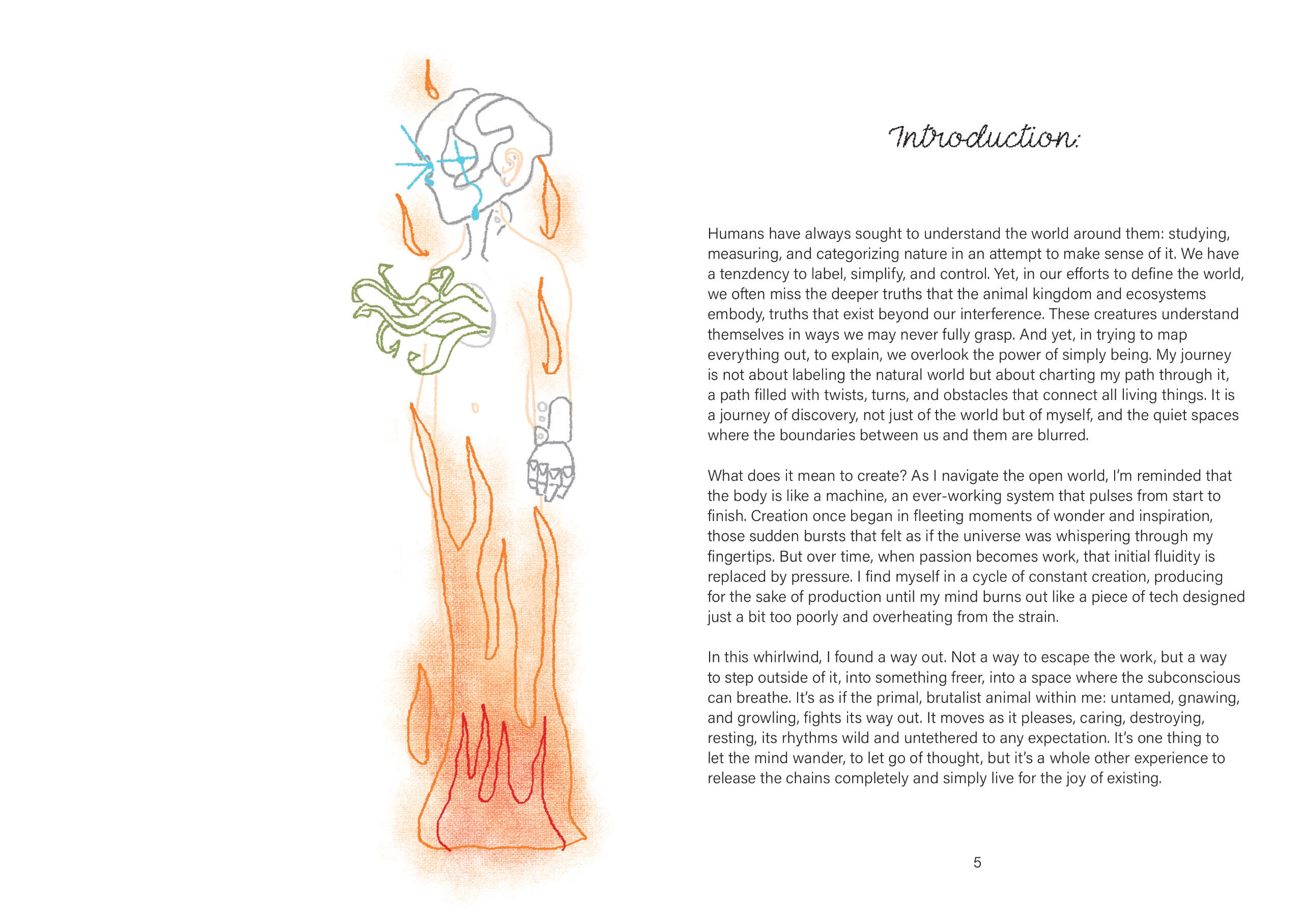
Body of Plenty
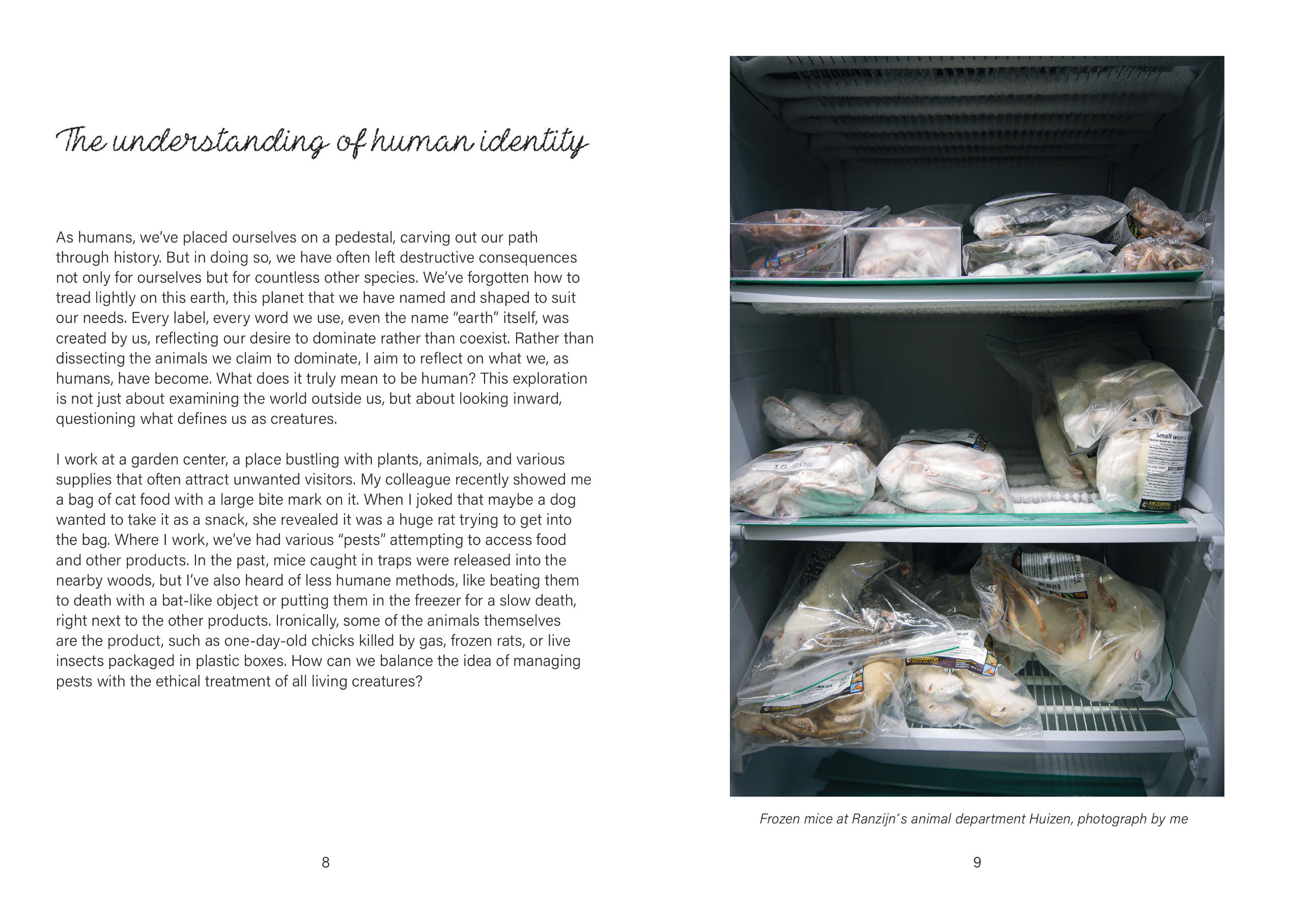
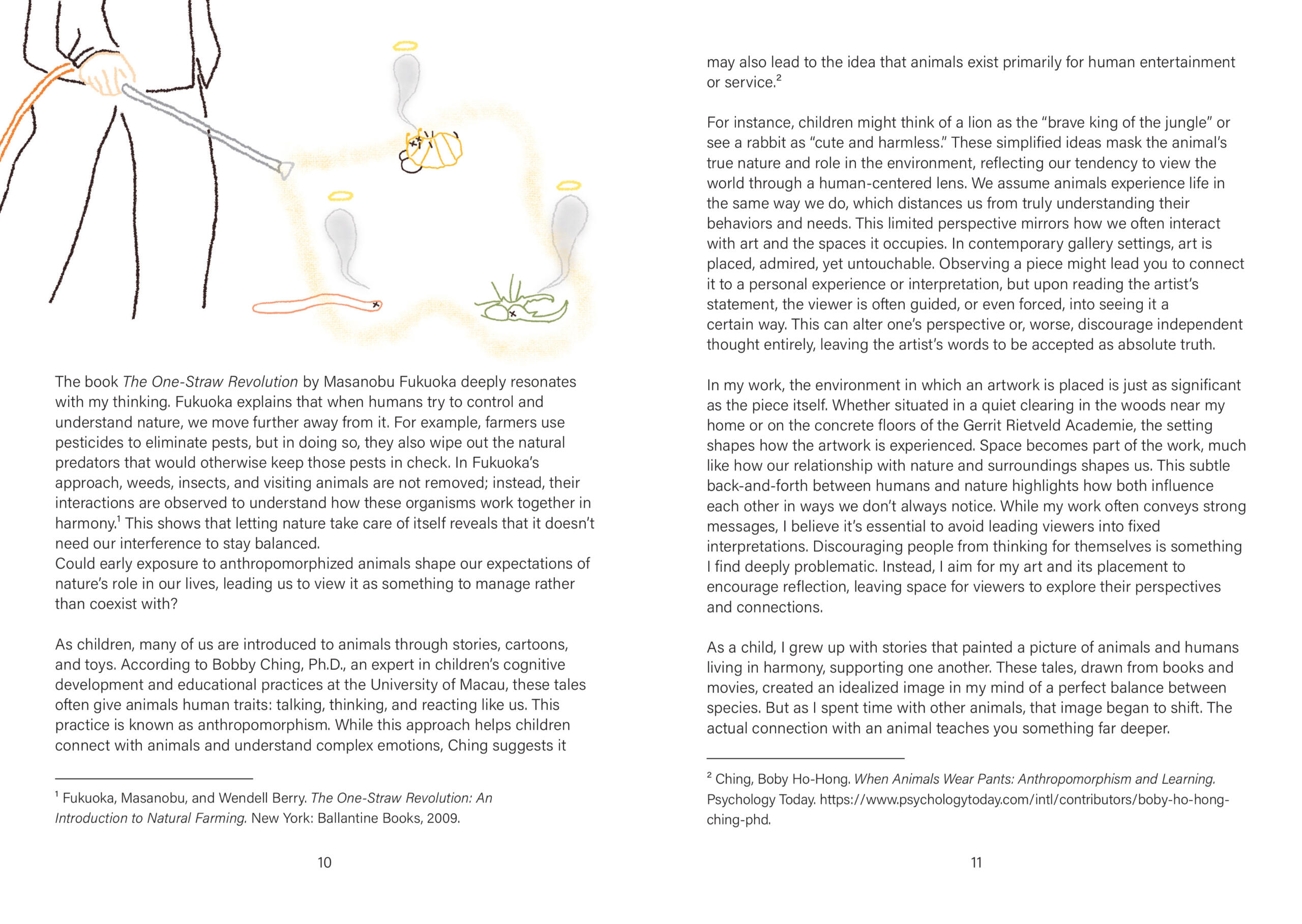
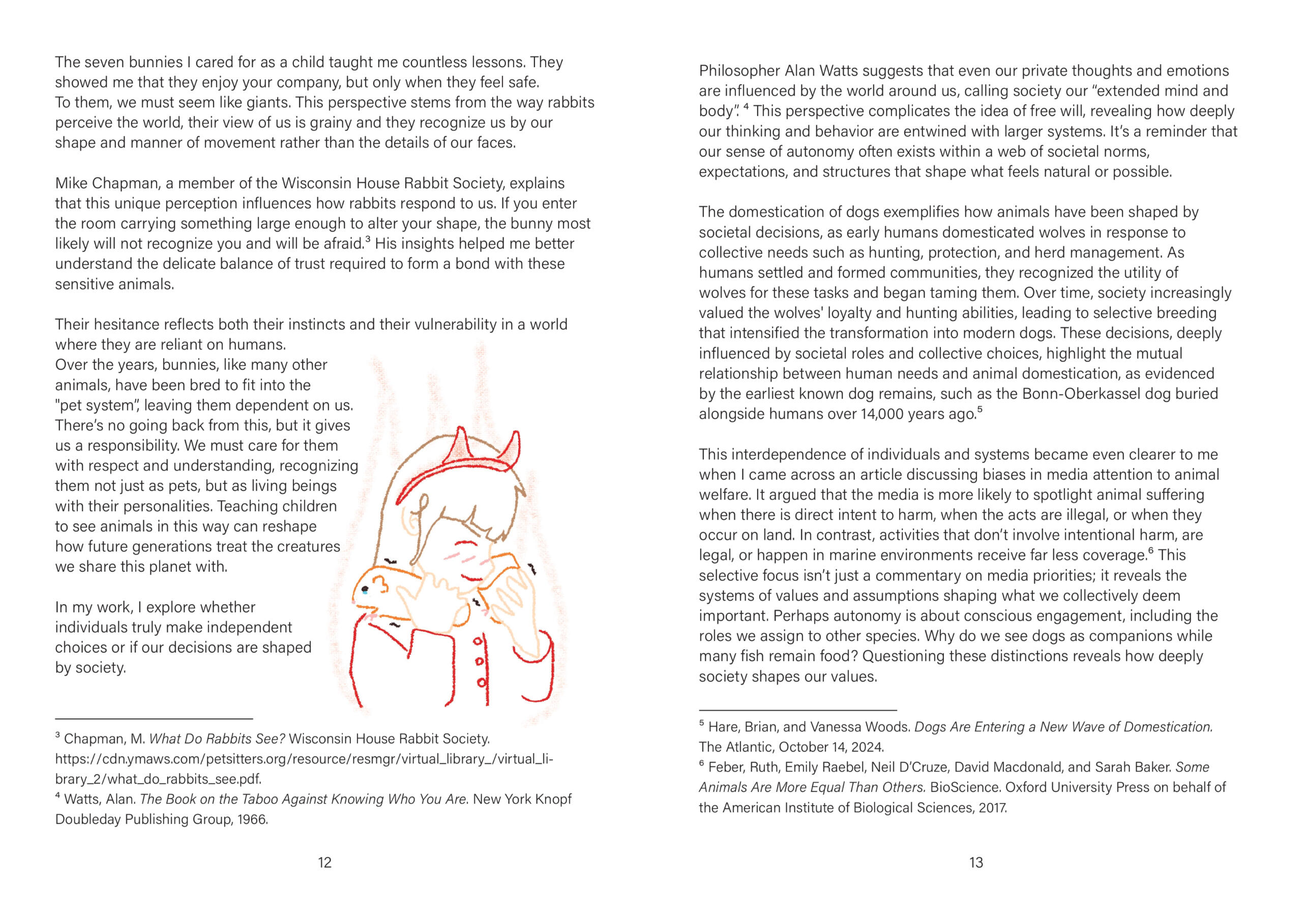
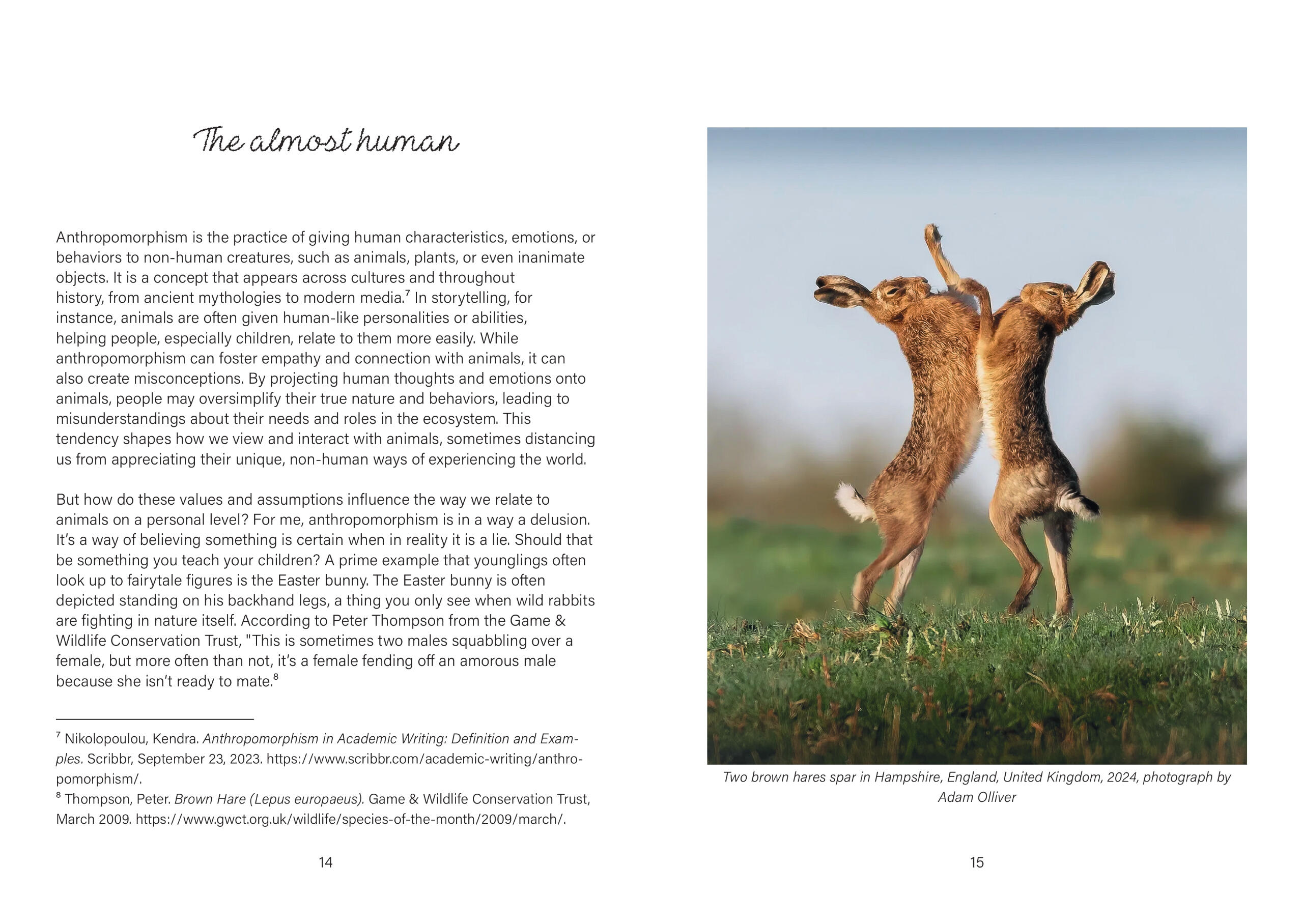
In Body of Plenty, I trace the intricate, often blurred boundaries between humans and the natural world,
not through cold dissection or scientific distance, but through felt experience, art, and personal
reflection. This work is a meditation on the animal within us: how we deny it, shape it, and occasionally
remember it. Moving between observation, memory, and critique, I unravel our habitual dominance over
nature and instead propose an alternative: to participate, to witness, and to exist among other creatures
without the burden of supremacy.My thesis is not only about animals or nature, but about rewilding the human self. Through reflections on
art, childhood, animal care, and philosophical inquiry, I explore what it means to create, coexist, and feel
in a world where we’ve tried to rise above nature but might find salvation in returning to it.
For the best experience with reading, i suggest you switch to a computer for reading my thesis.
Childhood dreams
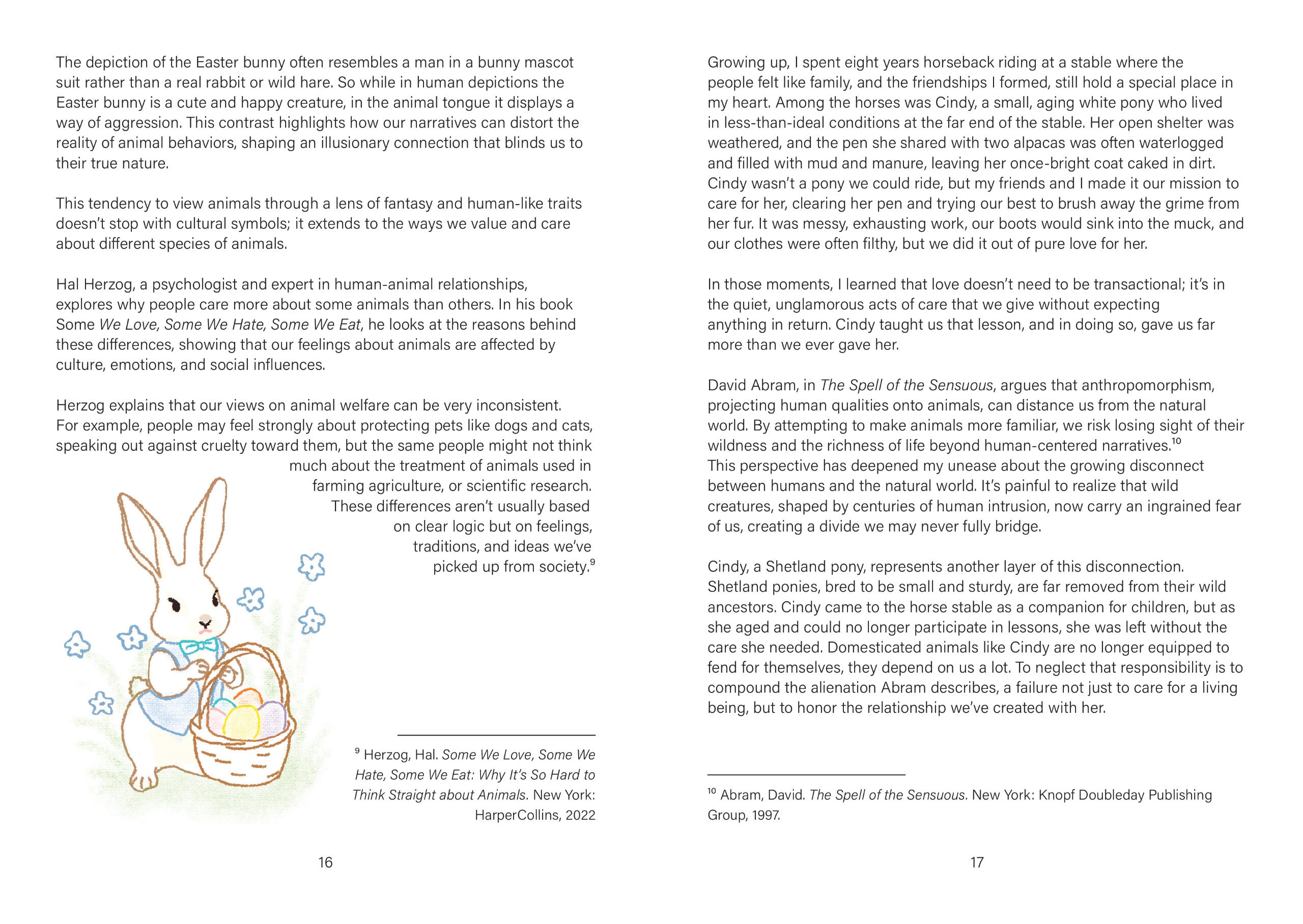
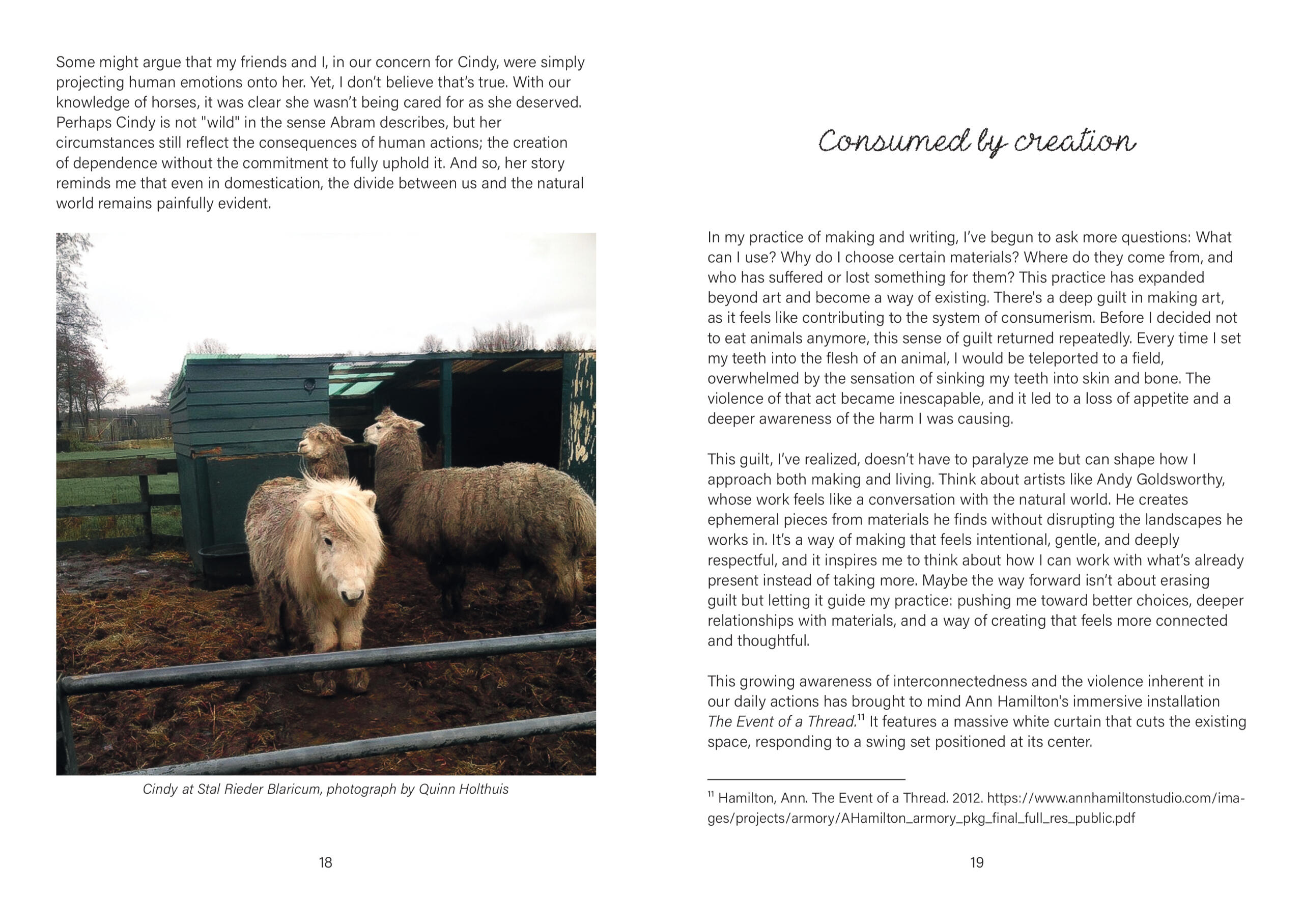
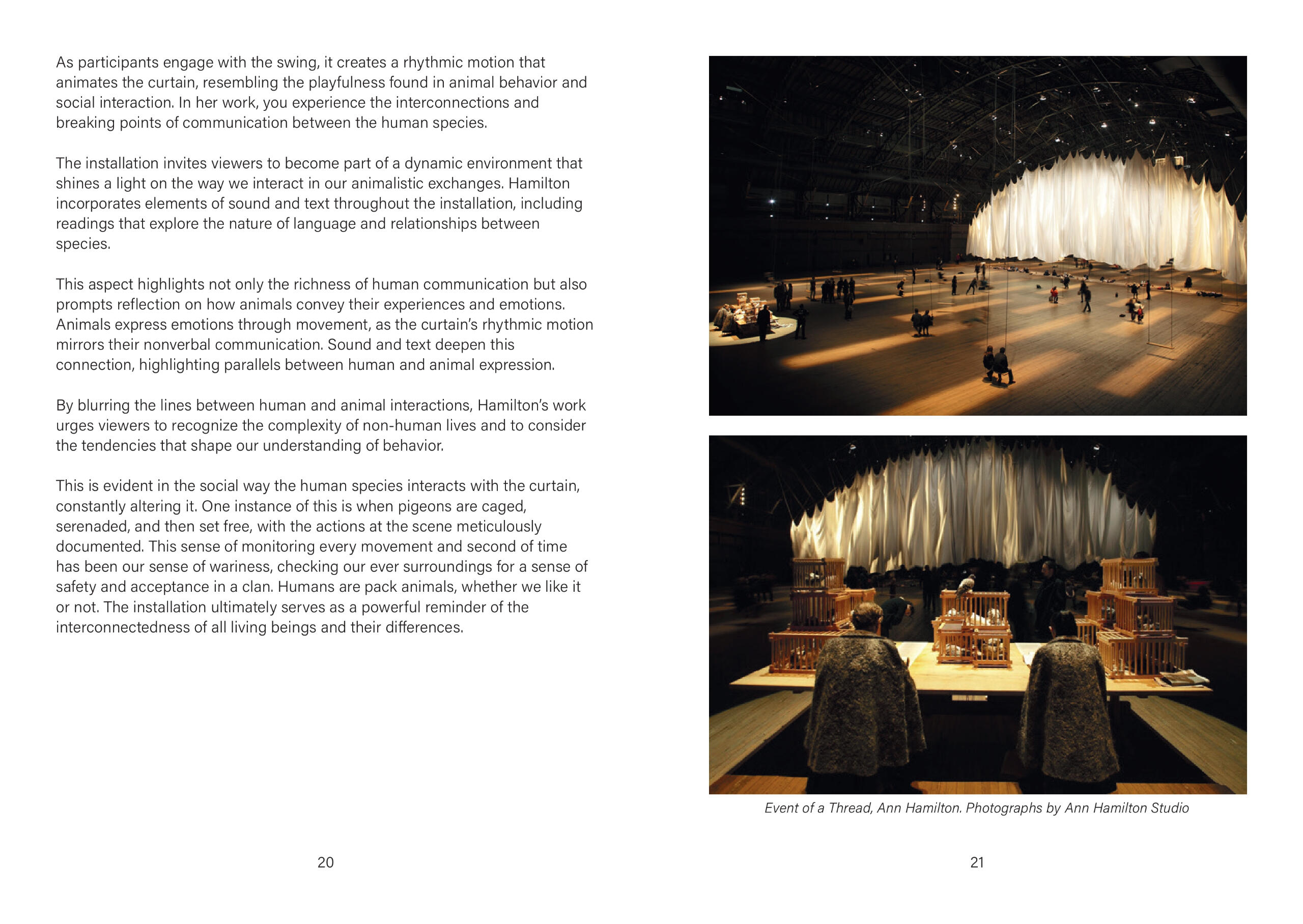
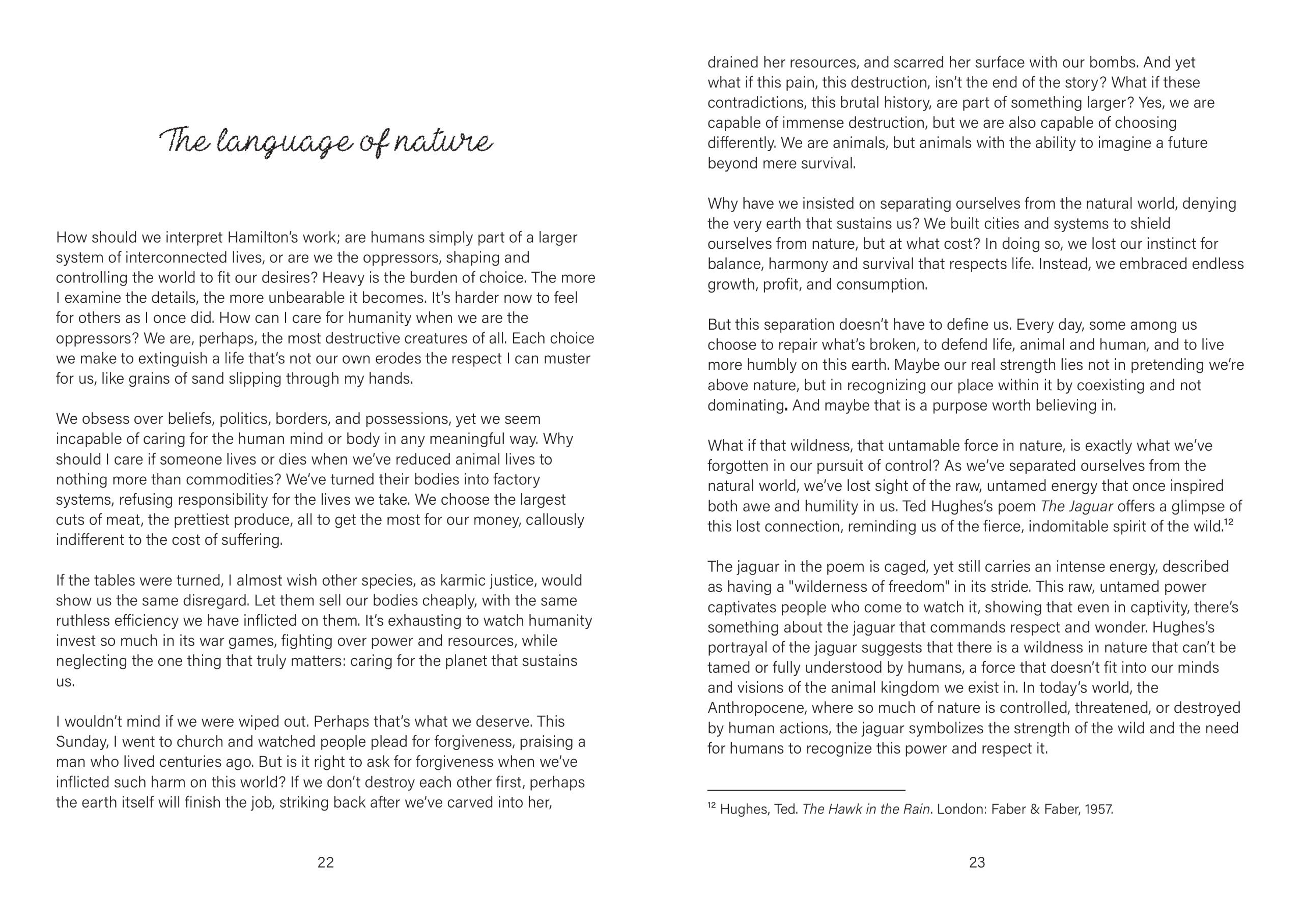
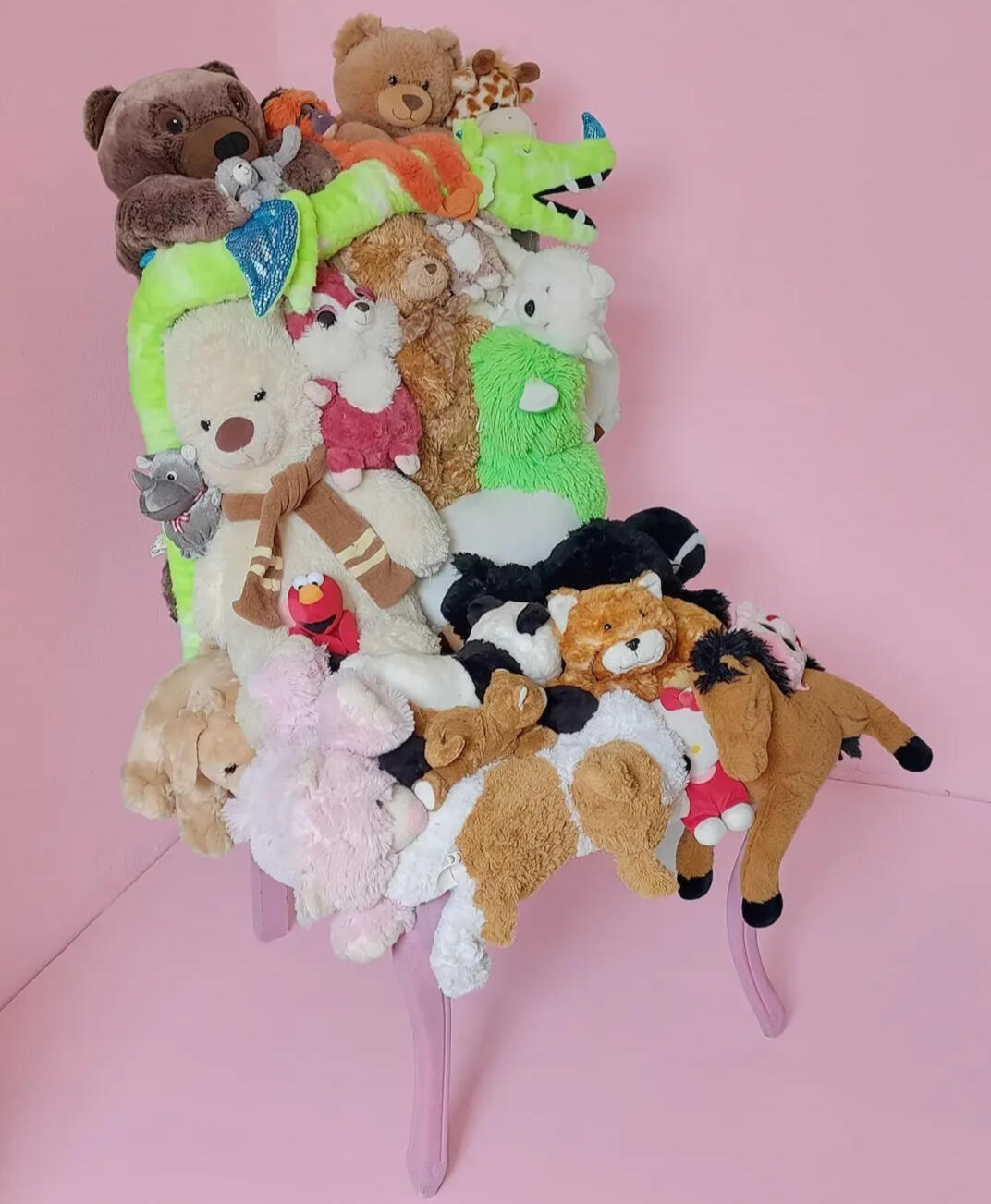
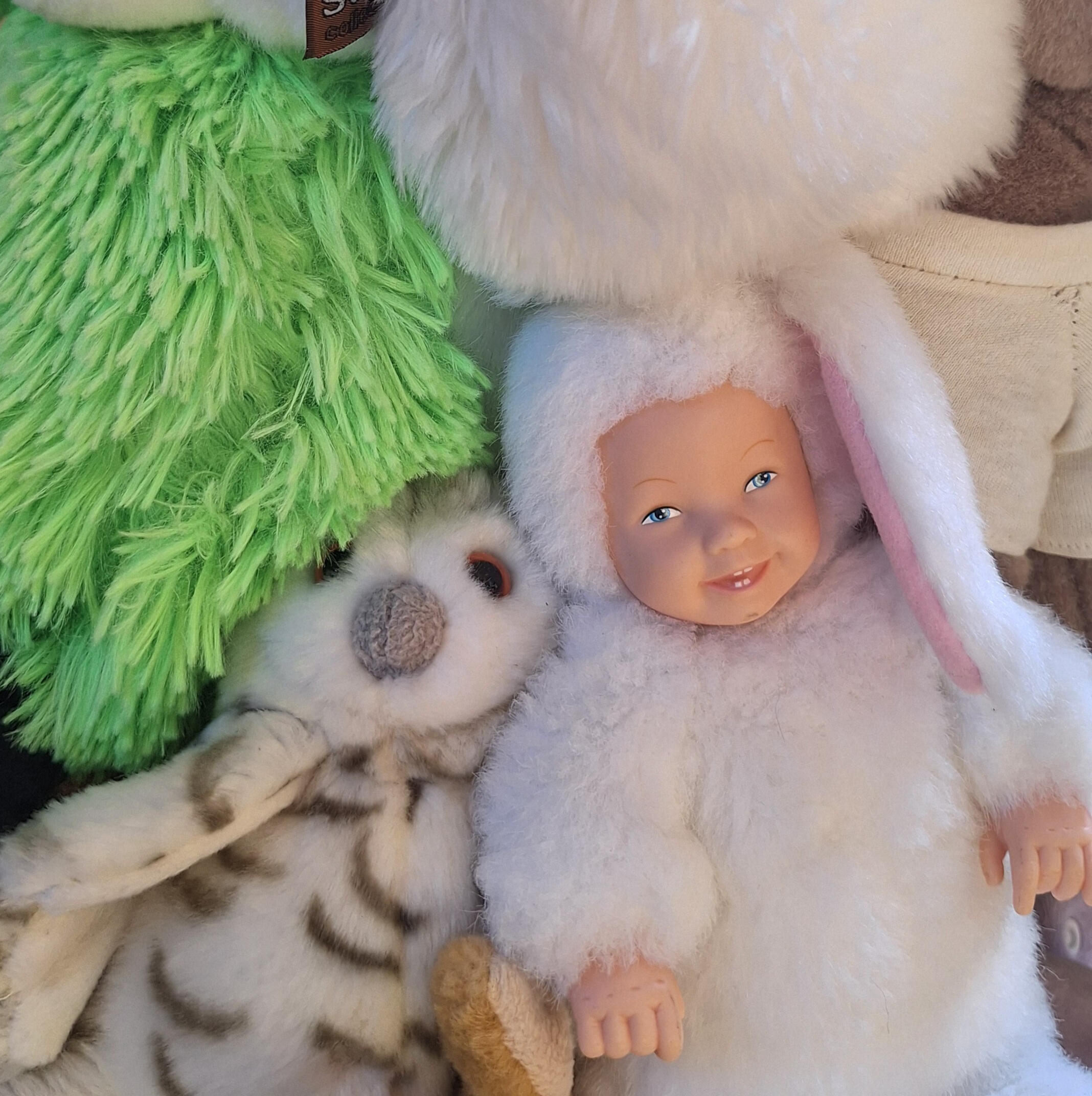
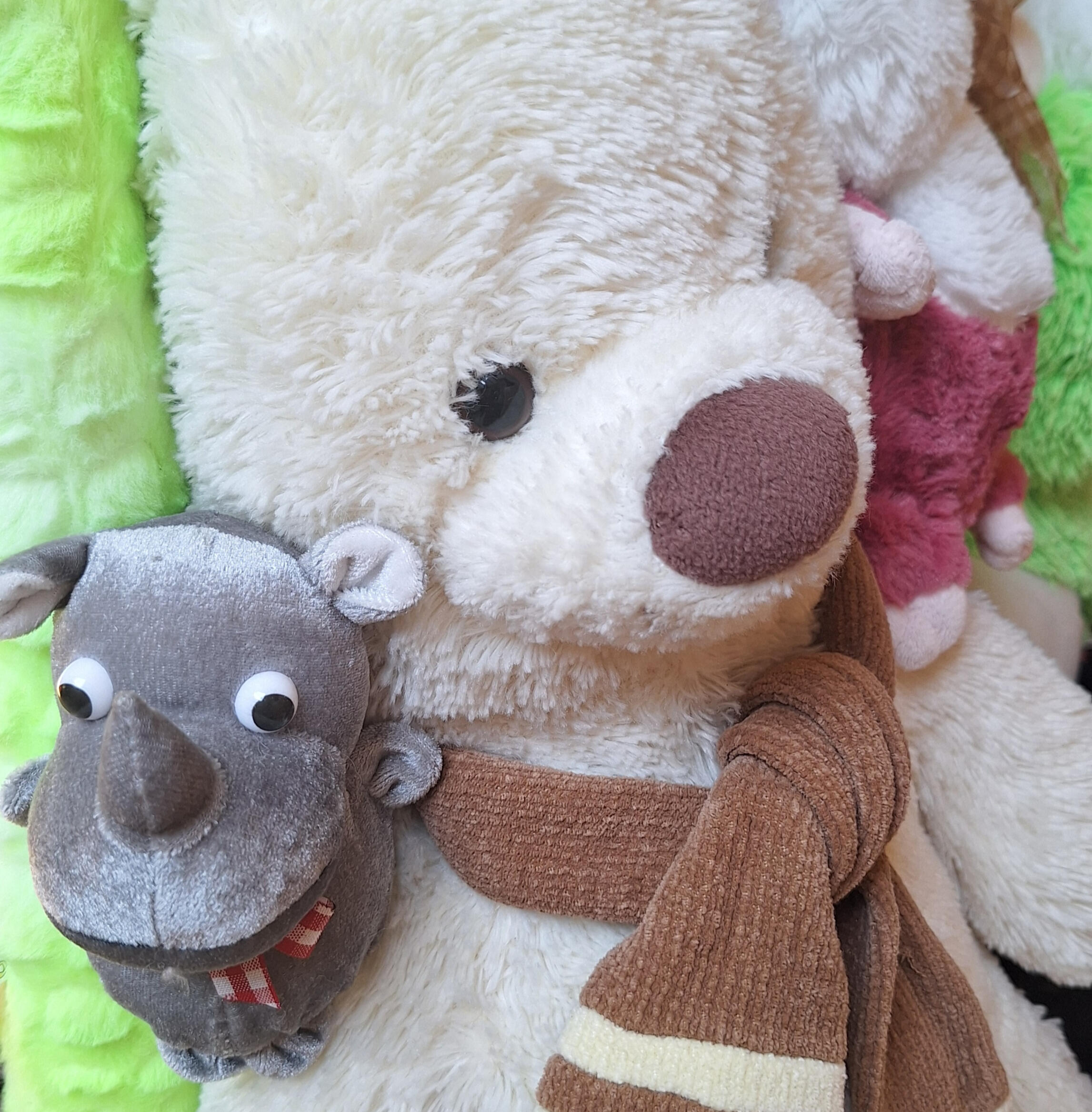
As people grow older, they often let go of their childhood companions; the stuffed animals they held close after nightmares, the ones they gave voices to, stories to, and endless adventures through their wildest imagination.I couldn't let go of these soft friends. Instead, I gave them a new purpose. Upholstered into this chair, they remain part of my home rather than disappearing with childhood itself.Yes, it might feel a little creepy to sew together your old companions. But to me, it's far better than letting them leave your life entirely. This piece is about holding on to that sense of wonder, preserving the comfort, playfulness, and imagination that shaped us.Growing up doesn't have to mean leaving your inner child behind.
Buitenkunst Art Camp
In July 2026, I attended Buitenkunst in Drenthe for a week with my dear friend Ilse, whom I've known since childhood. We share a love for making art and were excited to explore new creative experiences together.Throughout the week, we participated in workshops led by several inspiring artists and camped at a nearby campsite. It was a wonderful combination of creativity, nature, and connection.I highly recommend the programme if you enjoy meeting creative people, experimenting with different forms of artistic expression, and stepping outside your comfort zone.
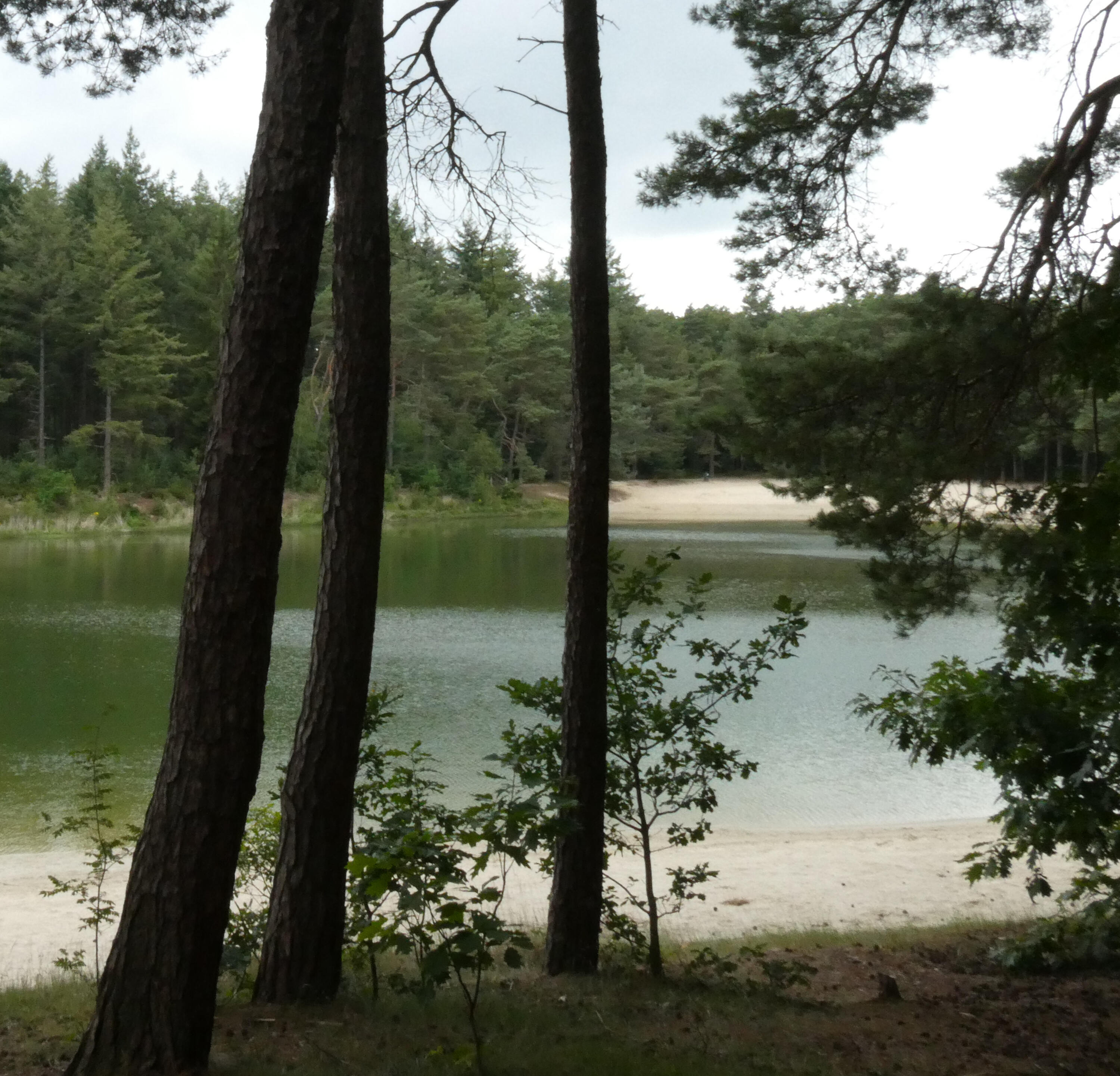
Lake located near the camp
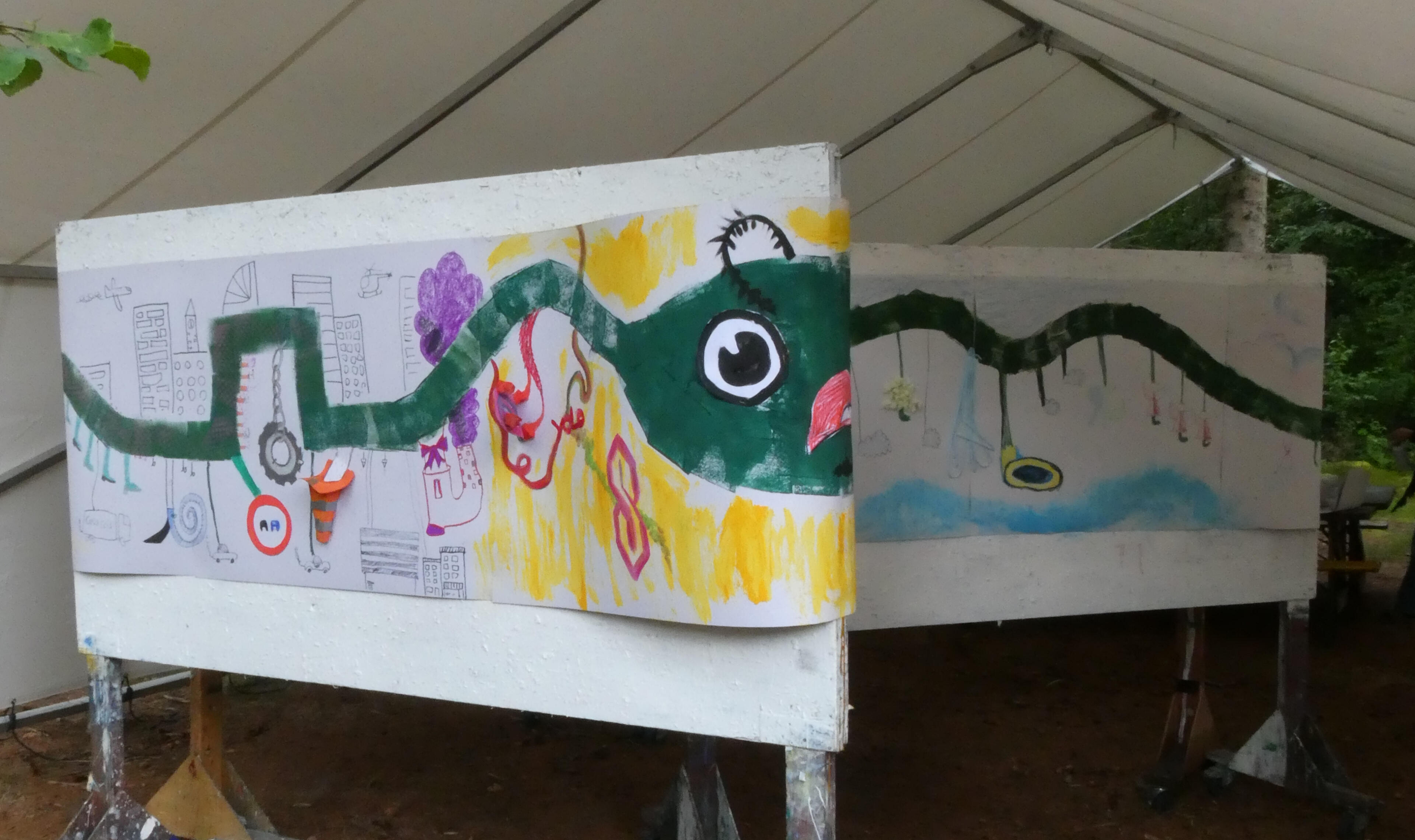
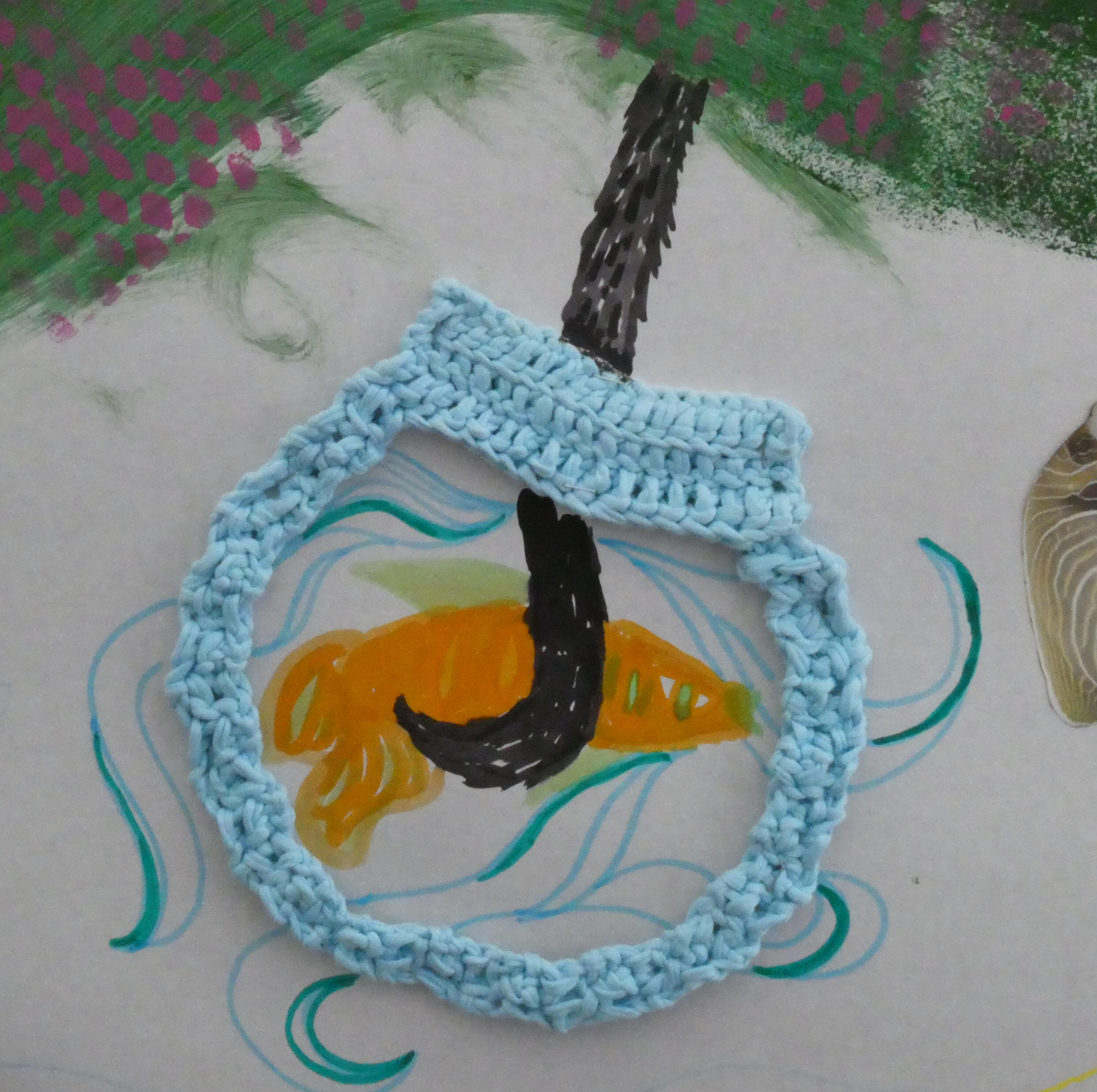
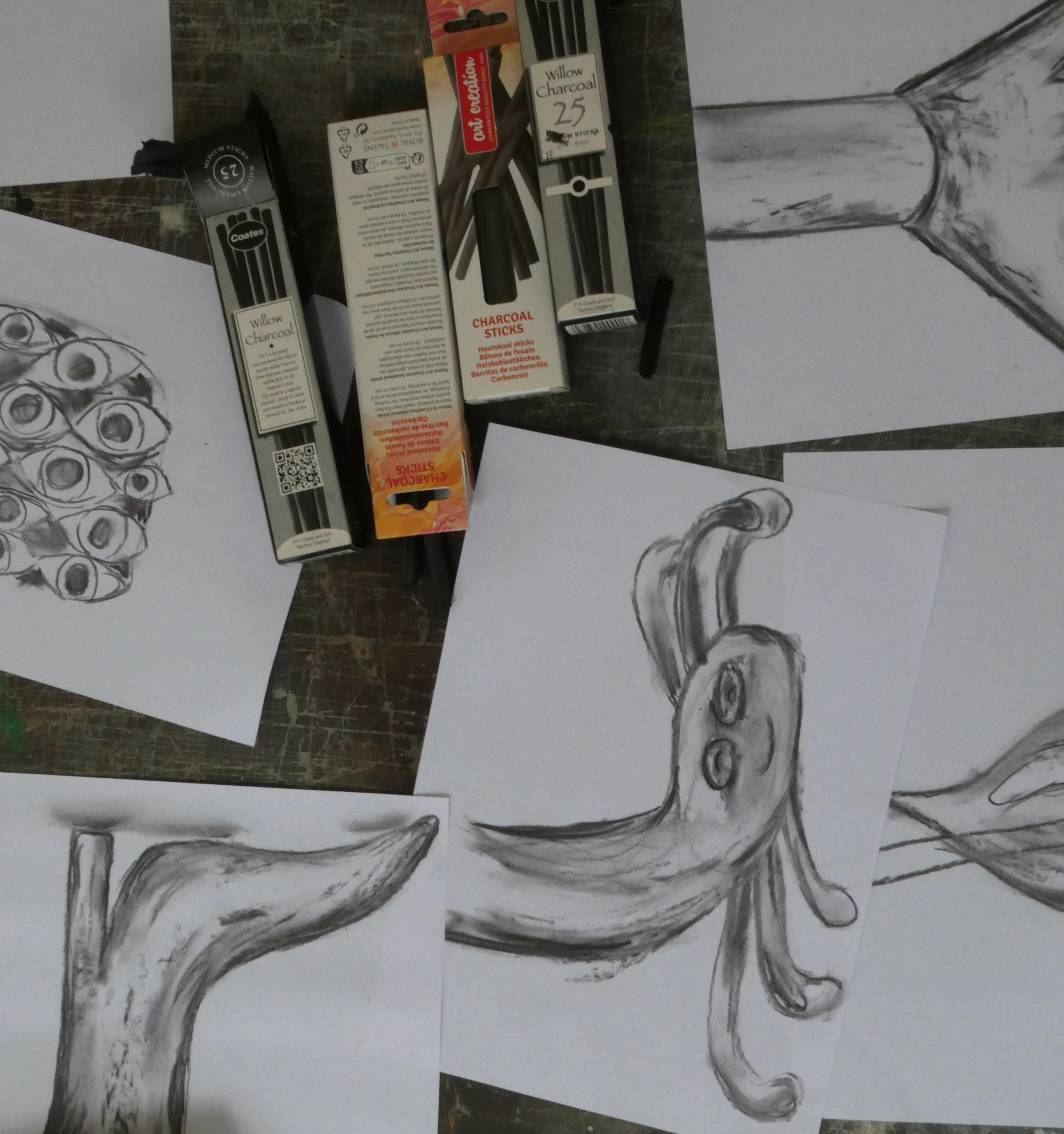
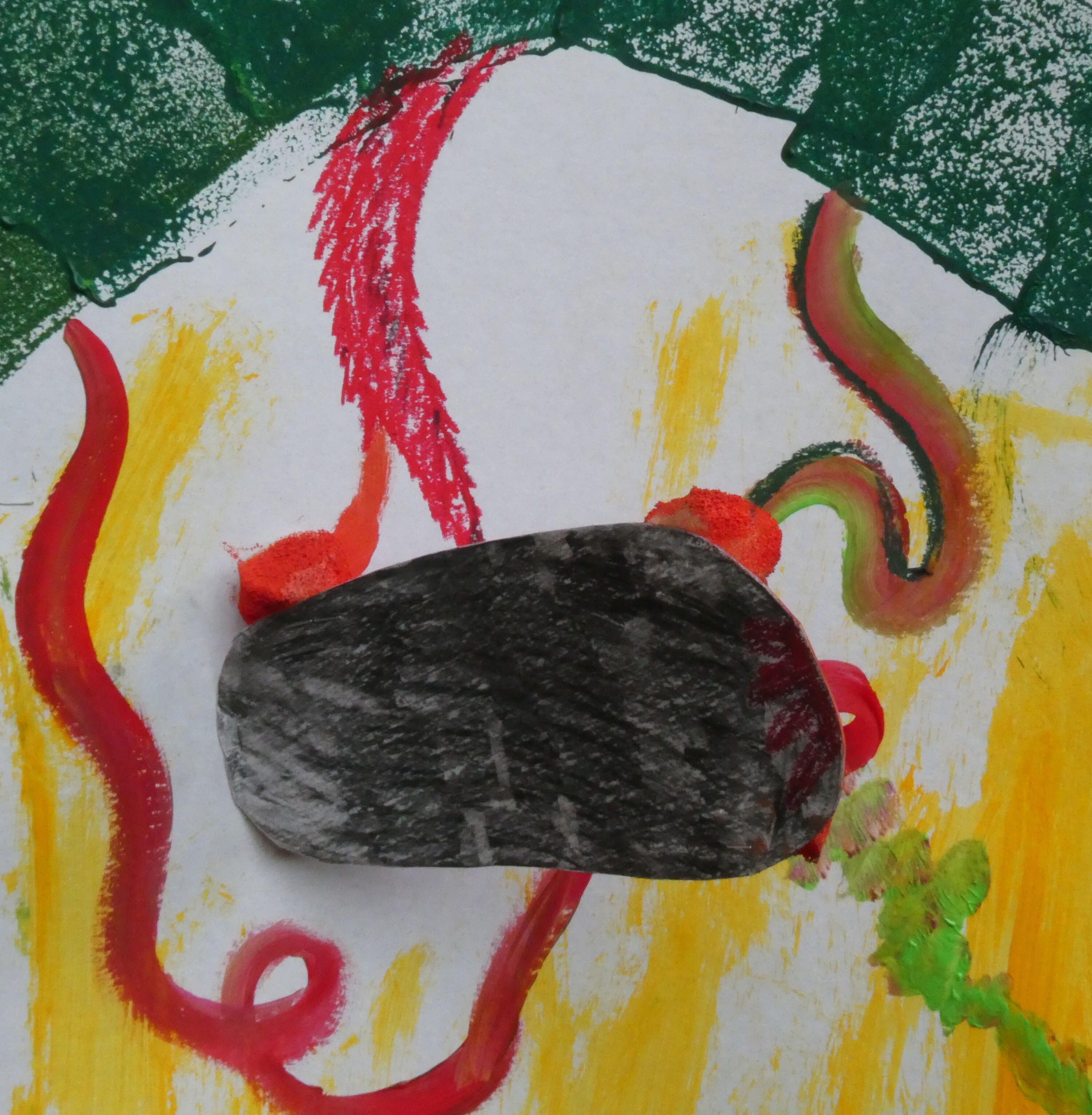
On Sunday, I attended a workshop inspired by the imaginative question: How do you design shoes for a centipede? Together, we imagined a curious creature travelling through a wide variety of environments; from bustling cities and underwater worlds to towering mountains, black holes, heaven, and many other fantastical places.As the centipede journeyed through each landscape, it needed different kinds of shoes to suit its surroundings. Every participant designed and created a unique pairs of shoes, contributing to the creature's ever-growing collection. In the end we designed over a hundred shoes.
On Monday, I attended a mosh pit workshop. I didn't document the day with photos or videos, as we all agreed to create a safe space by not recording one another. Instead, I'll describe the experience.Mosh pits are often found at concerts and festivals. While they may look chaotic or aggressive from the outside, they are built on trust, awareness, and mutual care. Participants push, jump, and move energetically together, but everyone is also responsible for looking after one another and making sure the space remains safe and inclusive.Together with 53 other participants, I learned the basics of moshing while taking care of both myself and the people around me. It was my first time ever participating in a mosh pit, and I found it incredibly energising, liberating, and fun.During the morning, we explored ways of moving through a crowd of bodies, practising how to safely push against one another while jumping, running, and changing direction. We also learned techniques for protecting ourselves and supporting others if someone lost their balance or fell.In the afternoon, we transformed these exercises into a choreographed performance. We began with a lively mosh pit, full of movement and energy, before gradually coming to a complete standstill. Then, as the music shifted, we were slowly drawn towards the centre of the group, waving our arms and merging into one large, moving mass of people. From there, the choreography evolved into everyone running in an infinity-shaped pattern, weaving from front to back. As the piece progressed, the movements intentionally became increasingly chaotic and messy, creating the feeling of controlled disorder.The performance ended with all of us suddenly running into the woods behind the audience. As they applauded, we returned together to take a final bow.The entire workshop and performance took place barefoot or in socks. Although we inevitably stepped on each other's feet countless times, and many of us ended up with bruises afterwards, not wearing shoes helped reduce the impact and made it less painful than it would have been otherwise. I was also sore for two days afterwards from all the running, jumping, and pushing. Despite the bruises and aching muscles, it was absolutely worth it. The physical intensity became part of the experience, making the sense of trust, teamwork, and shared energy even more memorable, and completely changing my perception of what a mosh pit can be.
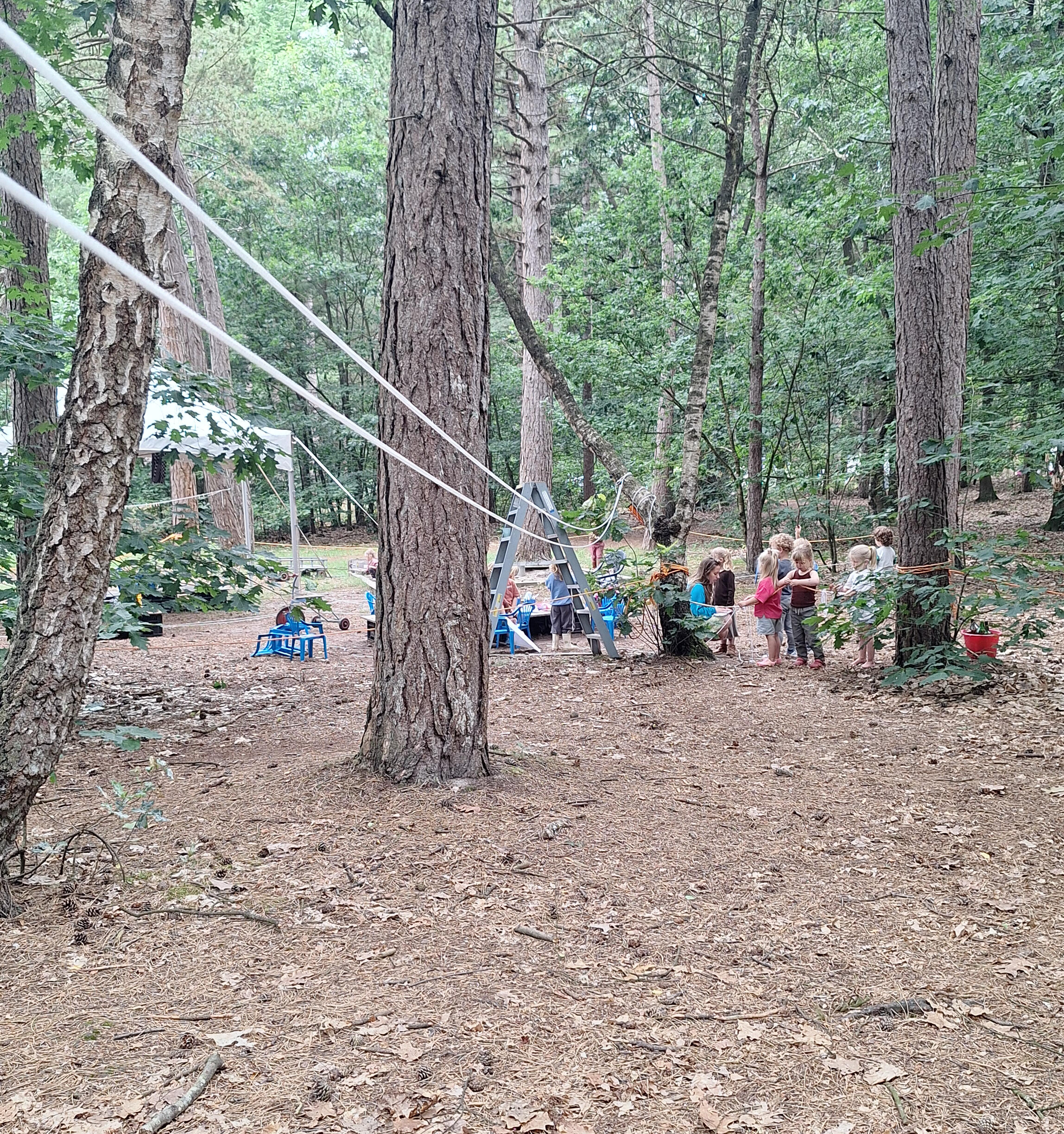
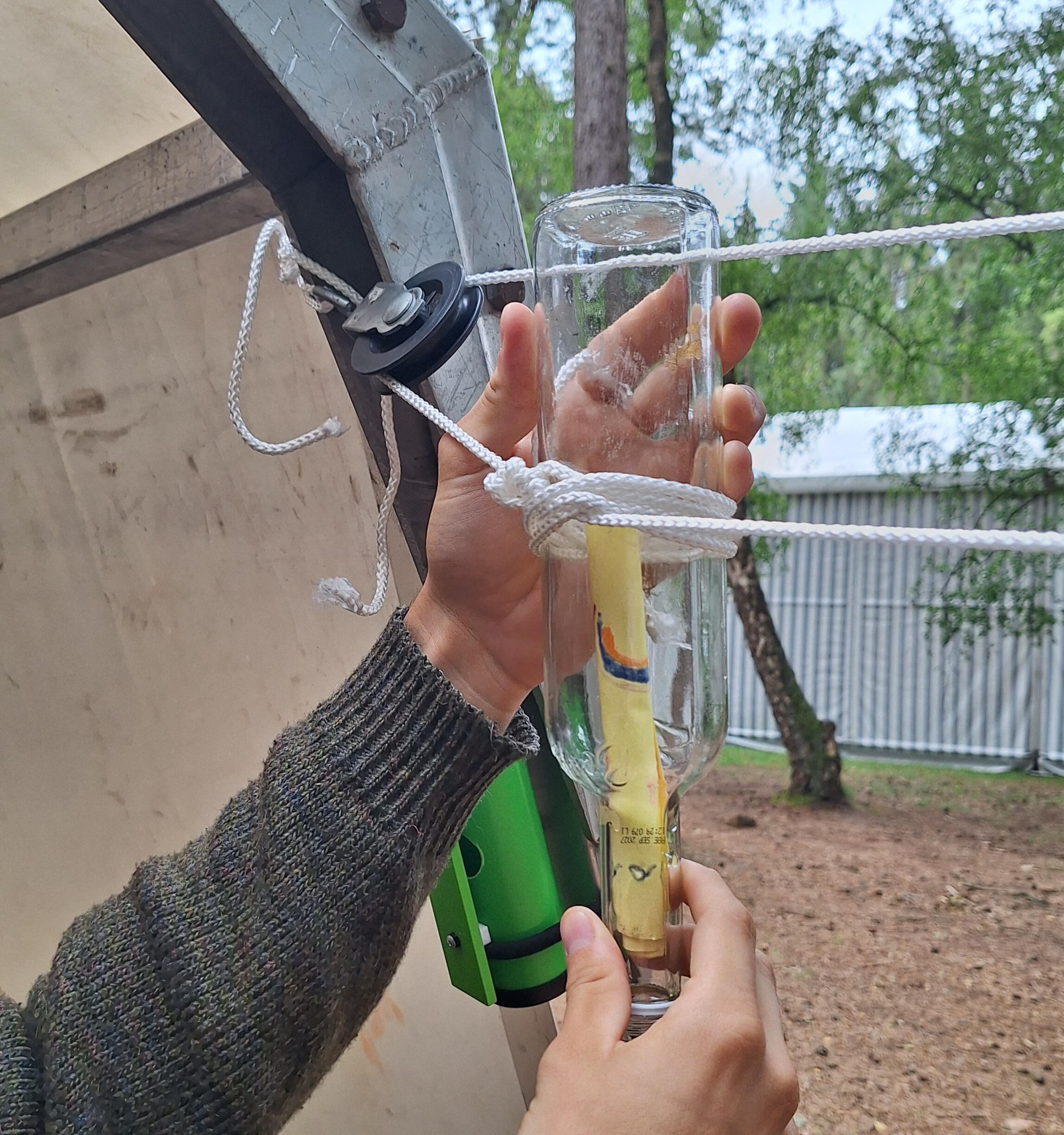
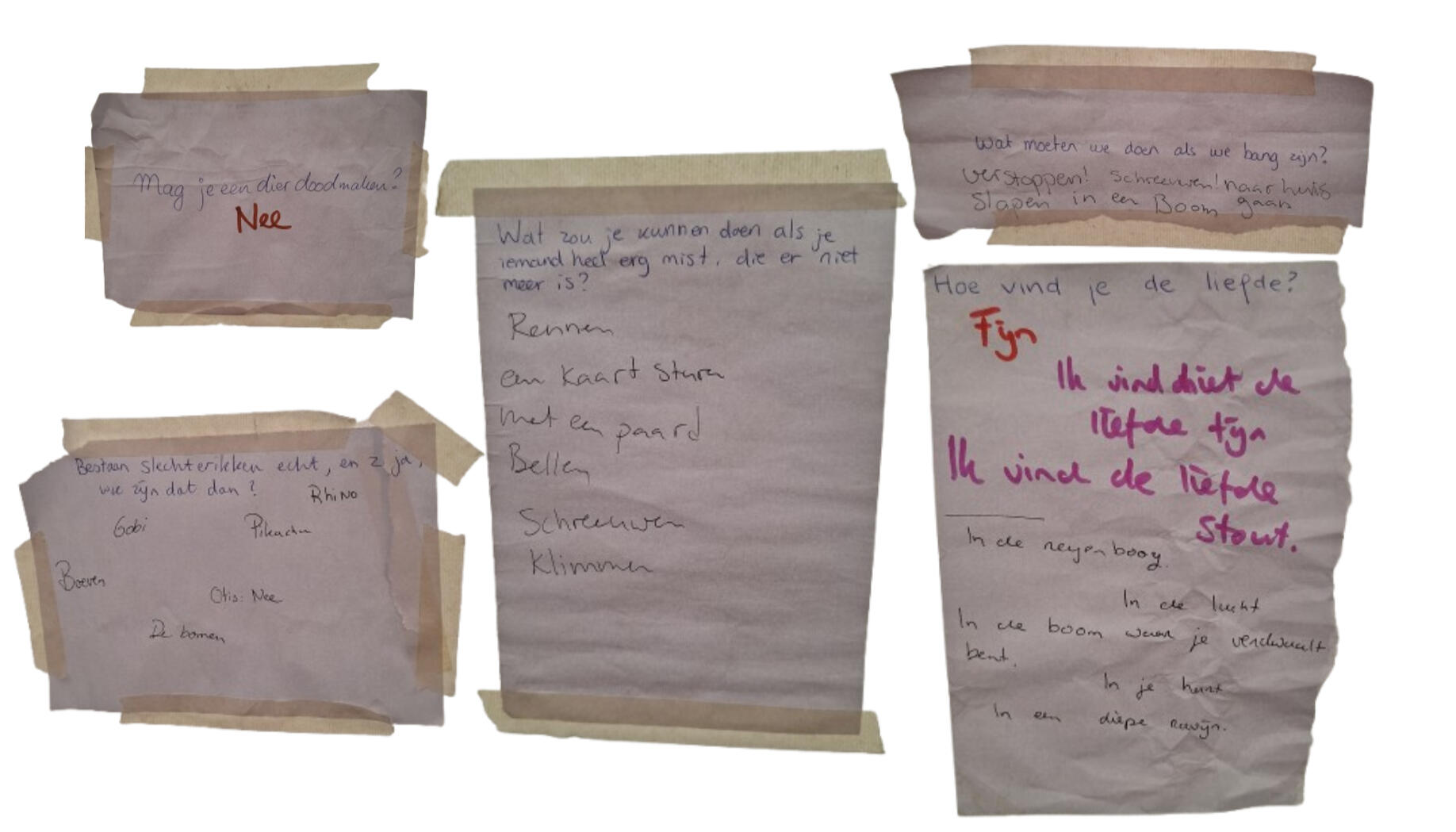
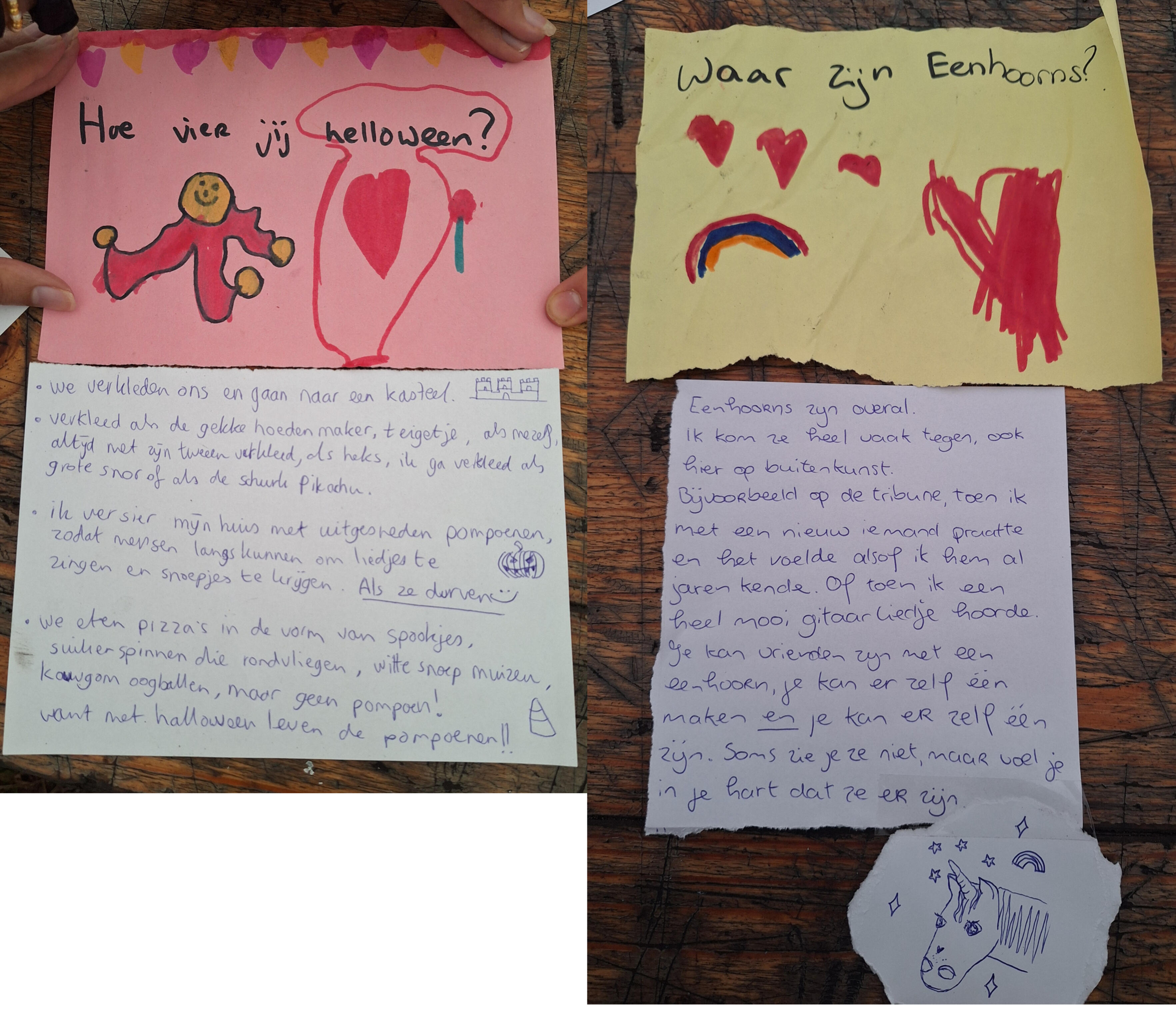
On Tuesday, I took part in a workshop centred around communicating with the youngest members of our little temporary society. Together with my group, we reflected on the big questions we carry through life; the kinds of questions we genuinely wish we had the answers to. We then translated these thoughts into simple language so that toddlers could respond to them in their own way. The children sent us drawings, questions, and little requests, and we replied in return.
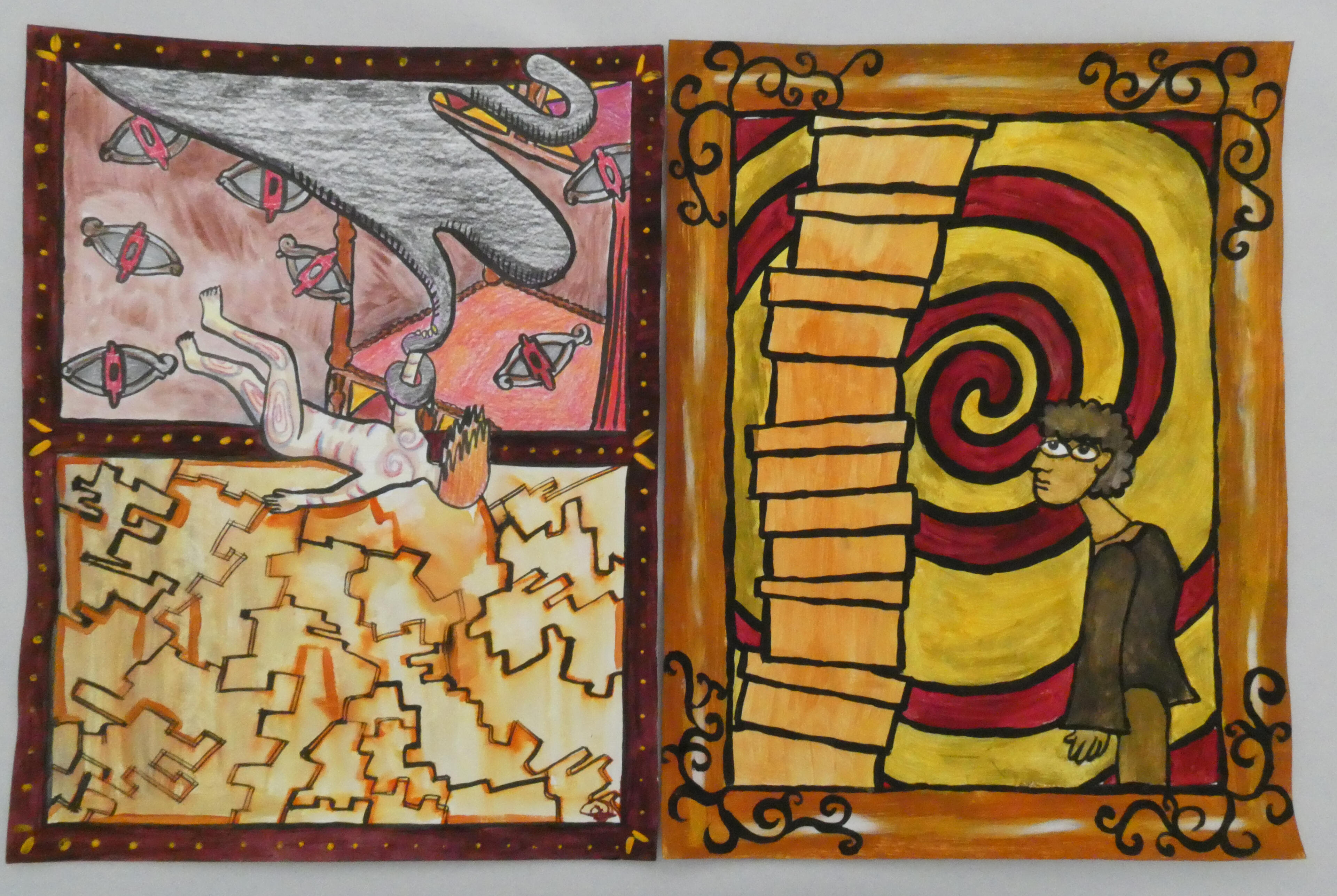
On Wednesday, we made prints inspired by Hildegard van Bingen, a 12th-century German abbess, writer, composer, and mystic. Throughout her life, she experienced vivid visions, which she believed were divine messages and later translated into writings and richly symbolic illustrations.During the morning session, we were asked to describe a vision or an unusual experience we had encountered ourselves. I chose to write about a recurring experience I sometimes have while falling asleep:"Tussen echt en nep in, maar wat is realiteit eigenlijk? Liggend op een bed, maar eigenlijk voelt het alsof ik erdoorheen val. Kronkelende lijnen lopen door elkaar heen als glimwormen. De schaduwmonsters kijken toe vanuit de hoek van mijn kamer. Hun ogen knipperend in het donker. Mijn meest bekende nachtwaker kronkelt zijn schaduws om m'n armen heen. De armen voelen als een koude mist. Wakker, maar niet wakker. Het gevoel van opgezogen worden door het matras naar een andere wereld, maar je bent daar nog niet helemaal. De lijnen kronkelen door m'n lichaam, proberen mij naar beneden te trekken. Duizelingwekkend tussenin, tussenin alles."In the afternoon, we translated our visions into prints, exploring how abstract experiences and emotions could be expressed visually rather than through words.Below, you can see my print on the left and Ilse's on the right.
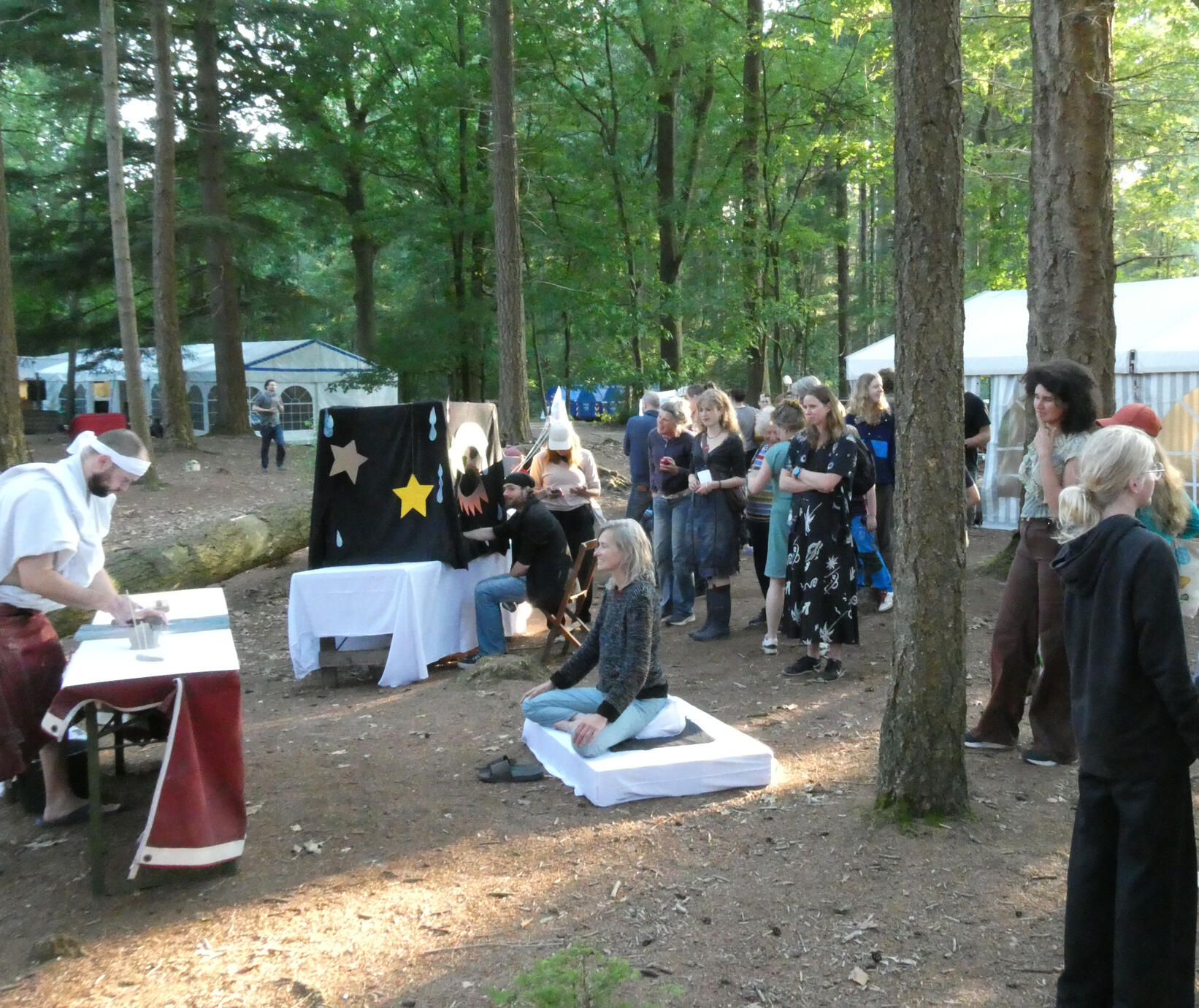
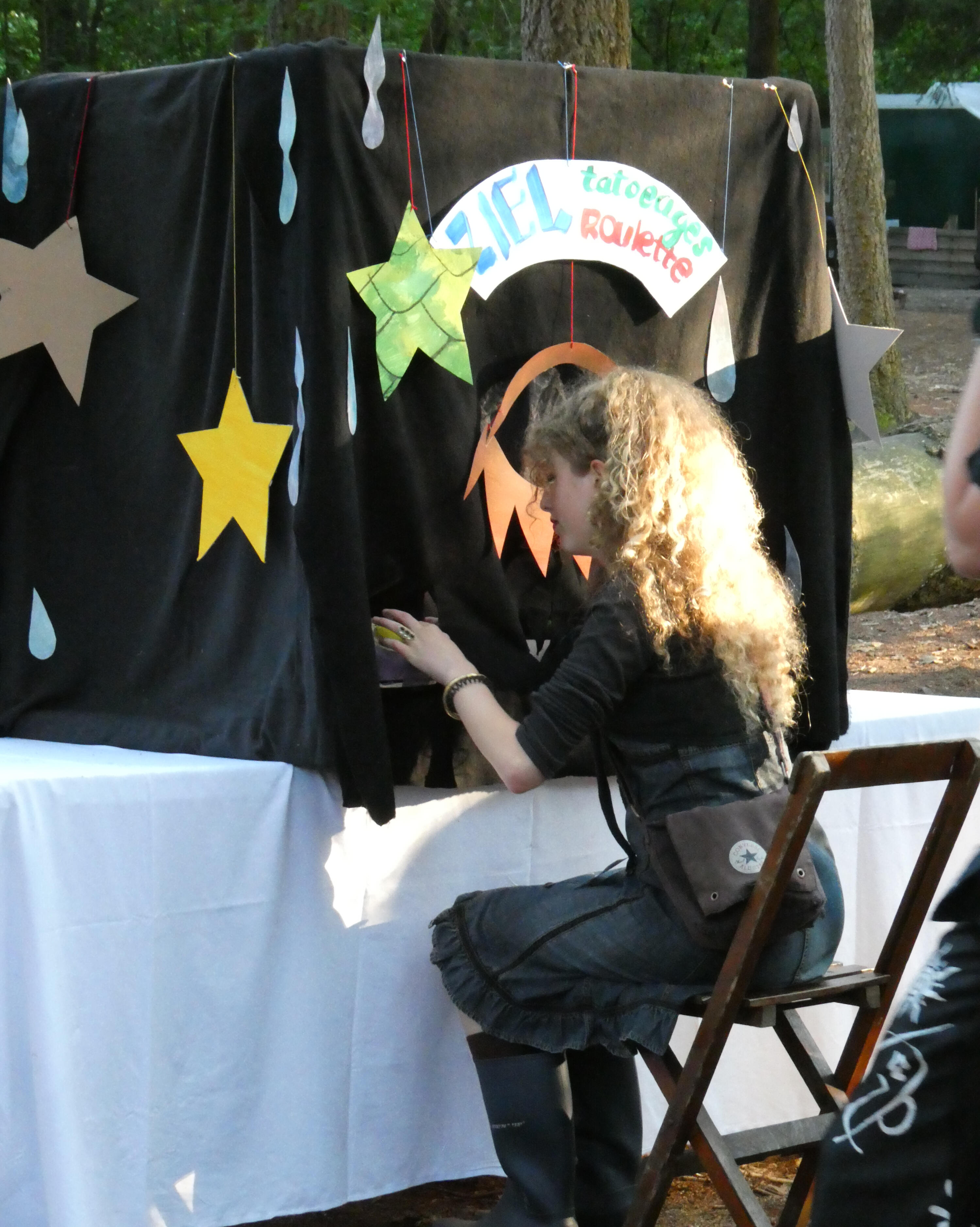
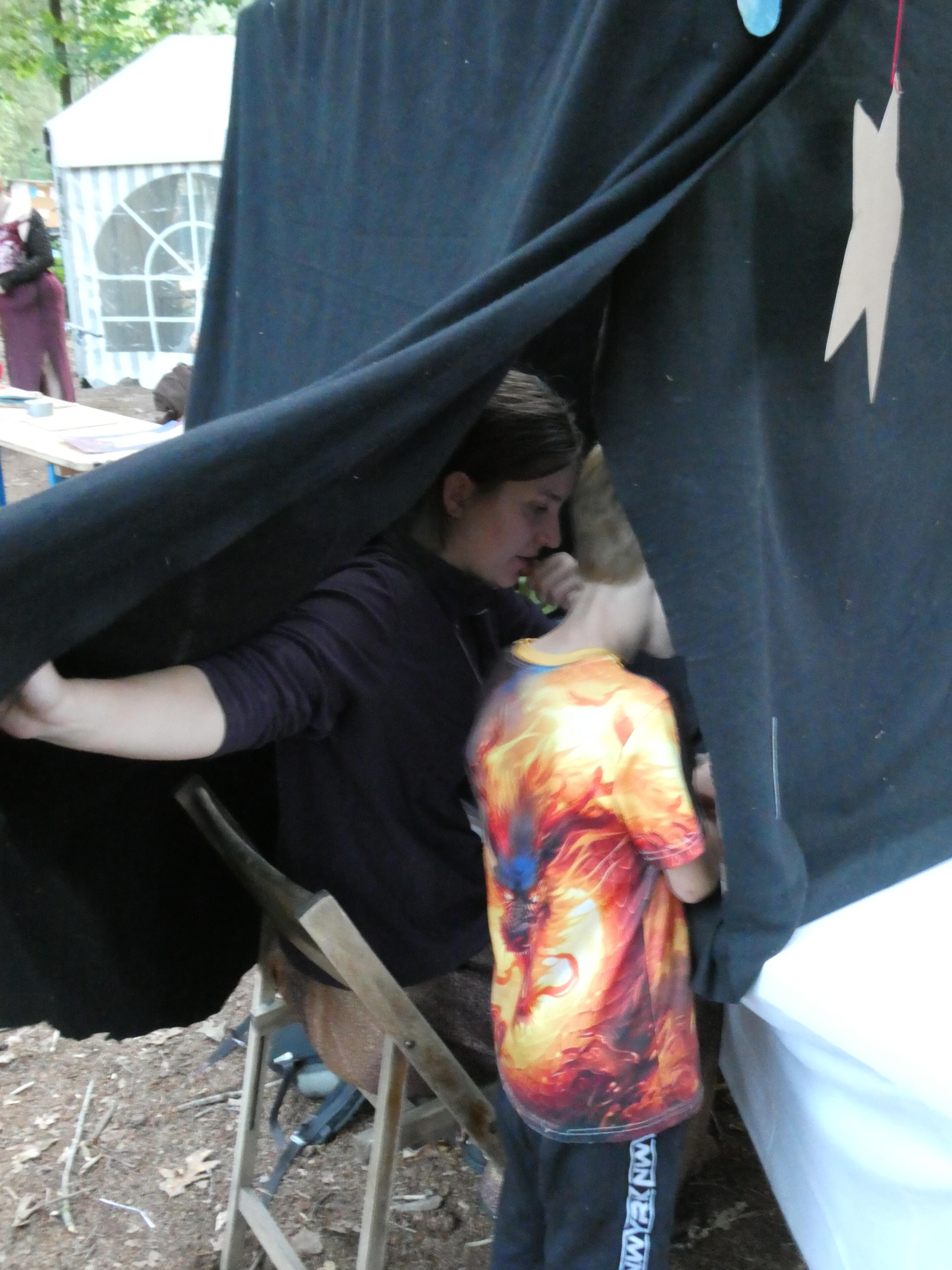
On Thursday, I attended a workshop with four other participants in which we created and hosted our own miniature art fair. Each of us developed an interactive booth that invited visitors to participate in a different creative experience.At my stand, visitors spun the dial of an old telephone and told me which number they landed on. Each number corresponded to a different theme that only I knew. They would then place their hand through a small opening in the booth, and, without revealing the theme beforehand, I would hold their hand and create a drawing directly on their skin inspired by the number they had chosen. I enjoyed the intimacy of the interaction; each drawing became a small, personal artwork that visitors carried with them for the rest of the day.The art fair was originally planned to last 45 minutes, but because so many people came to visit, it continued for an hour and a half. I spent the entire time drawing on people's hands, and it was incredibly rewarding to see everyone's curiosity and excitement.The other participants also created wonderfully imaginative experiences. One booth transformed visitors into animals through portrait drawings, another invited people to build small clay sculptures, while another combined tarot cards with poetry to answer visitors' questions.
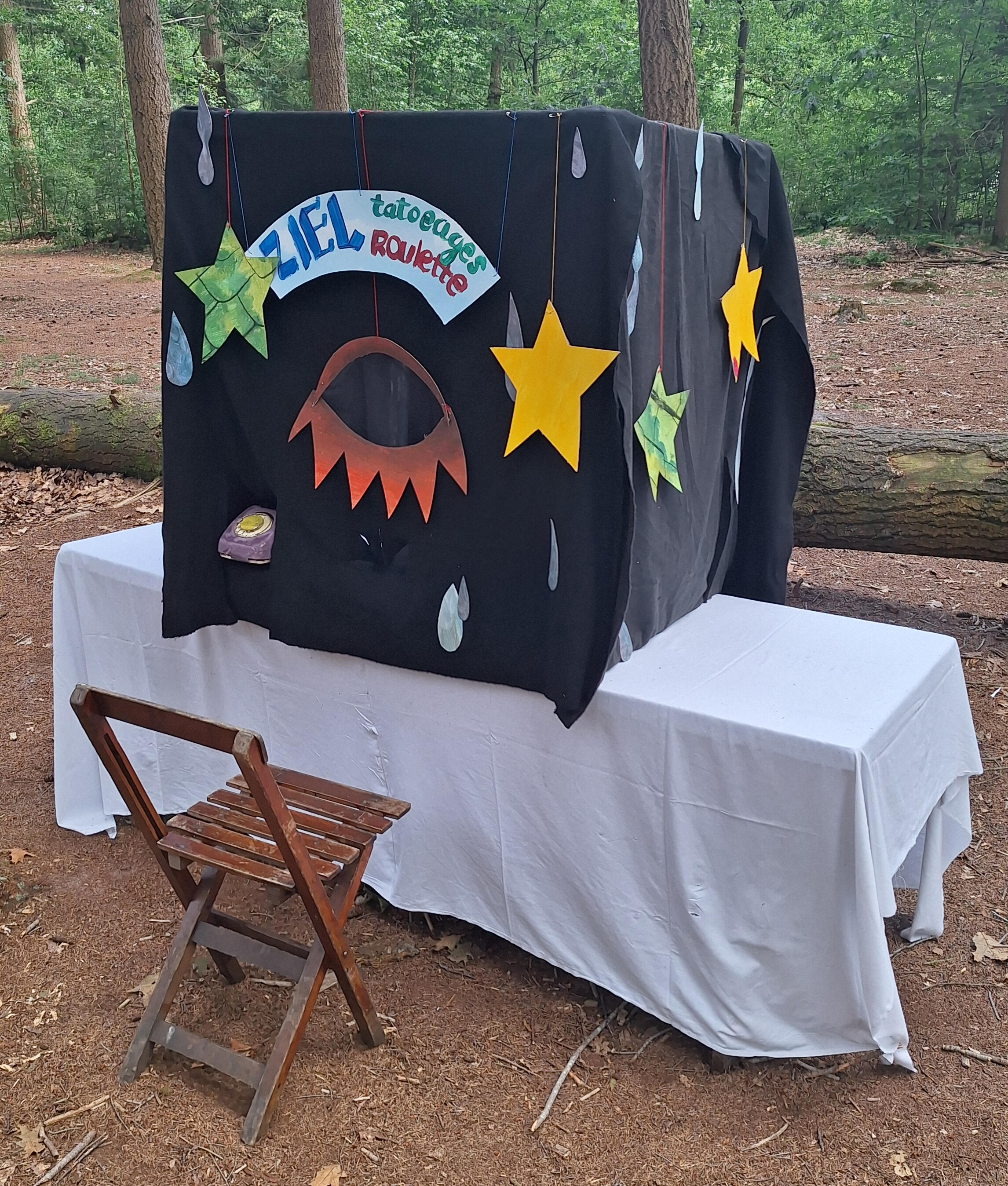
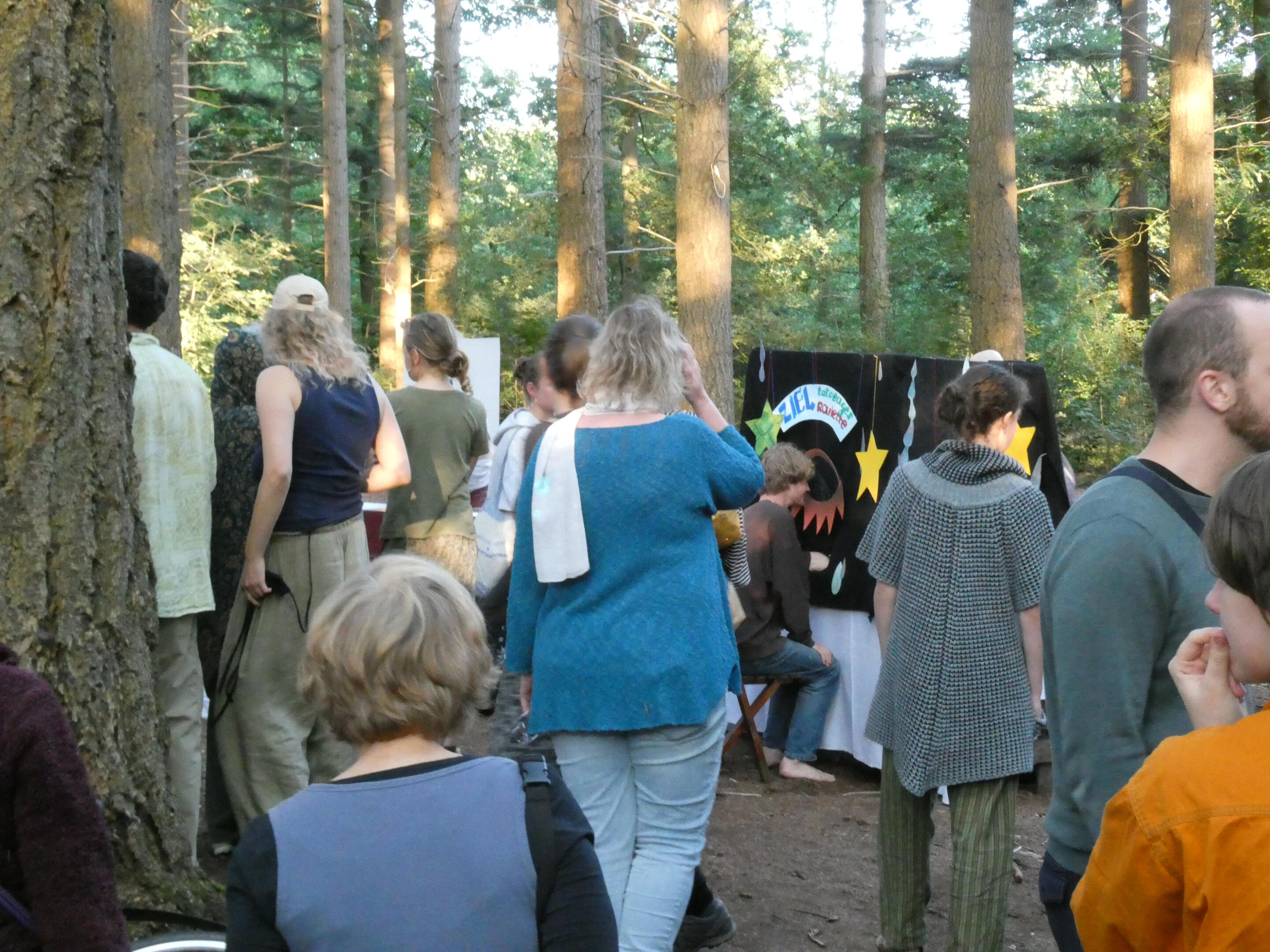
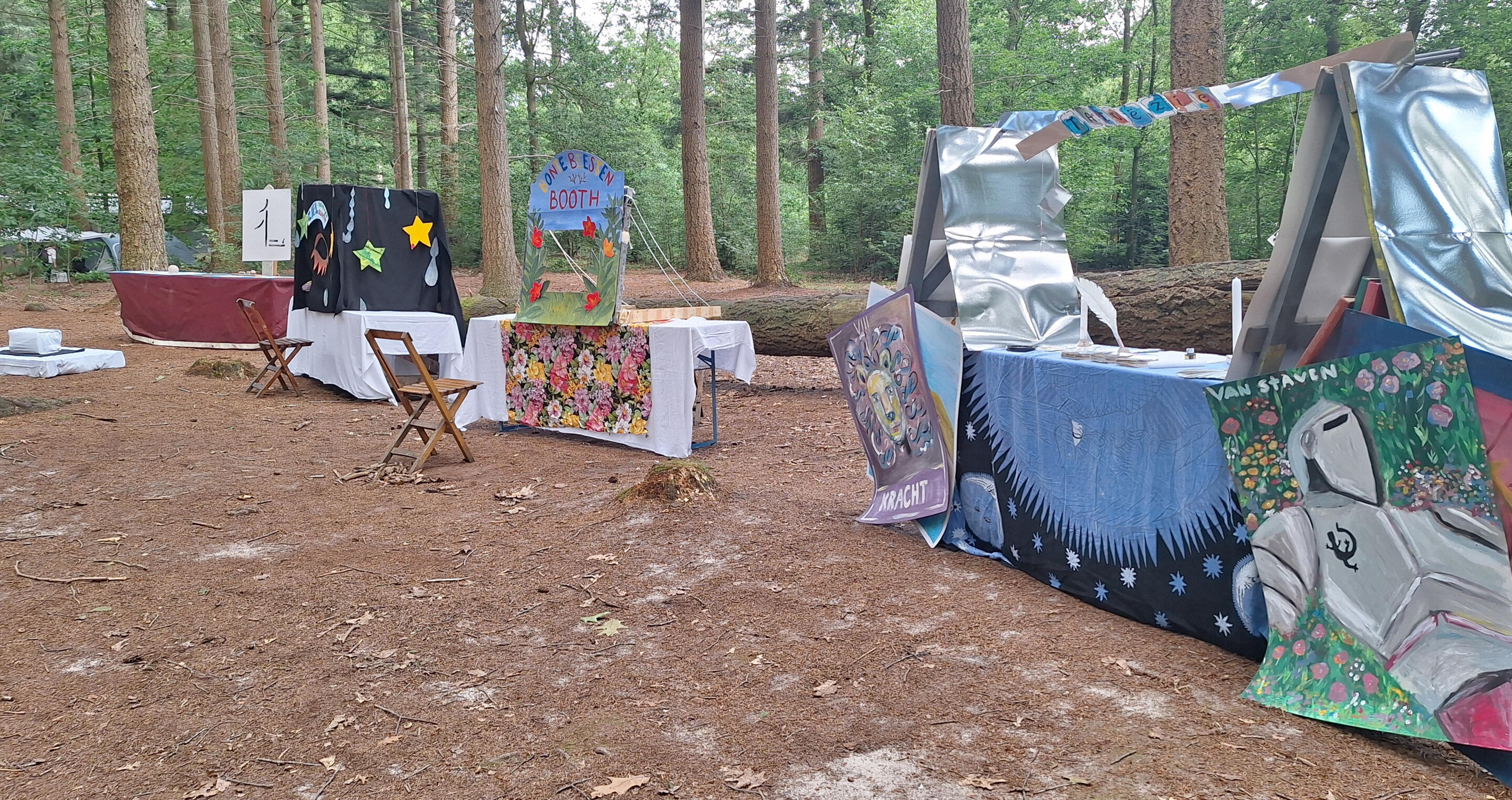
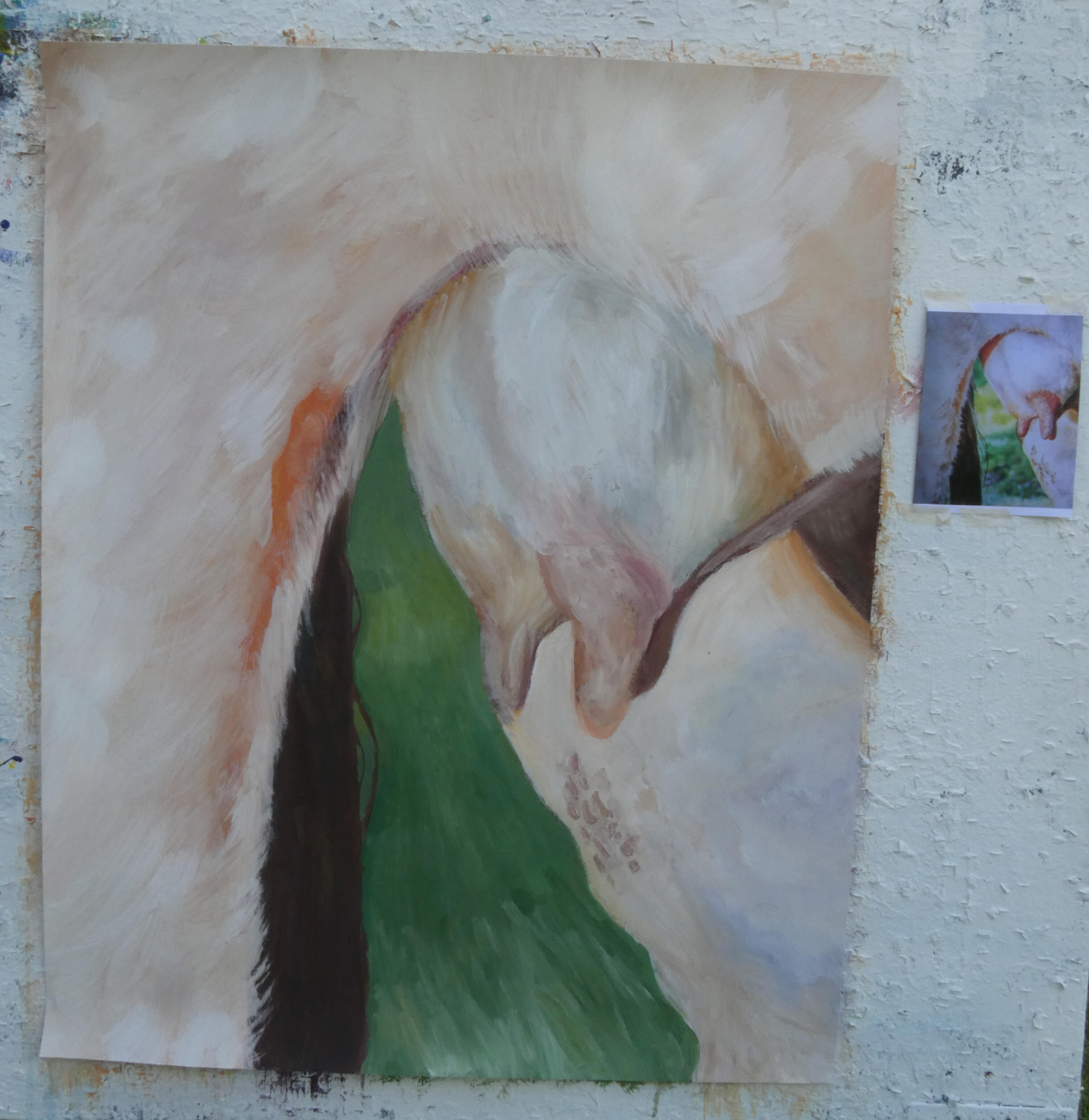
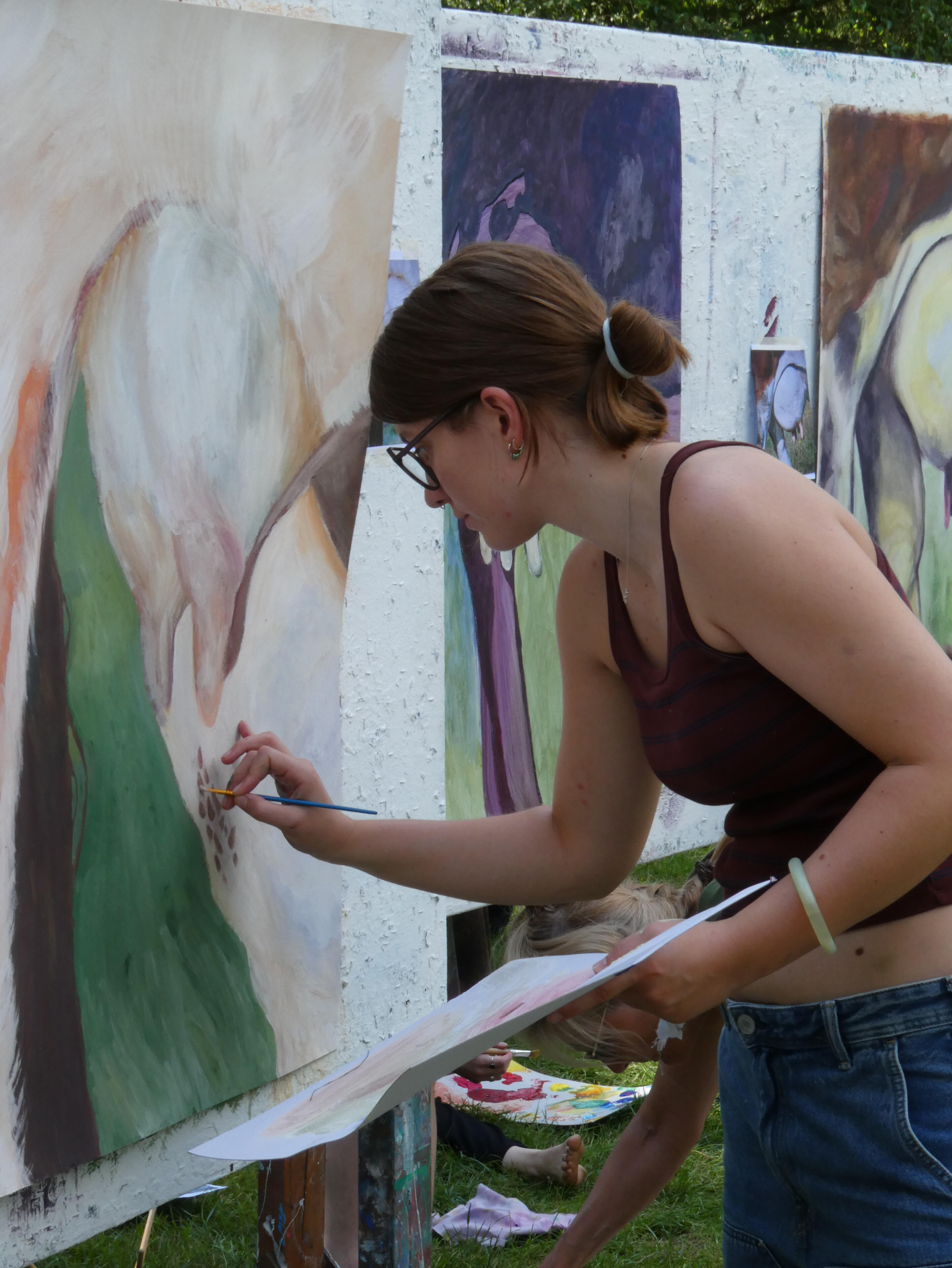
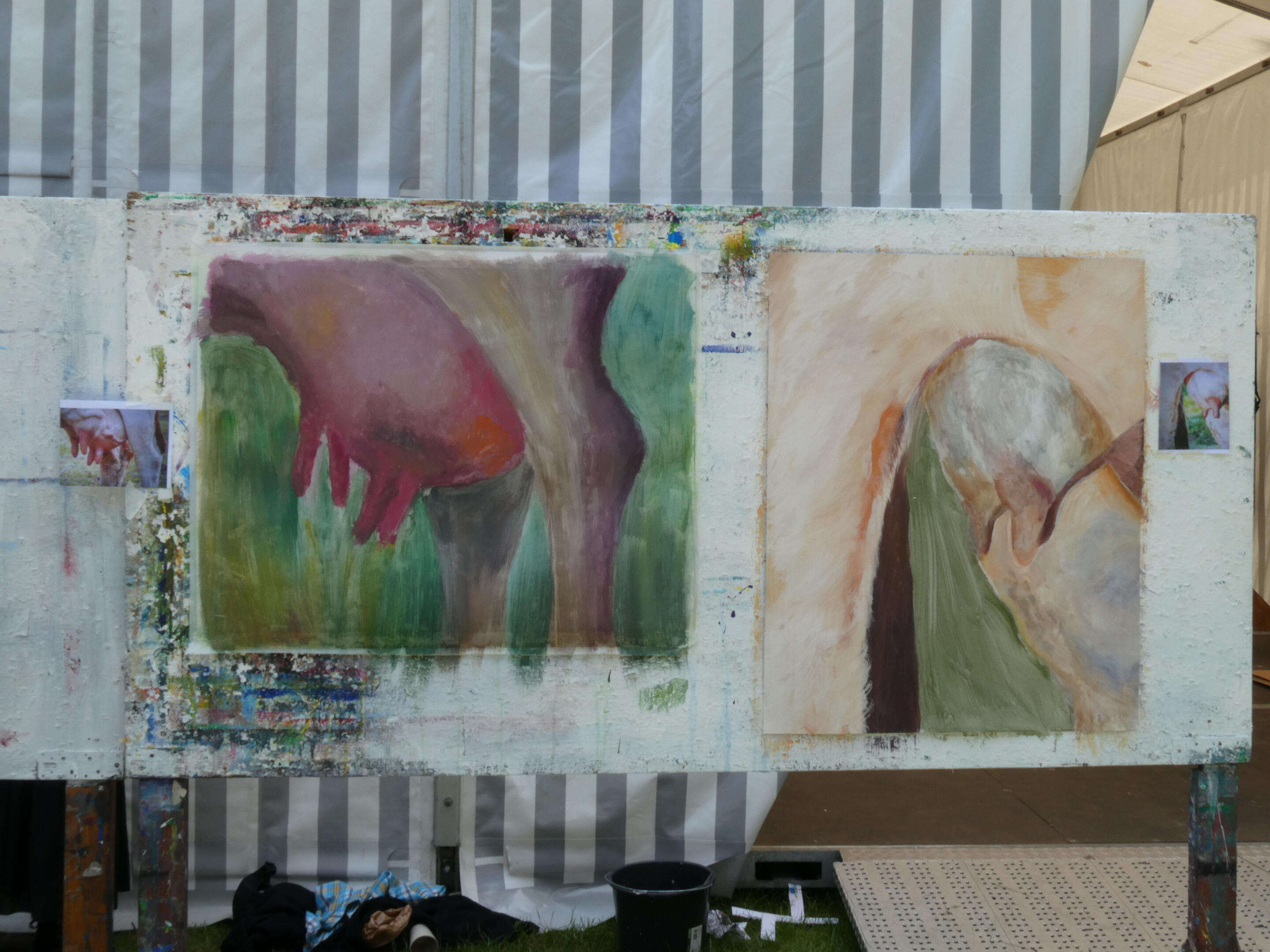
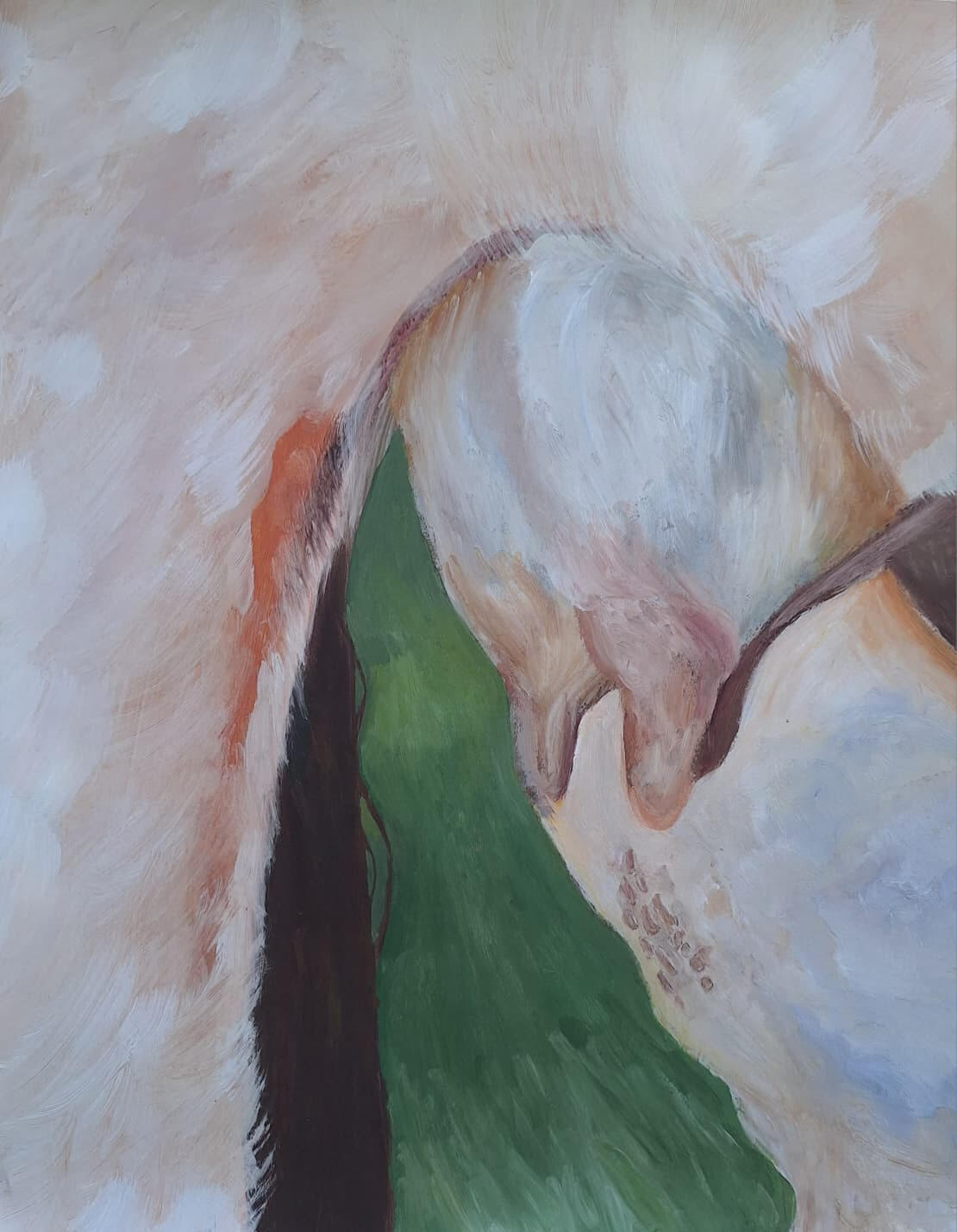
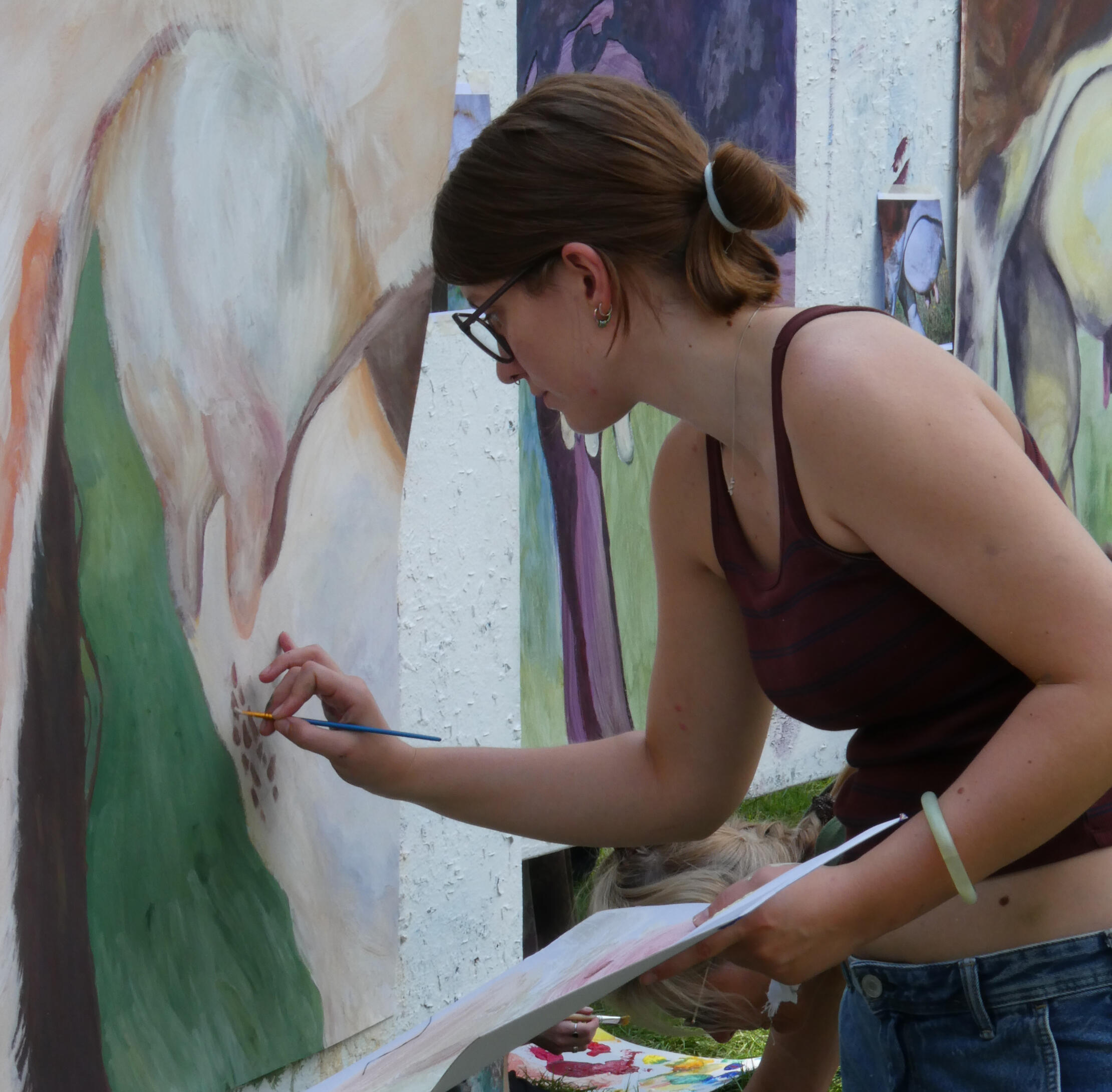
On Friday, we spent the entire day painting in a workshop. Our teacher took inspiration from Het Melkmeisje (The Milkmaid) by Johannes Vermeer. He was fascinated by how the milk jug is held so closely to the woman's chest, almost as if she herself is producing the milk. This led him to ask the question: Where does the milk actually come from?With that thought in mind, we spent the day painting cow udders. We could each choose a reference image from a large stack of photographs that our teacher had brought. Although it might seem like an unusual subject, it encouraged us to look closely at shape, texture, colour, and light.I really enjoyed this workshop because it gave me the opportunity to paint again after not having done so for quite some time. It was refreshing to rediscover the process of painting, learn a few new techniques, and return to making art with a greater sense of freedom and letting go.